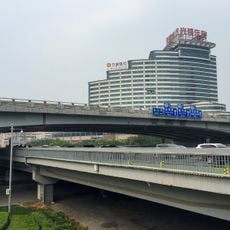
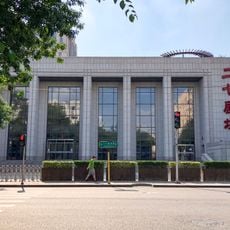
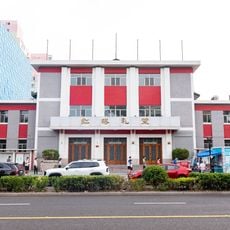
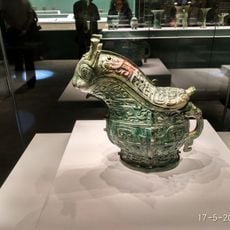
Lotus Pond Park, Urban park in Taipingqiao Subdistrict, Beijing, China.
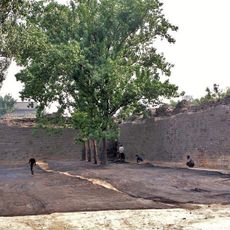
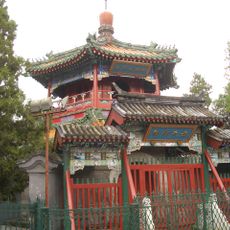
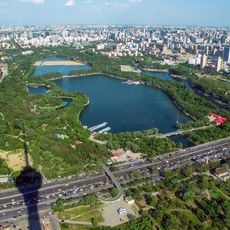
Lotus Pond Park is an urban green space covering about 53 hectares with multiple water bodies holding over 80,000 lotus plants of around 250 different varieties. The layout centers on a main lake, with pathways allowing visitors to explore these water gardens.
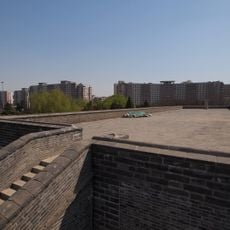
Lotus Pond, called Xihu in ancient times, fed the city of Ji and later became part of the Jin capital Zhongdu after 1153. When the Yuan built Dadu to the northeast, the lake lost its role as water source and declined. In 1984 it was listed as a Beijing cultural relic, and in 1998 a restoration project refilled it from Yuquantan and replanted lotuses.
A white marble statue near the pond shows a traditional Chinese story about a Lotus Fairy and a figure named Lotus-root Man. Visitors notice this sculpture as they walk, helping them connect with local legends and beliefs.
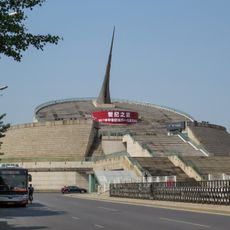
The park lies at 48 Lianhuachi Road in Fengtai District, immediately west of Beijing West railway station's south square. The east square holds an open-air theatre with 1,838 fixed seats. The lake was refilled with water diverted from Yuyuantan, so the lotus beds are reliable in summer.
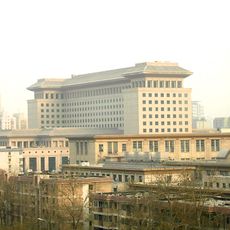
In 1984 the historical geographer Hou Renzhi argued that the pond was the only surviving relic of the Jin capital Zhongdu and the origin of Beijing, so the planned Beijing West railway station was moved about 100 metres northeast to spare it. The station's passenger yard axis was shifted 150 metres east, and its west annex is nearly 70 metres shorter than the east one. The pond is now a spot for photographing trains.
The community of curious travelers
AroundUs brings together thousands of curated places, local tips, and hidden gems, enriched daily by 93,086 contributors worldwide.