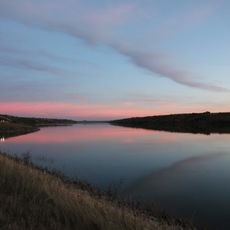
Prairie Pothole Region, Glacial wetland region across North Dakota, South Dakota, Minnesota, Iowa, Montana, Alberta, Saskatchewan, and Manitoba.
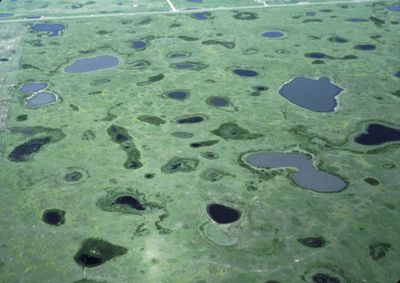
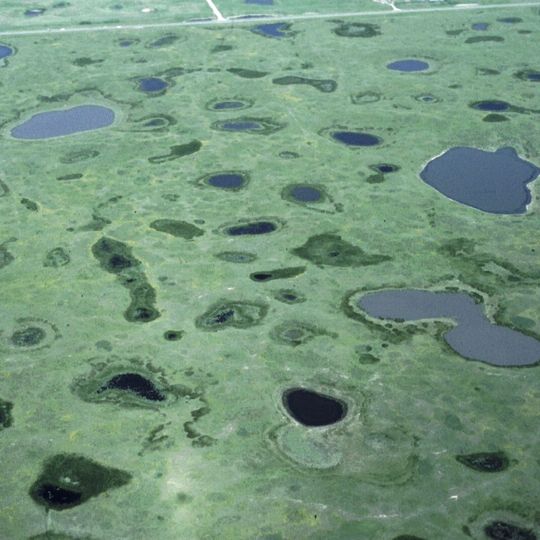
The Prairie Pothole Region is a wetland spanning eight states and provinces, containing millions of shallow water-filled depressions scattered across the landscape. These basins create a mosaic of small lakes, marshes, and grassland where countless plant and animal species thrive.
The region formed roughly 10,000 years ago when the Wisconsin ice sheet retreated, leaving behind uneven deposits of sediment and rock. Meltwater filled the resulting depressions, creating the wetland system that persists today.
Native peoples depended on these wetlands for hunting and gathering, recognizing them as rich sources of food and resources. Today, visitors come to experience the seasonal movement of birds and the web of life that thrives in this ecosystem.
Spring and fall offer the best bird-watching, when millions of waterfowl migrate through the region. Multiple wildlife refuges and observation areas provide public access, with trails that let you explore different habitats.
Each depression has its own distinct water chemistry, since the basins are isolated and fed only by spring snowmelt and rainfall. This separation allows specialized organisms in each pothole to adapt to their specific environment in ways not found elsewhere.
The community of curious travelers
AroundUs brings together thousands of curated places, local tips, and hidden gems, enriched daily by 60,000 contributors worldwide.