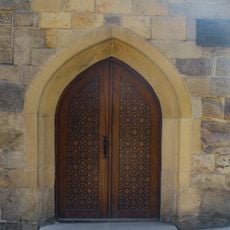
Divankhana, 15th century monument in Baku, Azerbaijan
Divankhana is a 15th century monument in Baku featuring an octagonal rotunda-pavilion with pointed arcades, a stone cupola, and a three-sided gallery surrounding a closed courtyard. The structure spreads across multiple levels that include an octahedral hall, an underground vault, and a five-meter deep well carved into the rock base.
The building was constructed during the reign of Farrukh Yasar, with construction halted around 1500-1501 following the arrival of Safavid armies in Baku. This interruption marks a significant shift in local rule and the region's architectural development.
The building's present name reflects the most widely accepted theory: that it served as a reception or council hall. A crown carved among the rich carpet-like ornaments of the west portal supports this, as a symbol of statehood. The hall's plan, an underground vault and Quranic verses (10:26–27) at the entrance also point to a memorial function.
Visitors can explore multiple chambers spread across different levels, including an octahedral hall, an underground vault, and a well set into the rock base. Wear sturdy footwear and be prepared for narrow passages and stairs that appear throughout the interior spaces.
The sources do not mention a 'milky well' or any link to women's health. Instead, they record five wells in the courtyard, from 3 to 15 metres deep, and a staircase in the centre of the hall leading down to a basement whose purpose is debated—possibly a tomb. The historian Sara Ashurbeyli also suggested that cup-shaped pits on the site, from a pre-Islamic sacred area, were used to hold the blood of sacrificed animals.
The community of curious travelers
AroundUs brings together thousands of curated places, local tips, and hidden gems, enriched daily by 94,257 contributors worldwide.