Northwest Passage, Maritime passage in Arctic Ocean, Canada
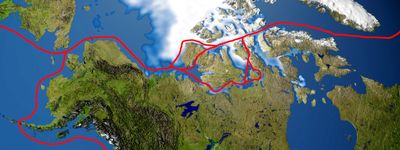
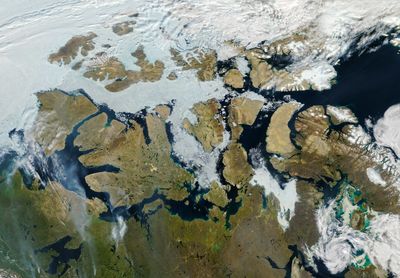
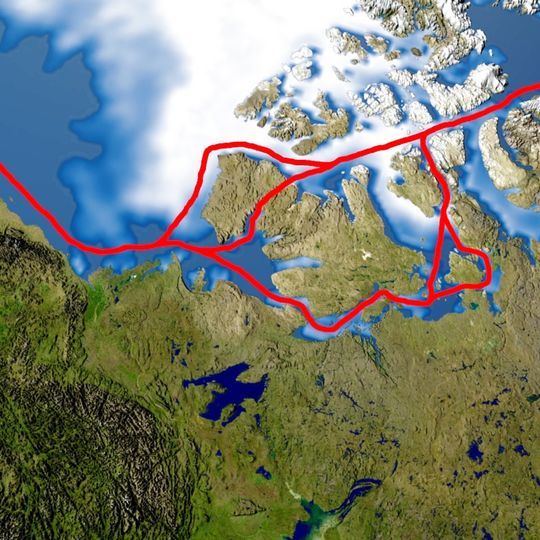
The Northwest Passage is a system of channels running through the Canadian Arctic Archipelago that links the Atlantic and Pacific Oceans. The route stretches thousands of kilometers north of mainland Canada, winding through narrow straits between islands and open sea sections that freeze and thaw depending on the season.
John Franklin led a British expedition in 1845 to chart this waterway, but his ships and crew vanished in the ice. Roald Amundsen became the first to navigate the entire route in 1906, completing the journey over three years in a small fishing vessel.
The Arctic waters serve as fishing and hunting grounds for Inuit families who still travel these channels in small boats during the open season. In summer, you might see hunters on the ice edge or near shore camps where seal and fish are processed following methods passed down through generations.
Only specialized icebreakers or reinforced vessels equipped with navigation systems for Arctic conditions can make the crossing. The best window for attempting the passage runs from July through September, when sea ice retreats and some channels become navigable.
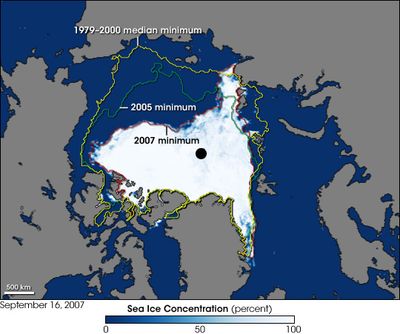
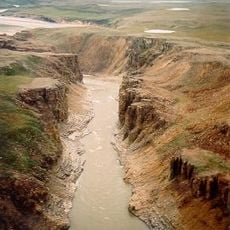
Melting ice has turned the route into a seasonal passage in recent years, allowing cruise ships and cargo vessels to use a shorter link between Europe and Asia. Some channels are so narrow that captains can see rocky shorelines on both sides at the same time.
The community of curious travelers
AroundUs brings together thousands of curated places, local tips, and hidden gems, enriched daily by 60,000 contributors worldwide.