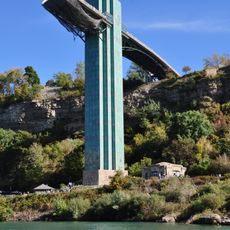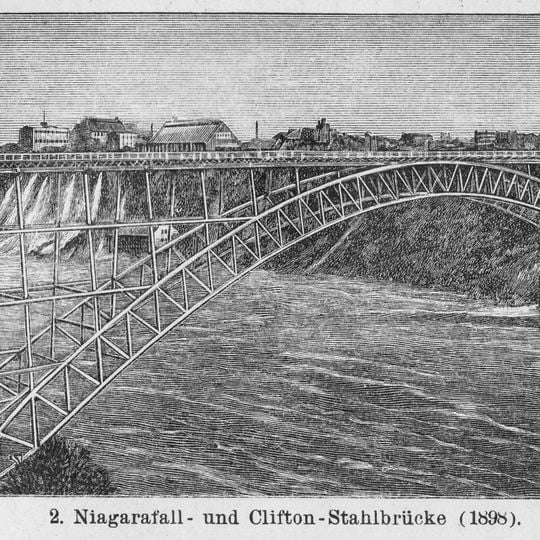
Honeymoon Bridge, Steel arch bridge at Niagara Falls, United States and Canada
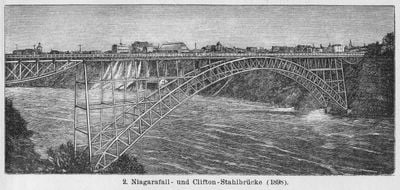
The Honeymoon Bridge was a steel arch bridge spanning approximately 500 feet across the Niagara River, connecting Ontario to New York. It carried trolley tracks and separate pathways for pedestrians, allowing both vehicular and foot traffic to cross the river.
The bridge was built in 1898 by the Pencoyd Bridge Company and was the world's largest steel arch bridge when it opened. It remained in service for about 40 years before its collapse in 1938 due to wind and ice pressure.
The bridge became known for its association with honeymoon travel, when couples came to the Niagara Falls to spend time together in a romantic setting. This role in romantic tourism shaped how locals and visitors understood and named the crossing.
The structure required constant protection from winter ice; engineers built stone walls about 24 feet (7 meters) high around its supports in 1899 to shield them from damage. Visitors interested in bridge history can still visit the site near the Niagara Falls to see the remains and historical markers that explain its engineering.
On January 27, 1938, thousands of spectators witnessed the bridge's collapse when powerful winds pushed massive ice sheets against its steel framework. This sudden failure became one of the most remembered bridge disasters of the era.
The community of curious travelers
AroundUs brings together thousands of curated places, local tips, and hidden gems, enriched daily by 92,618 contributors worldwide.