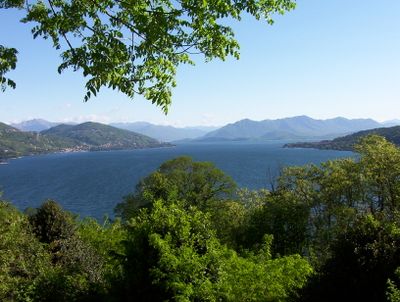
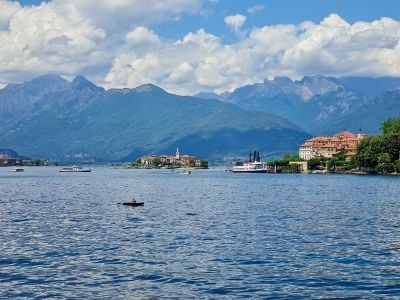
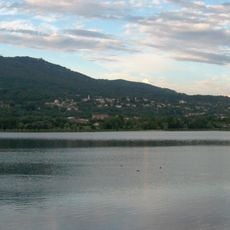
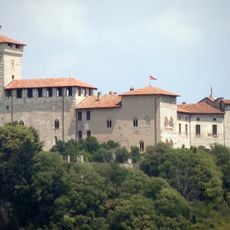
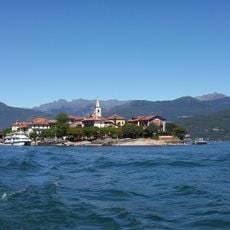
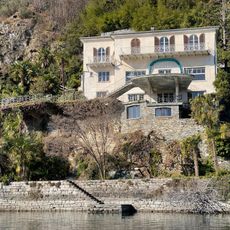
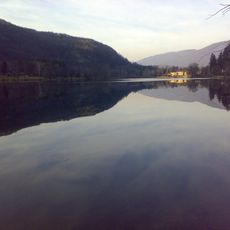
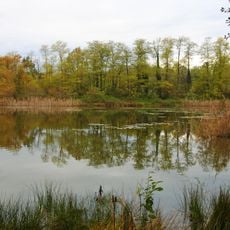
Lake Maggiore, Alpine lake between Ticino, Switzerland and Piedmont, Italy
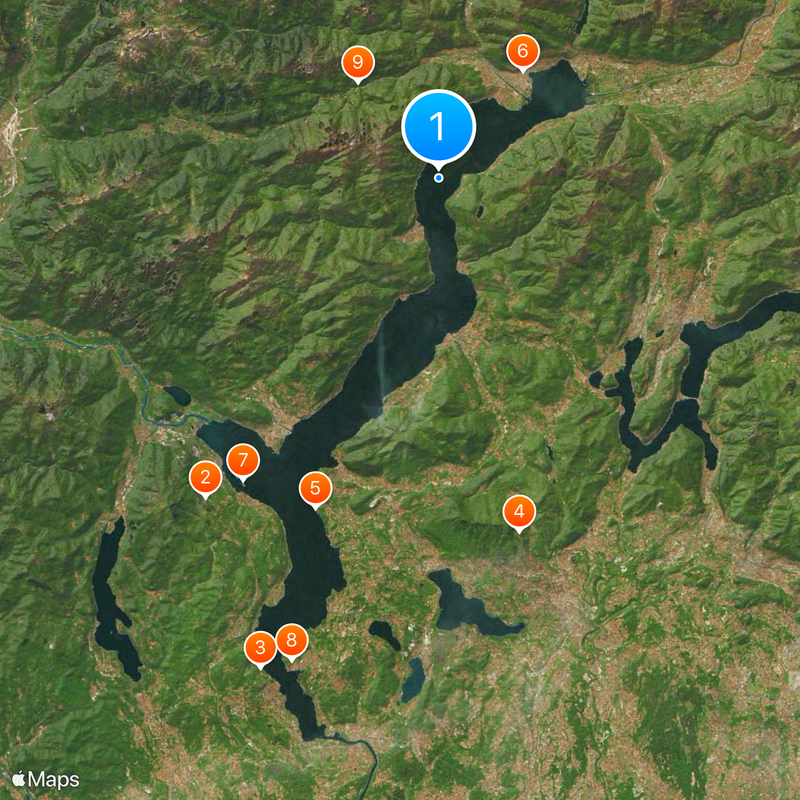
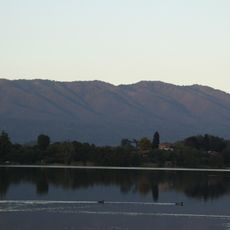
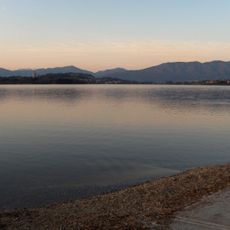
This Alpine water body stretches about 64 kilometers (40 miles) from the Swiss canton of Ticino southward into the Italian regions of Piedmont and Lombardy, reaching depths of around 372 meters (1220 feet) near Ghiffa. Its surface sits at roughly 193 meters (633 feet) above sea level, surrounded by forested slopes on the western shore and gentler terrain to the east.
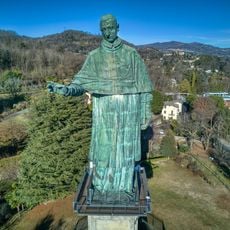
The lake formed when ice-age glaciers melted over a pre-existing river valley, leaving moraine hills that still mark its shores. In 1624 a 23-metre copper statue of Charles Borromeo was raised at Arona, walkable inside and taller than the Statue of Liberty until 1886. Scheduled passenger shipping began in 1826 and passed to the Austrian Lloyd in 1852.
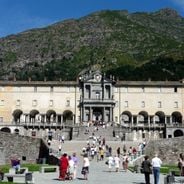
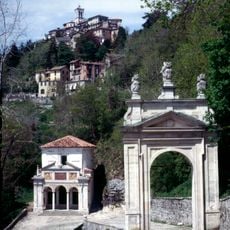
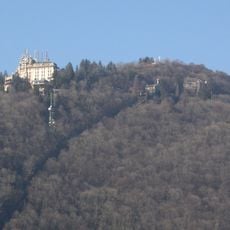
The name Maggiore means "greater" because it is the largest lake of the region, though it ranks second in Italy after Lake Garda. Fishing still supports several professional fishermen, with a total catch of about 150 tonnes a year. The lake is also a place of pilgrimage: the Sacro Monte di Ghiffa, a group of chapels above the shore, has been a UNESCO World Heritage Site since 2003.
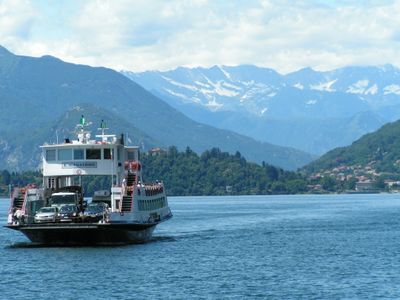
Many hotels in the Swiss part provide guests with a pass that covers buses, trains and ferries throughout the region, making it easy to explore the shoreline without renting a car. The ferry network connects towns on both sides, and schedules run more frequently during the warmer months.
The lake's deepest point, about 380 metres between Ghiffa and Porto Valtravaglia, lies 177 metres below sea level, since the surface itself sits at 193 metres. Around thirty artificial reservoirs in the basin hold some 600 million cubic metres; released at once, they would raise the lake by about 2.5 metres.
The community of curious travelers
AroundUs brings together thousands of curated places, local tips, and hidden gems, enriched daily by 92,446 contributors worldwide.