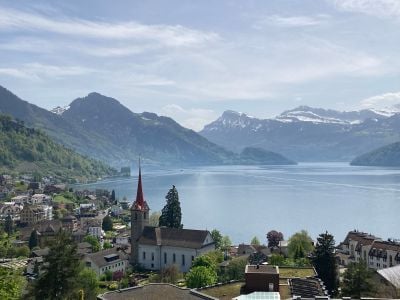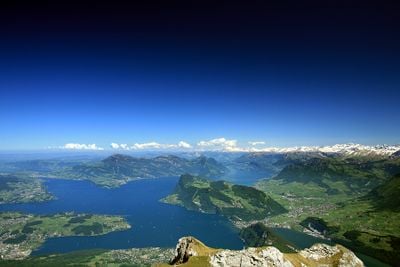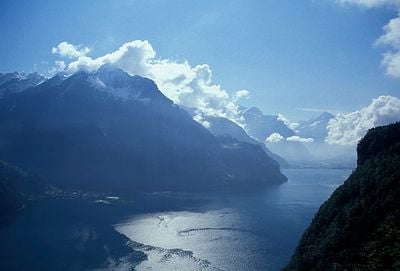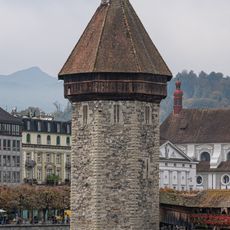
Lake Lucerne, Alpine lake in central Switzerland
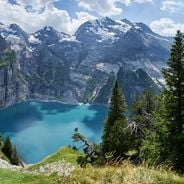
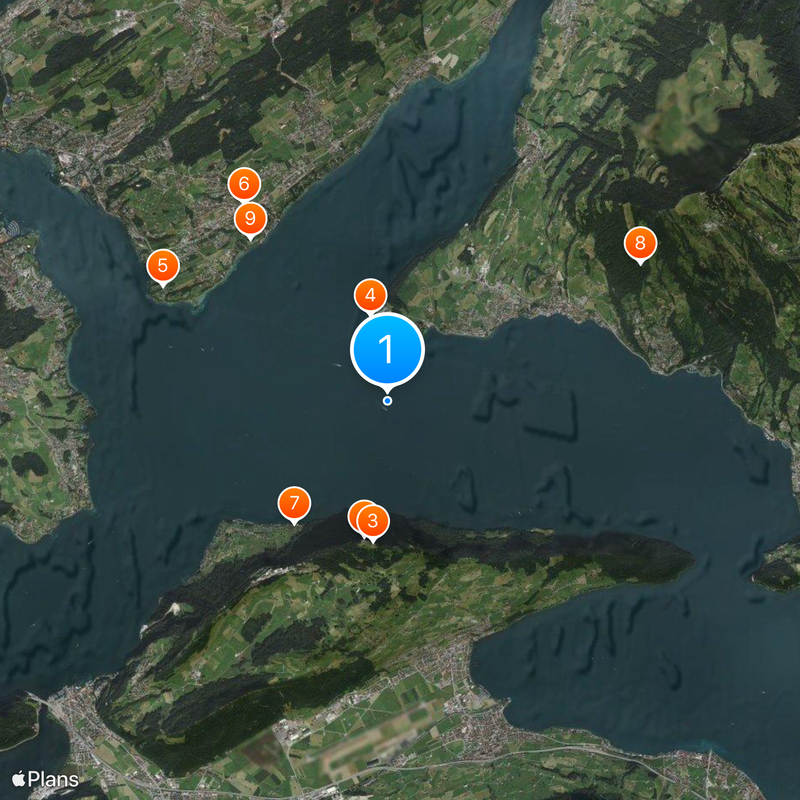
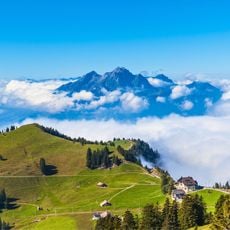
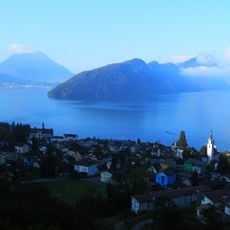
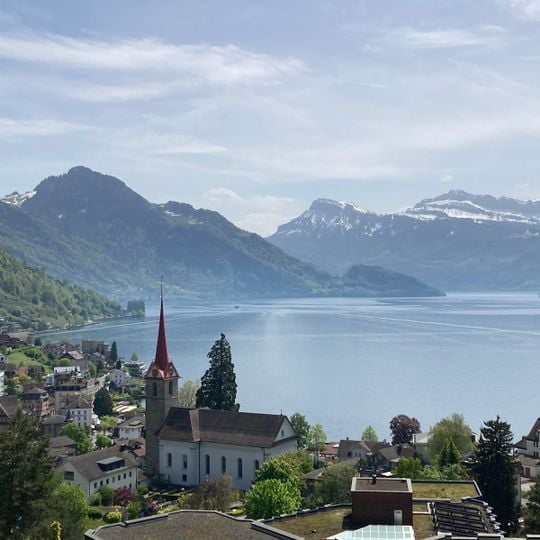
Lake Lucerne is a body of water in central Switzerland that extends through several cantons, with shores surrounded by mountains. The water consists of four basins connected by narrow passages, which give the lake its characteristic shape.
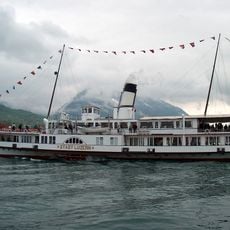
In 1291, representatives of the surrounding valleys met on the shore to form an alliance that is later regarded as the founding date of Switzerland. In the 19th century, regular steamship traffic began, connecting the communities along the water and bringing tourism to the region.
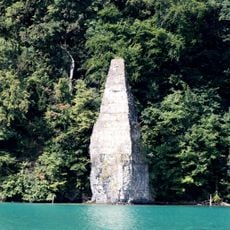
The surroundings of the lake hold special meaning for Switzerland, as the Rütli meadow on its shore is considered the symbolic birthplace of the Confederation and still plays a central role in national celebrations. Many place names along the shore refer to old legends and the story of William Tell, which have shaped the identity of the region for centuries.
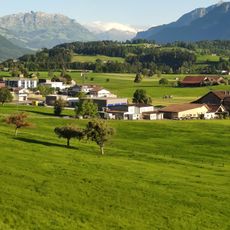
Roads and paths along the shore provide access to the water in many places, with flat sections in the north and steep slopes in the south shaping the landscape. Ships operate even in winter and connect the towns along the shore, making it possible to reach different parts of the lake without a car.
Archaeologists surveying the lake-bed during pipeline construction from 2019 to 2021 found a Bronze Age village with artefacts dating to around 1000 BCE, showing the area was settled 2,000 years earlier than previously thought. The Swiss Armed Forces also dumped old munitions here; an estimated 3,300 tonnes lie submerged, and the Defence Department offered 50,000 francs for a safe removal proposal.
The community of curious travelers
AroundUs brings together thousands of curated places, local tips, and hidden gems, enriched daily by 92,354 contributors worldwide.