Lugou Bridge, Stone bridge in Fengtai District, China
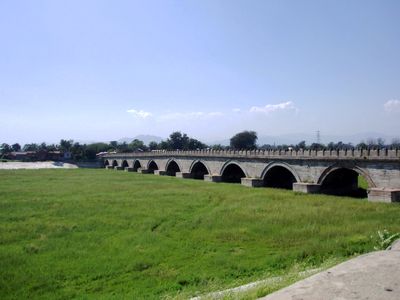
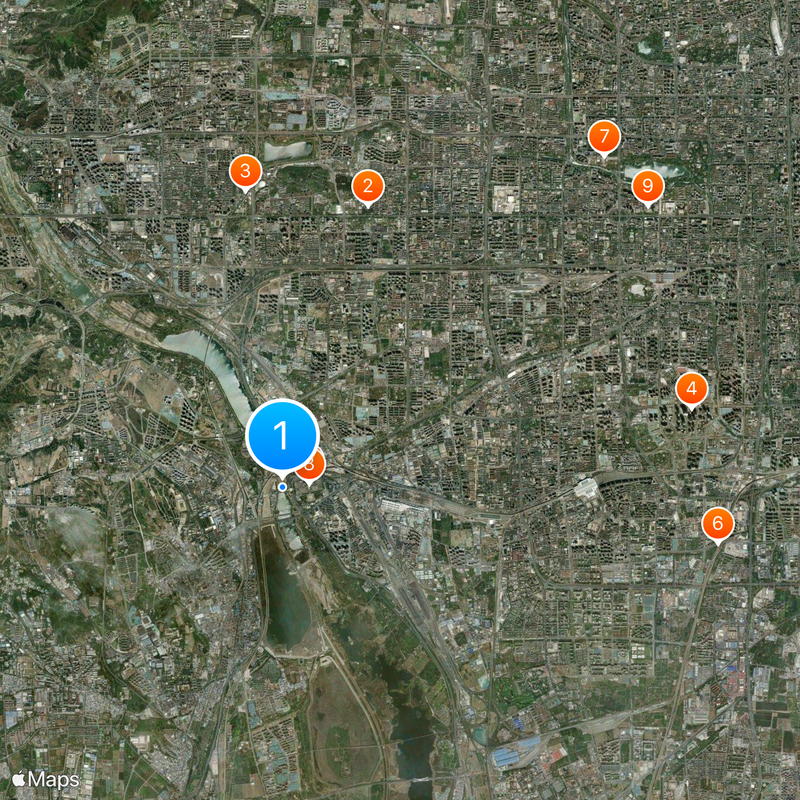
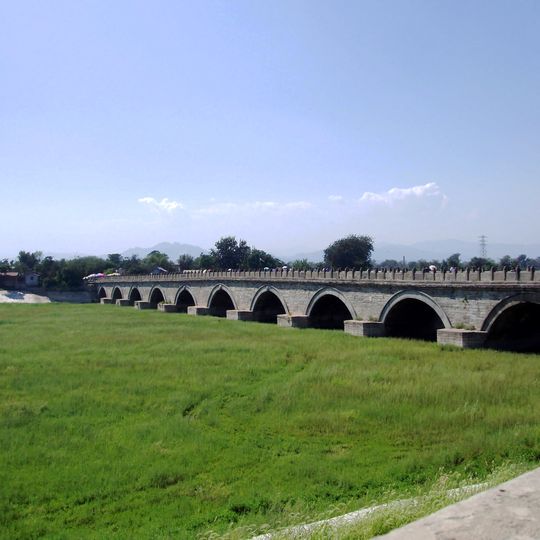
Lugou Bridge is a granite stone arch bridge over the Yongding River in Fengtai District, Beijing, 266.5 m long and 9.3 m wide. Its 11 segmental arches rest on 10 piers, each protected by triangular iron pillars against flood and ice. The 281 balustrade posts carry carved lions, with small lions hidden on the heads, backs, bellies and paws of the larger ones.
Construction began in 1189 under Emperor Shizong of Jin and was completed in 1192 under his successor; the bridge was first named Guangli Bridge. It was repaired twelve times during the Ming and Qing dynasties, and after flood damage it was rebuilt in 1698 under the Kangxi Emperor. On 7 July 1937, Japanese troops demanded entry to Wanping Fortress after a soldier went missing; the refusal and subsequent shelling of Wanping and the bridge by the Japanese, met by counterattacks from the 29th Army's 37th Division, started the Marco Polo Bridge Incident.
Each lion carved on the balustrade posts shows a different pose and face, pointing to centuries of stone carving work. Visitors today can walk between the arches and study the details of each figure, all shaped from the same granite.
Crossing is possible during daylight hours, and pedestrians can walk along the sides to view the sculptures. The best time to visit is morning, when light highlights the details of the stonework.
Marco Polo mentioned this bridge in his 13th-century travel writings and described the construction as exceptional. The exact number of lions on the balustrade posts remains disputed to this day, as many figures are very small and were hidden between larger sculptures.
The community of curious travelers
AroundUs brings together thousands of curated places, local tips, and hidden gems, enriched daily by 92,892 contributors worldwide.