Huguo Falun Temple, Buddhist temple in Huanggu District, China
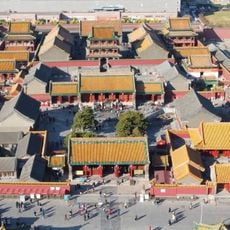
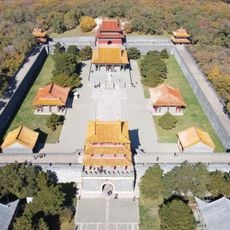
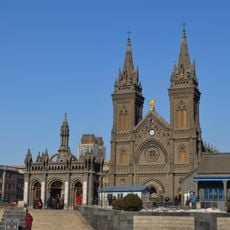
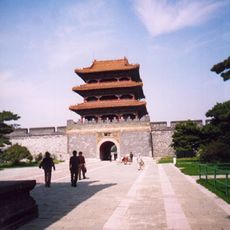
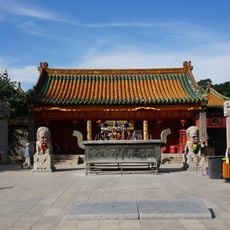
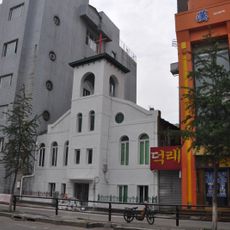
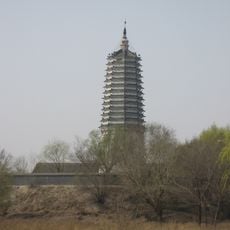
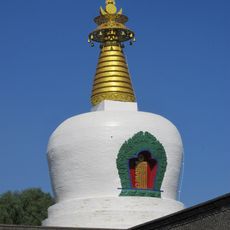
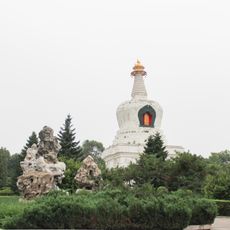
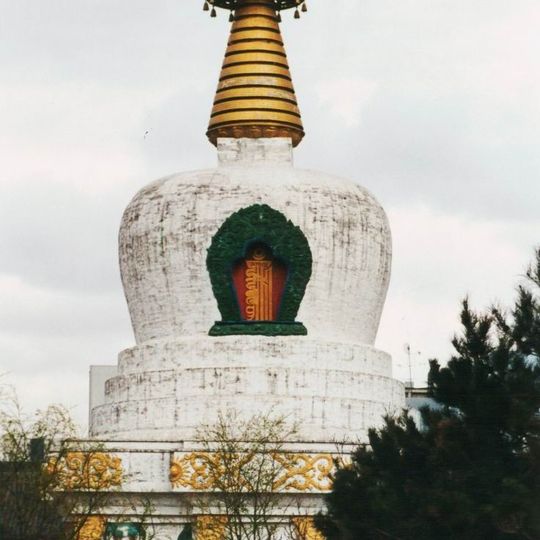
Huguo Falun Temple, also called Beita Falun Temple, is a Gelug Tibetan Buddhist monastery in Huanggu District, Shenyang. Its main buildings include the Mountain Gate with Four Heavenly Kings murals, the Mahavira Hall, the Tianwang Hall, and the north stupa in the northeast corner. The stupa is a Tibetan-style brick dome with a bronze finial and twelve wind bells.
Hong Taiji built the temple between 1643 and 1645 as the northern of four Gelug temples around Shengjing, each with a white stupa; it was originally a subordinate temple of Shisheng Temple. In 1778 the Qianlong Emperor visited, wrote the plaque "Jinjing Zhouyuan" and composed a poem; Jiaqing and Daoguang later added poems during their eastern tours. Part of the buildings and scriptures were destroyed in the Russo-Japanese War of 1905, and from 1921 the temple stored coffins of the poor until 1949.
The temple follows the Gelug school of Tibetan Buddhism, and you can observe monks conducting daily religious practices within its halls. The presence of resident clergy creates a living center of Buddhist devotion rather than simply a historical monument.
The temple is situated on Beita Street along Chongshan Road and welcomes visitors interested in observing Buddhist practices and the architecture. Plan your visit mindfully during quieter hours to better appreciate the spaces and show respect to those practicing there.
In 2011 the temple welcomed Zhaji Lhamo, a protector deity brought from Zhaji Temple in Lhasa, and installed her in a side hall without prostration cushions because she is a worldly protector. The north stupa's bronze finial hangs twelve wind bells, and its south gate bears the Ten Powers symbol.
The community of curious travelers
AroundUs brings together thousands of curated places, local tips, and hidden gems, enriched daily by 93,830 contributors worldwide.