Zhao Mausoleum, Imperial mausoleum in Beiling Park, Shenyang, China
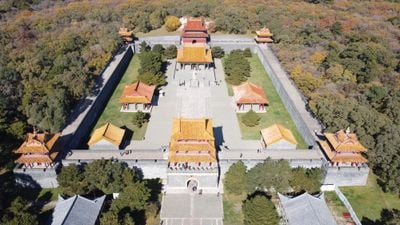
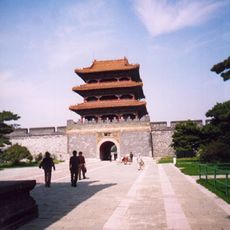
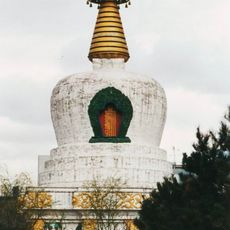
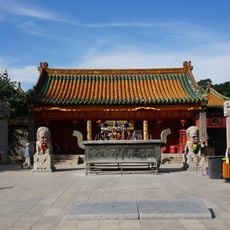
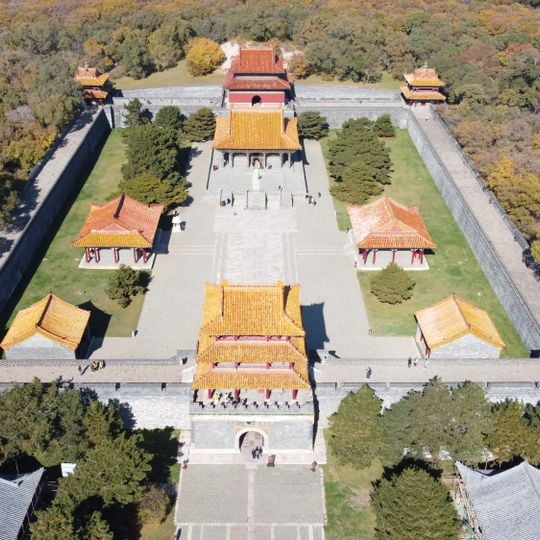
Zhao Mausoleum is an imperial burial complex located in Beiling Park in northern Shenyang, China, and is part of a UNESCO World Heritage Site. It is made up of ceremonial gates, stone animal sculptures, and pavilions arranged along a spirit road that runs from south to north toward the burial chamber.
Construction began in 1643, the year Emperor Hong Taiji died, and the tomb was largely completed by 1651. Additions and repairs continued through the Shunzhi and Qianlong reigns, including Qianlong's 1737 order reducing the Qingming earth-adding rite from thirteen baskets to one. In 1927 the Fengtian provincial government turned the tomb and its grounds into Beiling Park, and in 2004 it joined the UNESCO Ming and Qing Imperial Tombs extension.
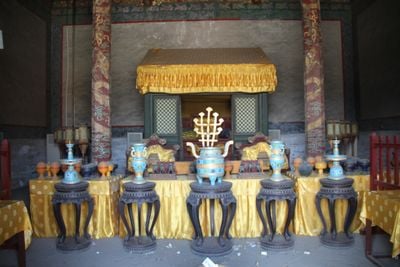
The name Zhaoling means "luminous mausoleum," from the character zhao, "to make bright or manifest," honoring Hong Taiji's civil and military deeds. Annual rites included seven great sacrifices, among them the Qingming rite in which earth was added to the burial mound; since 1737 a single basket has been offered by the officiating official kneeling at the top.
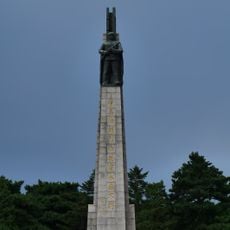
The sacred way runs about 1.2 km from the park gate to the tomb buildings, divided into three lanes: the centre for deities and offerings, the west for the emperor, the east for officials. A statue of Hong Taiji in military dress stands halfway along. Three Shenyang Metro Line 2 stations serve the area: Beiling Gongyuan, Lingxi and Xinle Yizhi.
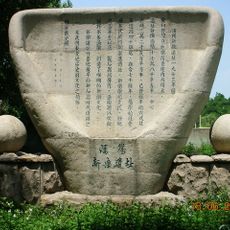
The spirit road's stone animals are arranged in pairs: xiezhi, qilin, horses and camels. The xiezhi, a mythical beast able to tell good from evil, stood for the emperor's justice, while the qilin represented peace and kindness. The stele recording Hong Taiji's deeds rests on a large stone turtle.
The community of curious travelers
AroundUs brings together thousands of curated places, local tips, and hidden gems, enriched daily by 93,839 contributors worldwide.