Fuling Tomb, Imperial mausoleum in Shenyang, China
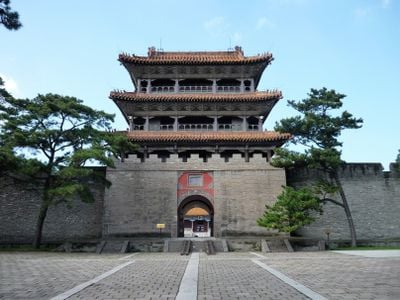
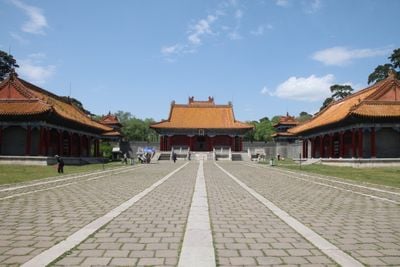
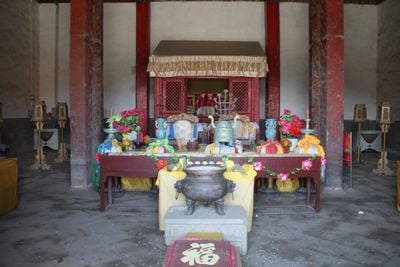
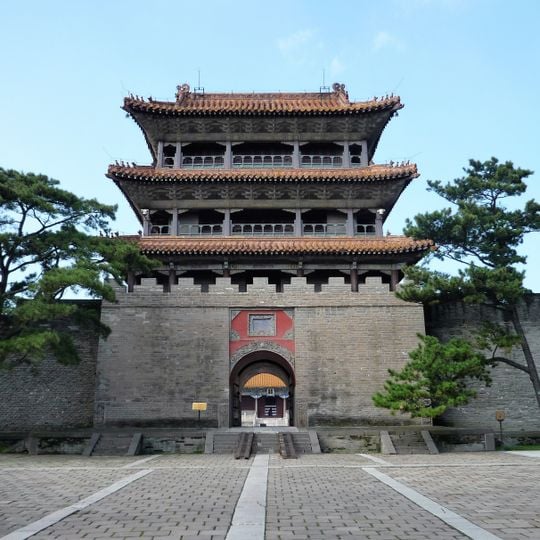
Fuling Tomb is the mausoleum of Nurhaci, founder of the Later Jin, and his wife Empress Xiaocigao, set in hills 10 km east of old Shenyang. Its red-walled grounds run south to north: stone animals along the spirit way, a 108-step staircase, the Shengong Shengde Stele Pavilion, then the castle-like Square Castle with Long'en Hall and the crescent Treasure City behind.
Nurhaci, founder of the Later Jin dynasty, died in 1626 at Shengjing (Shenyang); no burial site was chosen until 1629, when construction began northeast of the city. The tomb was first called Xianhan Ling or Taizu Ling and was named Fuling in 1636, meaning lasting fortune for the Qing realm. It was largely finished by 1651, with additions under the Kangxi and Qianlong emperors.
The stele pavilion, built in 1688, houses the Shengong Shengde Stele written by the Kangxi Emperor in both Manchu and Chinese. The mausoleum served as the main site for imperial family rituals throughout the Qing dynasty. Since 1929 the grounds have been open as a park, called Dongling (East Mausoleum) for its location east of the city.
The site is open to visitors, though hours change with the seasons and weather conditions. Wear comfortable walking shoes, as exploring the full grounds requires moving through multiple sections and climbing some areas.
The 108-step stairway does not lead to the Square Castle: it climbs from the end of the spirit path to the stone bridge and the stele pavilion, built in 1688, which holds the Shengong Shengde stele inscribed in Manchu and Chinese by the Kangxi Emperor. The Square Castle lies beyond it.
The community of curious travelers
AroundUs brings together thousands of curated places, local tips, and hidden gems, enriched daily by 92,791 contributors worldwide.