Anhai Longshan Temple, Buddhist temple in Anhai Town, China
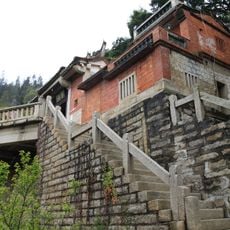
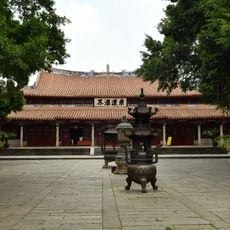
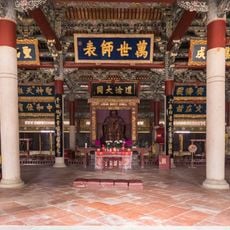
Anhai Longshan Temple is a Buddhist complex in the town of Anhai with several halls dedicated to different deities. The buildings display traditional Chinese architecture featuring stone dragon pillars and glazed roofs, with the Mahavira Hall and the Hall of Four Heavenly Kings among the main structures.
Founded between 618 and 619 at the start of the Tang dynasty, the temple was first called Tianzhu Temple and later Puxian Hall. It was restored in 1623 under the Tianqi Emperor, and in 1684 Shi Lang funded repairs and new buildings. The 1708 expansion followed, and in 1831 the halls were rebuilt with stone columns and brick walls. It became a National Key Buddhist Temple in 1983.
The temple serves as a living place of worship where visitors light incense and make offerings before the statues throughout the day. The veneration of Guanyin remains central to the rituals that locals and pilgrims perform here.
The temple sits at the foot of Mount Long in Xingcuo Village, Anhai. The Yuantong Hall, the main hall, is entered from the front, with the Hall of Four Heavenly Kings as the frontal hall and the Bell Tower nearby. Look for the pair of ten-metre stone pillars carved with facing dragons at the main hall.
The temple is the ancestral source of over 400 Guanyin temples, many still named Longshan. In 1653 the monk Zhaoshan left Anhai for Lukang, Taiwan, where he founded a temple using building materials shipped from Jinjiang and stone lions carved by Anhai craftsmen.
The community of curious travelers
AroundUs brings together thousands of curated places, local tips, and hidden gems, enriched daily by 95,041 contributors worldwide.