Cao'an, Manichaean temple in Jinjiang, China
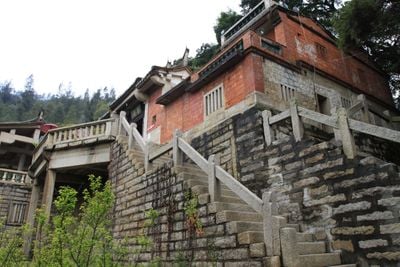
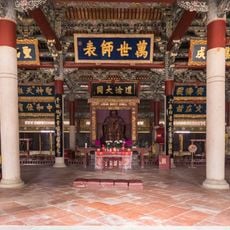
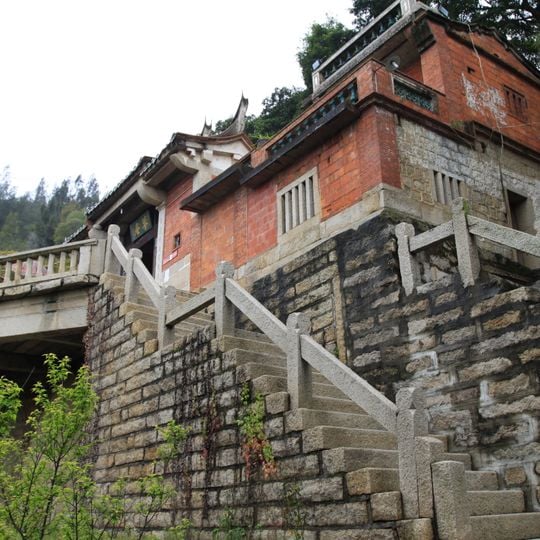
Cao'an is a granite temple in Jinjiang organized across two levels with distinct functional areas. The lower floor serves as a worship space, while the upper level provides living quarters for the temple's resident clergy.
Cao'an began in the mid-12th century, during the Southern Song reign of Emperor Gaozong, as a thatched hut built by Chinese Manichaeans. It was rebuilt in stone in 1339, the fifth year of the Zhiyuan era, when the believer Chen Zhenze and others carved the Manichaean light Buddha relief on the cliff behind it. Banned under the Ming and damaged in the Ming–Zheng wars, it was long taken for a Buddhist temple until scholars identified it in 1923.
The name Cao'an means "thatched nunnery", from the straw hut first built here in the Southern Song. Mani, the religion's founder, was called the "Buddha of Light" in China, and the temple later passed as Buddhist: locals told archaeologist Wu Wenliang the "Moni" in its inscriptions meant Śākyamuni. The 18-character Manichaean inscription carved on the rock 70 metres southeast of the temple is still legible.
The site is located on a hillside near a small village and is easily accessible on foot. Visit during dry weather for the most comfortable experience, as stairs and outdoor areas can be slippery when wet.
The Mani statue in the cliff niche behind the temple is 154 cm tall and 85 cm wide, carved in 1339 by devotees led by Chen Zhenze. Its round face has two strands of beard reaching the chest; monks once chiselled at the beard when the figure was venerated as Shakyamuni. A 18-character inscription on a rock 70 m to the right-front sets out Manichaean doctrine.
The community of curious travelers
AroundUs brings together thousands of curated places, local tips, and hidden gems, enriched daily by 93,847 contributors worldwide.