Fashi Zhenwu Temple, Taoist temple in Fengze District, China
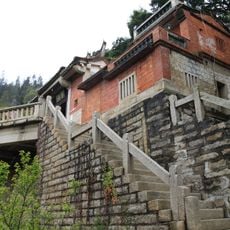
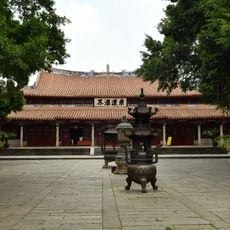
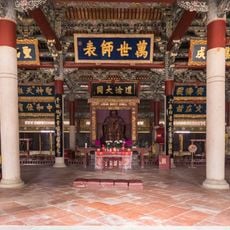
Fashi Zhenwu Temple stands on a small hill called Wudangshan by the old Quanzhou port, facing west. Its buildings are the four-column, three-bay, three-tier paifang gate, a 22-step stone stairway leading to a boulder carved with the characters "Tunhai" (1533), the Bai Pavilion with a double-eave pyramidal roof, and the 780-square-metre Zhenwu Hall, five bays wide and deep with a single-eave gable-and-hip roof.
According to the Quanzhou Prefecture Topography and Jinjiang County Annals, the temple was first built in the Song dynasty (960–1279), though one account places its founding in the Southern Tang (923–936). In late 1276 and early 1277 the fleeing Song emperor Duanzong stayed here. The Bai Pavilion was rebuilt in 1870, under the Tongzhi Emperor, and the Zhenwu Hall in 1842, under the Daoguang Emperor, with its timber frame restored in 1985.
The temple honors Zhenwu, a protective deity in Taoism, and visitors can observe how local communities gather here for religious practices and daily worship. The spaces reveal how this sacred figure remains meaningful to people today.
Visitors are expected to dress modestly and show respect in sacred areas. Photography and prayer zones have specific guidelines, so it is helpful to observe how people use different parts of the space.
The hill the temple stands on is called Wudang Shan, and a 1533 stone tablet inscribed "Tunhai" (Swallowing the Sea) by Jinjiang magistrate Han Yue stands at the top of the 22 stone steps. The gate's ancient well, Sanxie Longquan, was dug in 1586, during the Wanli reign.
The community of curious travelers
AroundUs brings together thousands of curated places, local tips, and hidden gems, enriched daily by 95,372 contributors worldwide.