Kaiyuan Temple, Buddhist temple in Licheng District, Quanzhou, China
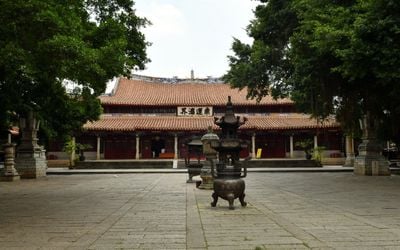
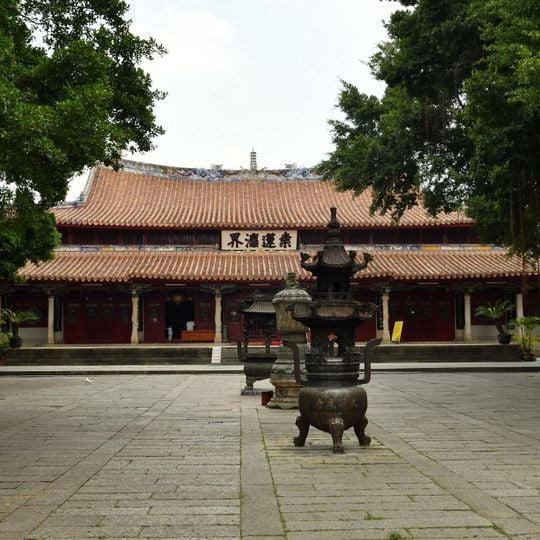
Kaiyuan Temple is a Buddhist complex featuring multiple halls arranged along a central axis, including the Mahavira Hall and Dabei Hall. The layout follows traditional Chinese architectural principles with various stone elements and carved details throughout the site.
The temple was founded in 686 during the Tang dynasty as Lotus Temple, in the mulberry garden of landlord Huang Shougong, who according to legend dreamed of a monk begging land and saw white lotuses bloom on the mulberry trees. In 738 it was renamed Kaiyuan Temple, the name still used. It was destroyed in 1155 and rebuilt, received the name Dakaaiyuan Wanshou Chan Temple under the Yuan, and the Mahavira Hall was rebuilt in 1637 under Zheng Zhilong.
The complex reflects a blend of Buddhist and Hindu traditions visible in its architectural details and stone carvings. These elements tell the story of merchants and travelers who shaped the site over centuries.
The site is open daily with wide pathways and level ground throughout the complex, making it easy to navigate. Morning visits are ideal when crowds are lighter and natural light illuminates the stone details best.
The complex features two distinctive stone pagodas that stand among the tallest of their kind in China. These towers display remarkable stonework craftsmanship and serve as symbols of the site's architectural importance.
The community of curious travelers
AroundUs brings together thousands of curated places, local tips, and hidden gems, enriched daily by 92,803 contributors worldwide.