Qinglongdong, Religious architectural complex in Zhenyuan County, China
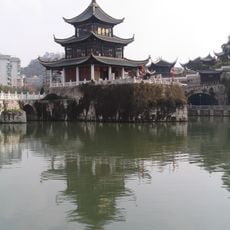
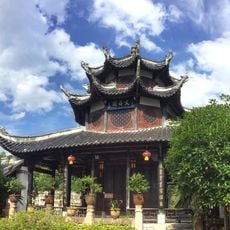
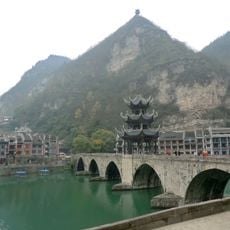
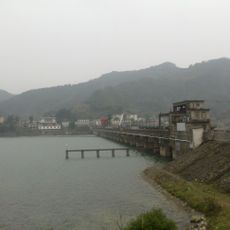
Qinglongdong is a religious architectural complex nestled against the cliff face of the Wu River in Zhenyuan County, combining 36 buildings across steep terrain. The structures are built directly into the mountainside, using natural caves and rock formations as integral parts of the design.
Founded in 1388, the 21st year of the Hongwu era under the Ming dynasty, the complex reached roughly its present scale by the early Qing. It was listed as a county-level protected unit on 16 September 1981, upgraded on 23 February 1982, and in 1988 entered the third batch of Major National Historical and Cultural Sites.
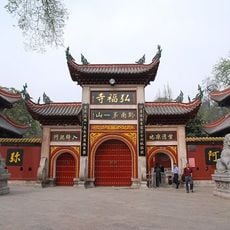
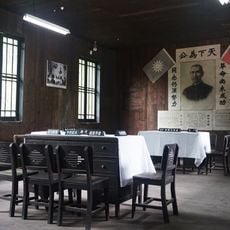
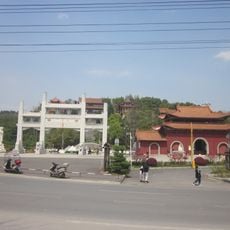
The complex holds Buddhist, Taoist and Confucian buildings side by side on Mount Zhonghe: the Zhongyuan Chan Temple with its Great Buddha Hall, the Taoist Zhengyi and Lüzu halls of Qinglongdong, and the Ziyang Academy of Classical Learning, a Confucian school. Wanshou Palace, a guild hall with a stage and the Yangsi General Hall, adds a lay, merchant layer to the site.
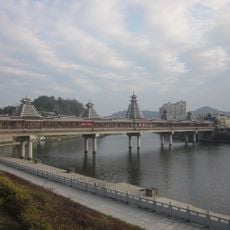
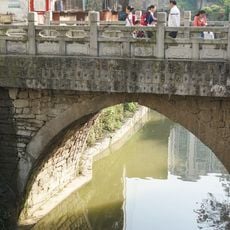
Visitors move through multiple levels connected by stone pathways, with the main entrance located near Zhusheng Bridge. The site requires moving up and down different elevations, so plan time for exploring the terrain.
Zhongyuan Chan Temple, on the upper cliff behind Ziyang Cave, uses a natural rock cave as its mountain gate. The cave opening serves as the entrance itself, so the temple's threshold is the living rock of Mount Zhonghe rather than a built gate.
The community of curious travelers
AroundUs brings together thousands of curated places, local tips, and hidden gems, enriched daily by 93,409 contributors worldwide.