Hailongtun Castle, Fortress complex in Bozhou District, China
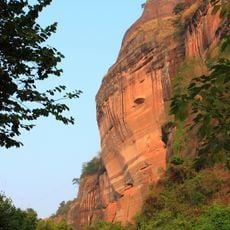
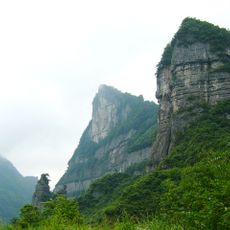
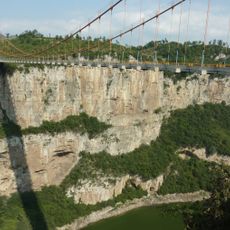
Hailongtun Castle stands on Longyan Mountain at about 1,350 metres, with cliffs on all four sides and a single ridge entrance at its southwest end. Its inner and outer cities cover 1.59 square kilometres, enclosed by nearly 5.6 kilometres of surviving stone walls. The eastern approach runs through the Iron and Copper Pillar passes, up the 36-step stairway to Feihu Pass, then along the cliff-cut Longhu Road to Feilong and Chaotian passes.
The fortress was built in 1257 during the Southern Song dynasty as a stronghold for local rulers. It was destroyed in 1600 when the Ming government moved to consolidate regional control and ended the Tusi system.
The fortress demonstrates the Tusi system, where local indigenous leaders maintained self-governance while providing resources and allegiance to the central Chinese government. This arrangement shaped how people organized their settlements and defenses across the mountain.
The site is reached by taking a bus from Maocaopu station in Zunyi and then a cable car from the visitor center to the mountain base. From there, a steep climb on foot leads up to the ruins on the peak.
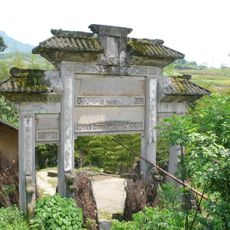
The eastern approach begins at the Tiezhu (Iron Pillar) and Tongzhu (Copper Pillar) passes, linked by a straight wall to the Thirty-Six Steps: a stairway 51.5 metres long, each step 2.8 metres wide and half a metre high, climbing at about 30 degrees. It is the only route up to Feihu Pass.
The community of curious travelers
AroundUs brings together thousands of curated places, local tips, and hidden gems, enriched daily by 94,347 contributors worldwide.