Shixia Site, Archaeological site in Qujiang District, China.
The Shixia Site is an archaeological location with physical remains from several periods of ancient Chinese history. On the ground you can see traces of dwellings, storage areas, pottery workshops, and burial spaces that show how people lived here over many generations.
The site was discovered in 1973 between the lion-head and lion-tail peaks of Shiziyan, near the cave where the Maba Man skull was found in 1958. Its four cultural layers span roughly 6000 to 2600 years ago: a Neolithic layer, the late Neolithic Shixia culture (about 5000–4000 years ago), an early Bronze Age layer, and a late Bronze Age layer from the Western Zhou to Spring and Autumn period. Excavations cleared 136 tombs.
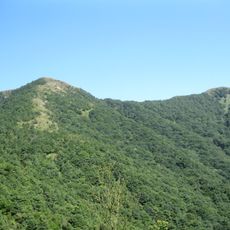
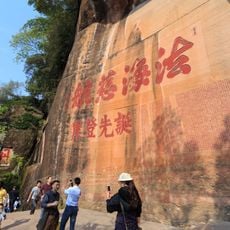
The site's name comes from Shixia, the spot between the two limestone peaks of Shiziyan, whose outline resembles a crouching lion. Excavations there uncovered 136 tombs and pottery kilns, and the late Neolithic layer (c. 5000–4000 years ago) was named "Shixia Culture" after the site. Finds include stone tools, pottery and jade objects.
The site is accessible to visitors and offers displays explaining the discoveries and history of the excavations. Wear comfortable shoes since the ground can be uneven as you explore the different areas on foot.
Interestingly, this place connects two different regional cultural traditions that were otherwise far apart from each other. The findings suggest that people from different origins met here and shared knowledge with one another.
The community of curious travelers
AroundUs brings together thousands of curated places, local tips, and hidden gems, enriched daily by 93,086 contributors worldwide.