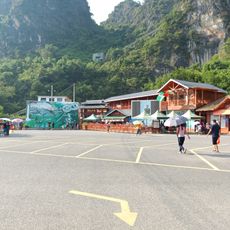
Nanhua Temple, Buddhist temple in Maba, Guangdong, China
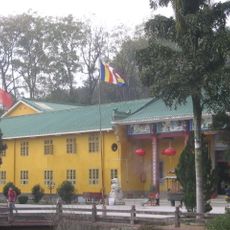
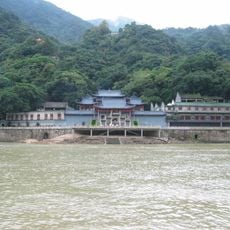
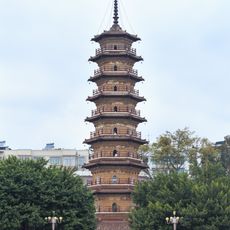
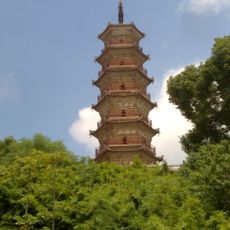
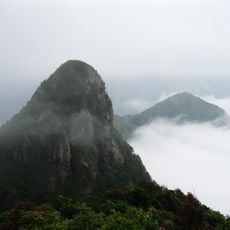
Nanhua Temple is a Chan Buddhist monastery in Maba, Qujiang District, covering over 42.5 hectares. Its buildings include the Hall of Four Heavenly Kings, the Mahavira Hall with three gilded Buddha statues over 8.3 meters tall, the Sixth Ancestor Hall, and the Lingzhao Pagoda. The grounds hold 690 Buddhist statues and nine Chinese swamp cypresses estimated at 400 to 500 years old.
The temple was founded in 502 by the Indian monk Zhiyao Sanzang, who named it Baolin Temple. It received its present name in 968 under Song Emperor Taizong. Hanshan Deqing reformed the monastery in the 16th century, and Xuyun led renovations in 1934.
The temple serves as a living place of worship where visitors encounter monks, pilgrims, and ceremonies throughout the day. The statues and artwork inside tell stories about Buddhist beliefs and practices.
The temple is well organized with clear pathways connecting its various sections, making it easy to navigate the grounds. Visit in the early morning for a quieter experience, and allow time to walk through the different halls and courtyards at a relaxed pace.
Matteo Ricci visited in 1589 while moving from Zhaoqing to Shaoguan and described the temple as "magnificent in grandeur", praising its fountain as "graciously designed and wonderfully built". He also saw the relics of the Sixth Patriarch, whom he called Lusu, and noted that local authorities offered the Jesuits lodging on the grounds, which they declined in favour of the city.
The community of curious travelers
AroundUs brings together thousands of curated places, local tips, and hidden gems, enriched daily by 92,793 contributors worldwide.