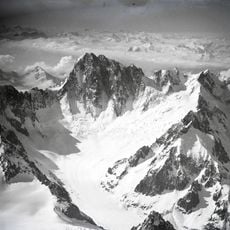
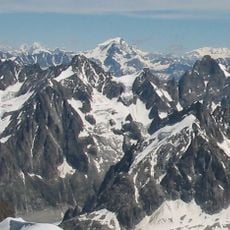
Grandes Jorasses, Alpine mountain peak on France-Italy border
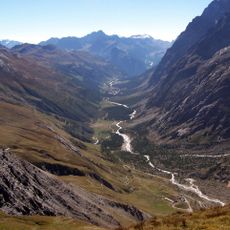
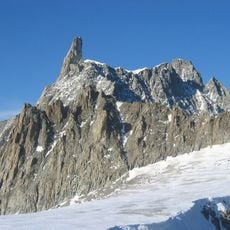
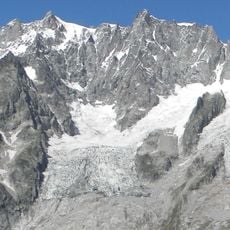
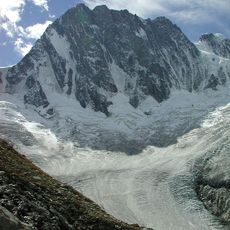
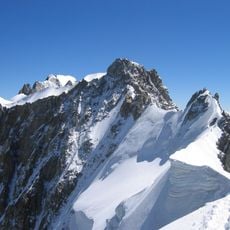
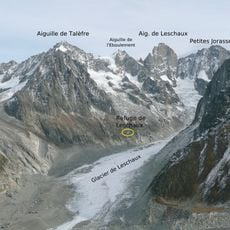
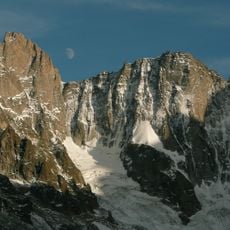
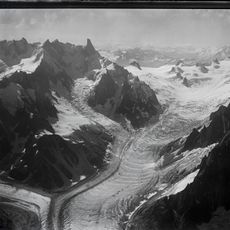
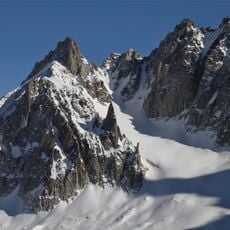
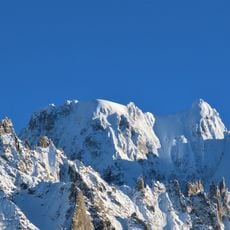
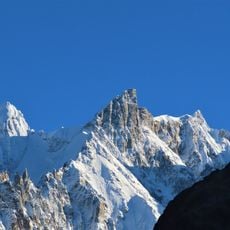
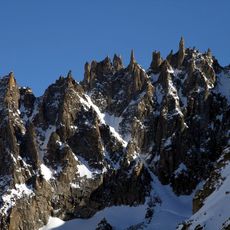
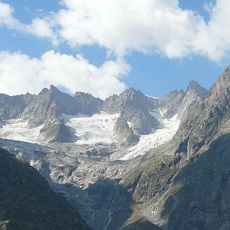
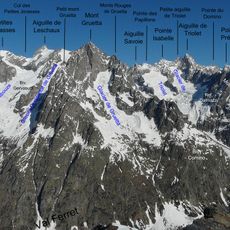
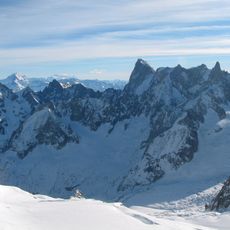
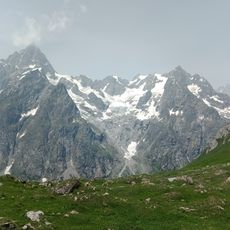
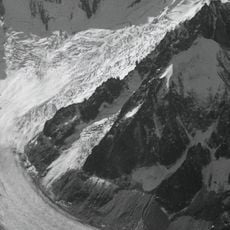
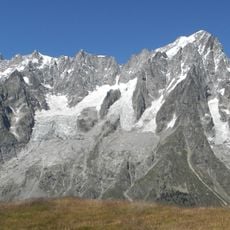
Grandes Jorasses is an east-west summit ridge about one kilometre long on the France-Italy border, carrying six points from Pointe Young (3,996 m) to Pointe Walker (4,208 m), the highest. Its north face, 1,200 m high and nearly a kilometre wide, is cut from granite of variable quality. On the French side it overlooks the Leschaux glacier; on the Italian side, Val Ferret and Valdigne.
Edward Whymper's party made the first ascent of Pointe Whymper on 24 June 1865, but Whymper stopped short of Pointe Walker. Horace Walker, with guides Melchior Anderegg, Johann Jaun and Julien Grange, reached the highest summit on 30 June 1868. The north face was first climbed in 1935 via the Croz Spur by Martin Meier and Rudolf Peters.
The six summits carry names of climbers and royalty: Pointe Whymper and Pointe Croz honour Edward Whymper and his guide Michel Croz, while Pointe Elena and Pointe Margherita recall Princess Elena and Queen Margherita of Savoy. The name Grandes Jorasses may derive from a Francoprovençal word for conifer wood or from Latin jugum, a mountain summit.
From Chamonix, climbers access the mountain via Walker Spur, while the Italian route uses the Boccalatte cabin in Val Ferret as a base. Both approaches demand serious Alpine experience and proper equipment for safe passage on rock and ice.
The north wall ranks among the three greatest north faces in the Alps, joining the Eiger and Matterhorn in mountaineering legend. This trio remains deeply embedded in the identity of extreme climbing across the continent.
The community of curious travelers
AroundUs brings together thousands of curated places, local tips, and hidden gems, enriched daily by 92,886 contributors worldwide.