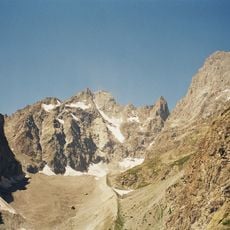
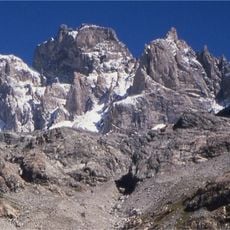
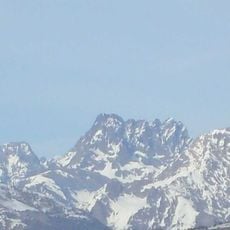
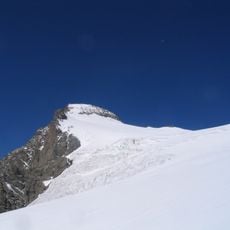
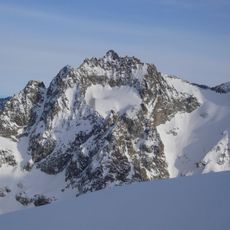
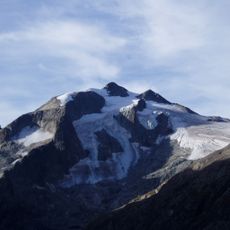
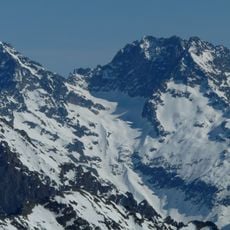
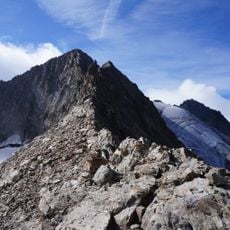
Pilatte Glacier, Alpine glacier in Saint-Christophe-en-Oisans, France.
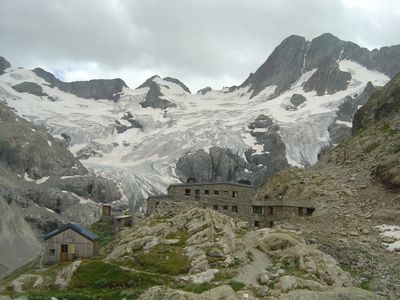
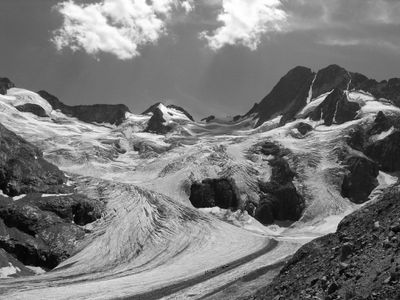
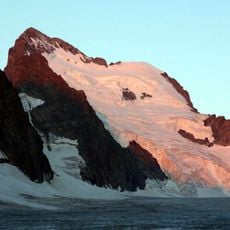
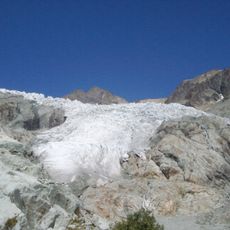
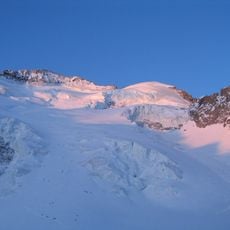
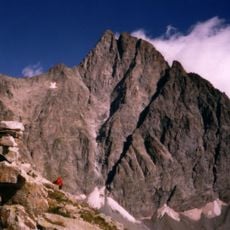
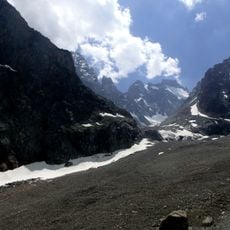
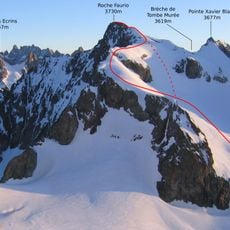
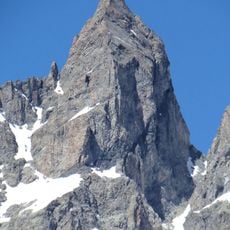
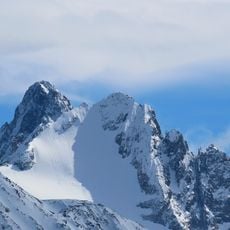
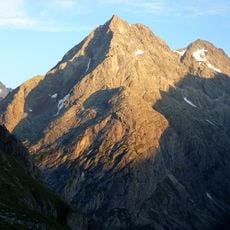
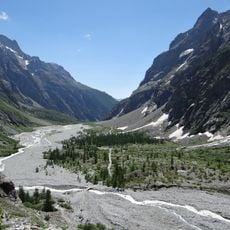
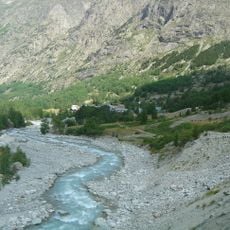
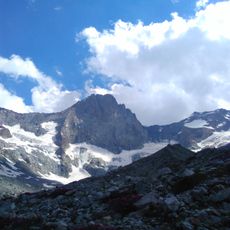
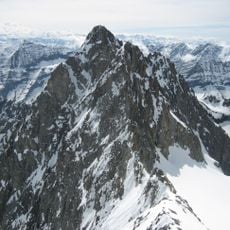
Pilatte Glacier rises in a cirque beneath the Pointe Richardson, Les Bans, Pointe de la Pilatte, Pointe des Bœufs Rouges and Pointe du Sélé, then flows north for about 2.5 km as a valley glacier. Its front, at roughly 2,400 m, gives birth to the Vénéon. The surface is white snow and pale grey ice cut by crevasse lines and dark rocky outcrops, narrowing into a dirtier grey tongue above stone buildings with grey roofs.
In the 20th century, melting of the glacier's terminal tongue, probably linked to climate warming, caused decompression of part of the western flank of Mont Gioberney. A block of about 400,000 m³ was destabilised and set in motion, carrying with it part of the Pilatte refuge built across the fissure. Cracks widened until the building's structural integrity was threatened, leading to its closure, most likely permanent, in 2021.
The glacier serves as a gateway for mountaineers and backcountry skiers who depart across its surface to reach neighboring passes during winter months. Visitors can observe how local mountain guides use this route and explain which paths suit different skill levels.
A marked hiking trail runs from La Berarde to the Pilatte Refuge offering direct access to the glacier through the national park. Visitors should bring proper mountain gear and check weather conditions since alpine conditions change quickly.
The glacier surface has shrunk noticeably over recent decades and is smaller today than it was in the later 1900s. This change makes it a visible example of how climate shifts affect ice masses in the European Alps.
The community of curious travelers
AroundUs brings together thousands of curated places, local tips, and hidden gems, enriched daily by 94,257 contributors worldwide.