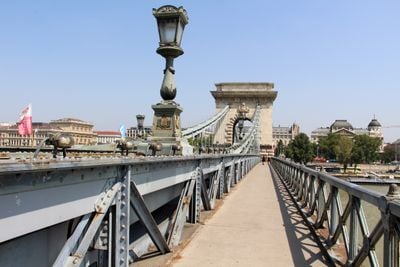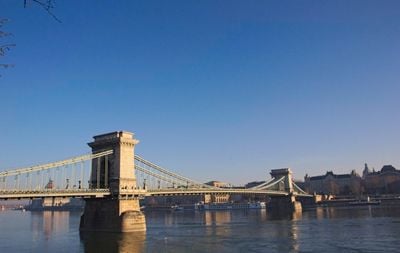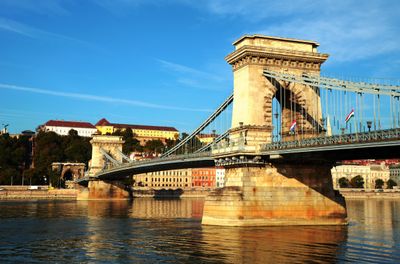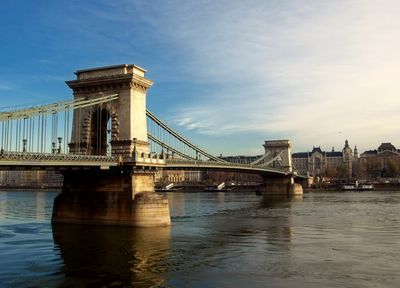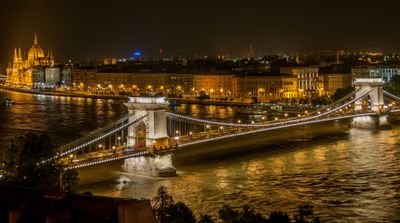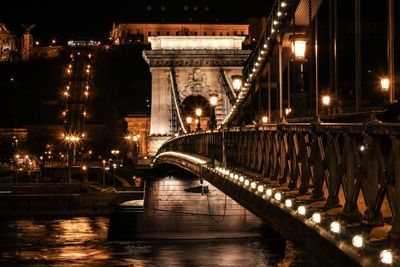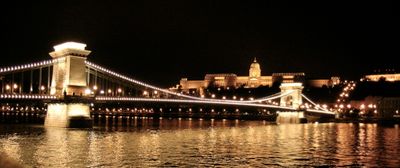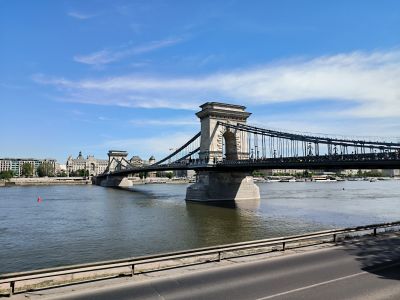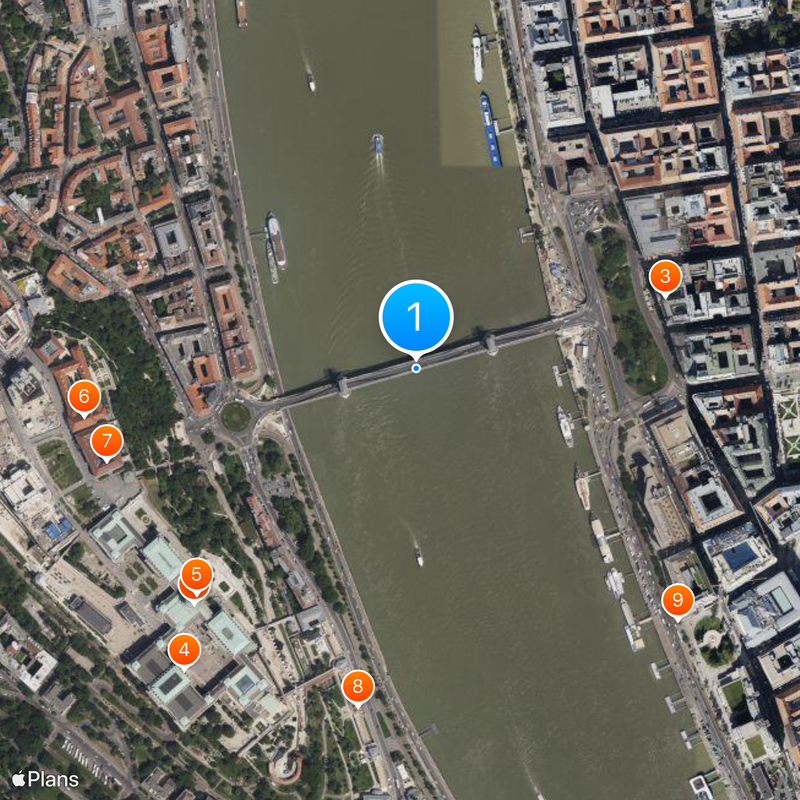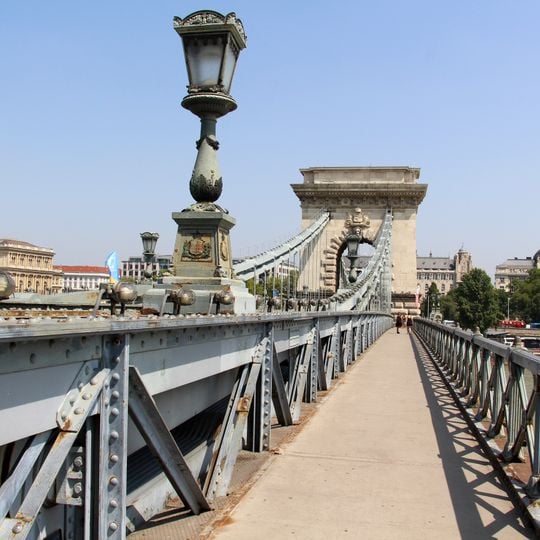
Széchenyi Chain Bridge, Road bridge over Danube River in Budapest, Hungary.
Széchenyi Chain Bridge connects Buda and Pest across the Danube through a system of stone towers and iron chains that support a central span of 202 meters (663 feet). The roadway measures 12.5 meters (41 feet) wide and includes pedestrian walkways on both sides alongside the vehicle lanes.
William Tierney Clark designed this first permanent crossing over the Danube in Hungary, which opened in 1849 and connected Buda with Pest. After heavy damage during World War II, the structure was fully rebuilt in the late 1940s.
Named after Count István Széchenyi, who championed a permanent crossing to replace the ferries that once shuttled between the banks, this structure ended centuries of seasonal interruption. The lion statues guarding both approaches have become one of the city's most recognizable symbols and a popular meeting point for residents.
Pedestrian walkways on both sides allow visitors to cross the full length of 375 meters (1230 feet) on foot and take in views of both banks. In the evening, the structure is illuminated and offers a distinct sight along the river.
The design replicates the Marlow Bridge over the River Thames in England but at a larger scale adapted to the wider waters of the Danube. János Marschalkó created the lion statues at the abutments in 1852, though legend claims he forgot to give them tongues.
Location: Budapest
Inception: 1839
Architects: William Tierney Clark
Official opening: 1849
Architectural style: Renaissance Revival architecture
Length: 375 m
Longest Span: 202 m
Width: 12.5 m
Made from material: stone, iron
GPS coordinates: 47.49889,19.04361
Latest update: December 12, 2025 17:59
Bridges are a part of our daily lives. They have connected banks, valleys, and communities for centuries. This collection presents structures from various periods and regions. From medieval stone arches to modern steel constructions, these works demonstrate the evolution of engineering. The Rialto...
Budapest is a city where history appears at every corner. The Danube River divides the city into two parts: the hilly Buda with its castle and the flatter Pest with its wide streets and squares. Walking through Budapest, you see medieval churches standing beside 19th-century buildings, thermal baths...
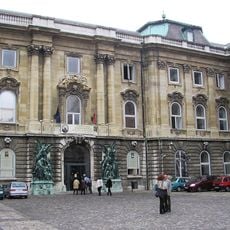
Buda Castle
426 m
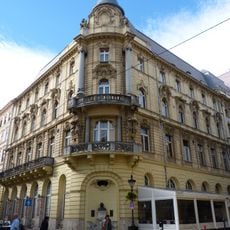
Gresham Palace
342 m
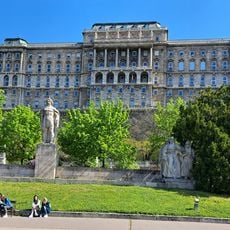
National Széchényi Library
500 m
Hungarian National Gallery
414 m
Carmelite Monastery of Buda
441 m
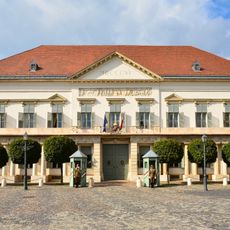
Sándor Palace
425 m
Castle Bazaar
451 m
Little Princess Statue
477 m
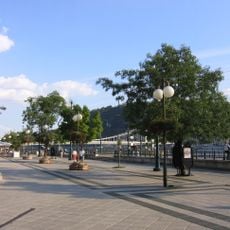
Danube Promenade
528 m
Hungarian National Gallery
408 m
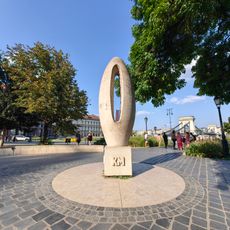
Zero Kilometre Stone
282 m
Buda Castle Tunnel
485 m
Budapest History Museum
448 m
Danube Palace
446 m
Palatinal Crypt
415 m
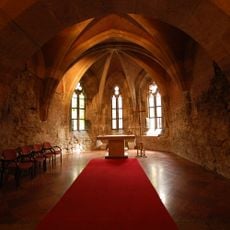
Palace Chapel
415 m
Saint Elizabeth of Hungary Church, Alsó-Víziváros
528 m
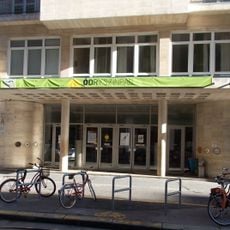
Ódry Színpad
101 m
Institut français de Budapest
387 m
Court Theatre of Buda
464 m
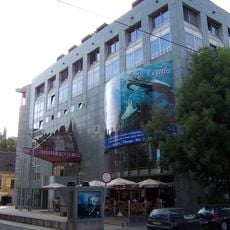
Madame Tussauds Budapest
445 m
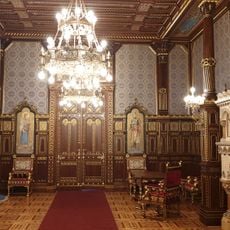
Saint Stephen’s Hall
493 m
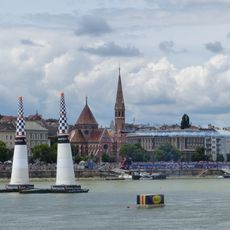
Red Bull Air Race in Budapest
310 m
Galleria nazionale
320 m
Andrássy Palace
340 m
Main building of the Hungarian Academy of Sciences
324 m
Budavári Palota A épület
465 m
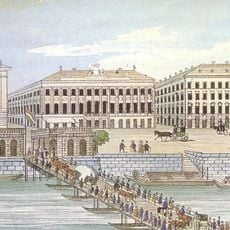
Pontoon bridge between Pest and Buda
457 mVisited this place? Tap the stars to rate it and share your experience / photos with the community! Try now! You can cancel it anytime.
Discover hidden gems everywhere you go!
From secret cafés to breathtaking viewpoints, skip the crowded tourist spots and find places that match your style. Our app makes it easy with voice search, smart filtering, route optimization, and insider tips from travelers worldwide. Download now for the complete mobile experience.
A unique approach to discovering new places❞
— Le Figaro
All the places worth exploring❞
— France Info
A tailor-made excursion in just a few clicks❞
— 20 Minutes