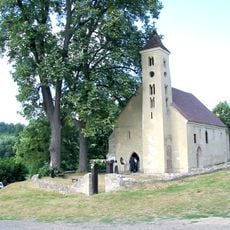
Mánfai Cave, Protected cave in Mánfa, Hungary
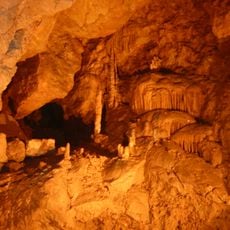
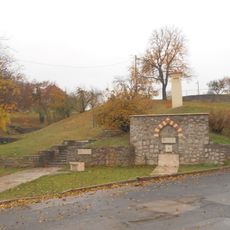
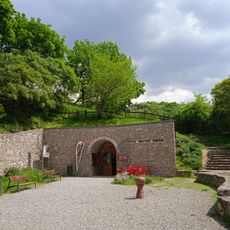
Mánfai Cave opens in Middle Triassic grey Anisian limestone, with dolomite and dolomitic limestone beds visible in places. Its largest entrance is the biggest cave entrance in the Mecsek, leading to an inactive passage about 30 metres long, separated by a wall from the section connected to the waterworks adit. Small cross-section siphons formed because of tectonic conditions and poorly soluble dolomite.
The cave was first documented in 1844 by Miksa Hölbling and later served as a water reservoir for the nearby town of Komló. It has been studied by researchers since 1922, when systematic investigation of the underground system began.
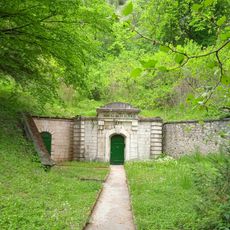
The name Mánfai-kőlyuk was first recorded in 1931; earlier writings called it Kőlyuk, Gyula-barlang and Zichy Gyula-barlang. The cave stream once fed Komló's water supply, and the regulated corridor built for the waterworks has lost its natural state. The Gyula-forrás inside was the stream's original outlet.
Visits require permission from the Duna-Dráva National Park Directorate, and the waterworks section also needs the operator's consent. Tours are limited to two groups per day of at most 20 people each, with basic caving equipment. Access is restricted during the bats' winter rest period.
Gebhardt Antal recorded 159 animal species in the cave: five cave-dwelling, 16 cave guests, 31 cave-loving and 107 cave-visiting species. Among the cave-dwellers are the snail Lartetia Gebhardti, the blind isopod Stenasellus hungaricus robustus, the blind amphipod Niphargus Molnári and two flatworm species first described from here, Dendrocoelides pannonicus and Pilycelis Tóthi.
The community of curious travelers
AroundUs brings together thousands of curated places, local tips, and hidden gems, enriched daily by 94,025 contributors worldwide.