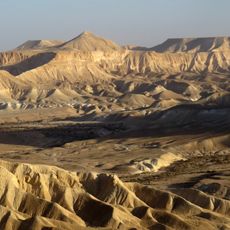
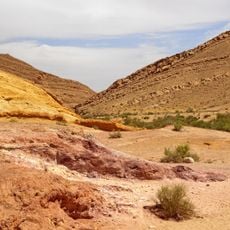
Nekarot fortress, Archaeological site in Negev, Israel.
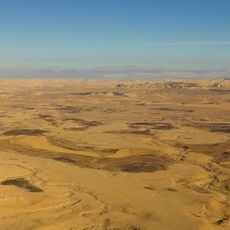
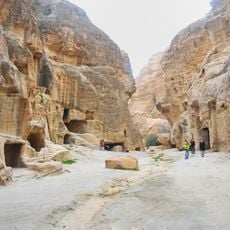
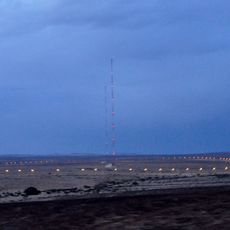
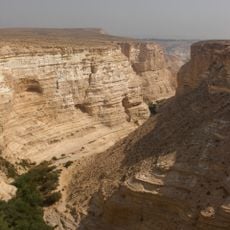
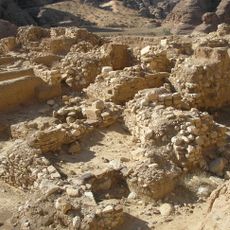
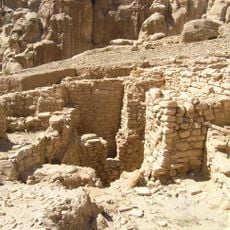
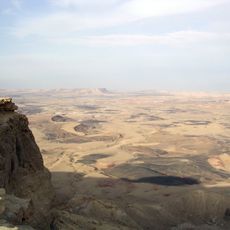
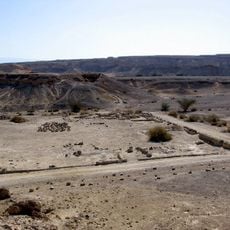
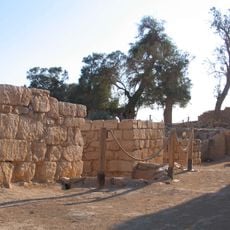
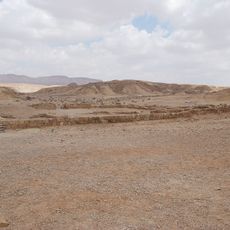
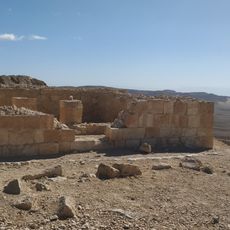
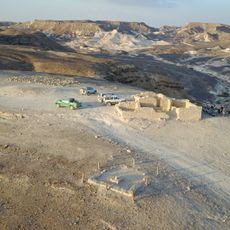
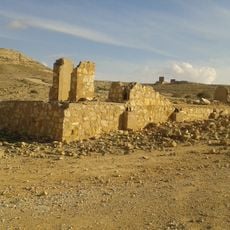
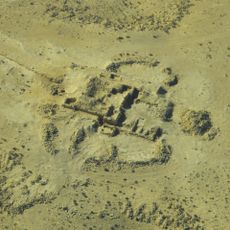
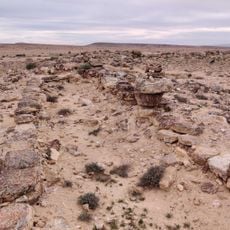
Nekarot fortress is an archaeological site in the Negev desert featuring stone structures, defensive towers and walls positioned along ancient trade routes. The ruins show how the installation was strategically placed to control the movement of goods and people through the wilderness.
The Nabataeans paved the road from Moa to Oboda through Makhtesh Ramon at the end of the 1st century BCE, founding small sites to guard it. Most, including this one, stayed occupied after the Nabataean kingdom was annexed by Rome in 106 CE, until the early 3rd century. In the early Roman period it served as a Nabataean caravan station, later as a Roman guard post.
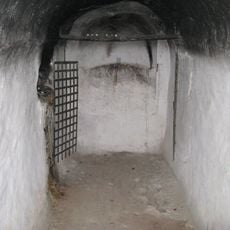
The water pool south of the streambed was not cut into rock but built of ashlar stones against the channel wall, measuring 7x7 m and roofed with flat stone slabs resting on three arches. Its walls were plastered in several layers, and it survives almost intact at its original height, ceiling included.
The site lies in a wadi in the Southern District, about 16 km west of Ẕofar, at roughly 247 m above sea level, with desert hills rising to about 404 m within a kilometre to the east. Summer heat is severe, so carry water and wear sturdy shoes. The water pool stands a few hundred metres from the fortress, up a mountain channel south of the Nekarot streambed.
The water pool stands several hundred metres from the fortress and the road. Because the streambed rock was too hard to cut, the Nabataeans built it against the channel wall in dressed stone, 7 by 7 metres, then covered it with stone and earth to resist water pressure. Its flat stone slabs rest on three arches, and its inner walls carry several coats of plaster.
The community of curious travelers
AroundUs brings together thousands of curated places, local tips, and hidden gems, enriched daily by 93,000 contributors worldwide.