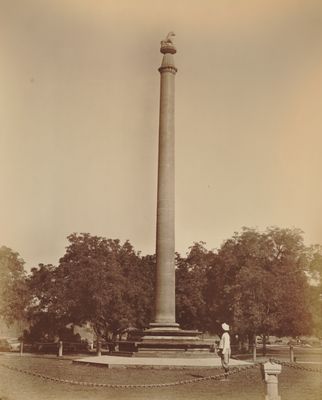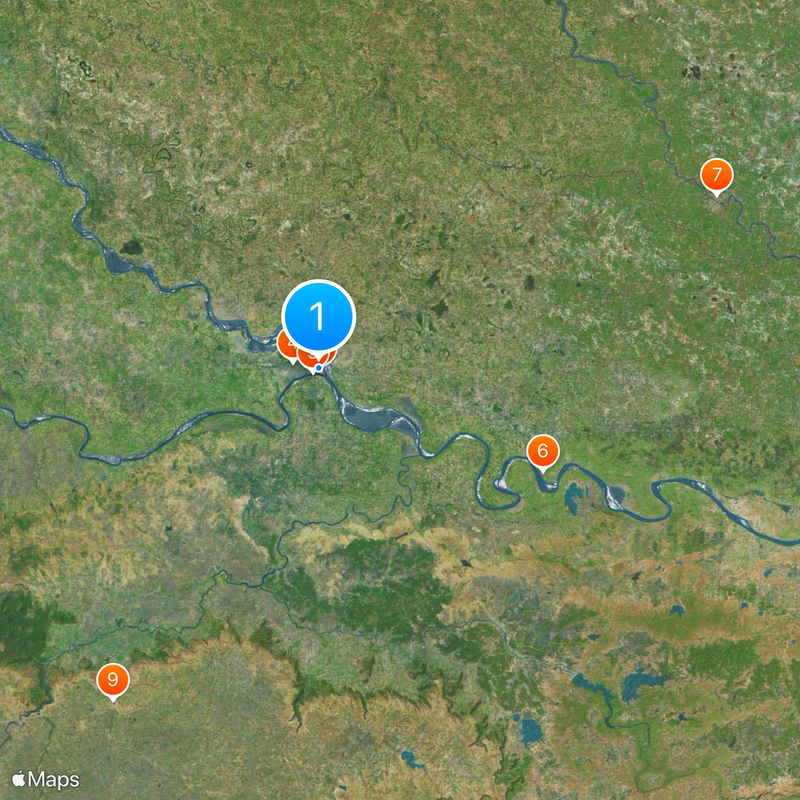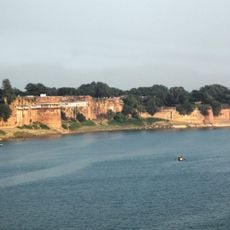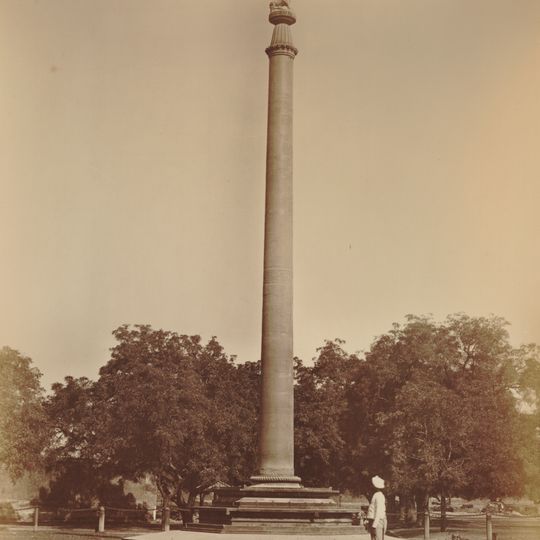
Allahabad Pillar, Sandstone pillar of Ashoka in Allahabad Fort, India.
The Allahabad Pillar is a single polished sandstone shaft 35 feet (10.7 m) high, tapering from a lower diameter of 35 inches (0.9 m) to 26 inches (0.7 m) at the top. Its original bell-shaped capital is lost; the present top was added in 1838 by Captain Edward Smith. A band of Ashokan edict is incised around the lower third, with later inscriptions by Samudragupta and Jahangir above.
The pillar carries three sets of inscriptions: Ashoka's edicts from the 3rd century BCE, the Prayag Prashasti composed by Harishena for Samudragupta in the 4th century CE, and Jahangir's record of his accession in 1605. It was toppled in 1798 and re-erected in 1838 by Captain Edward Smith, who added a new lion capital.
The stone carries inscriptions left by different rulers, showing how successive dynasties chose to record their authority and deeds here. The markings reveal how important this site was to powerful leaders across centuries.
The monument is in a restricted zone and visitors must obtain permission in advance to view it. Daytime visits work best, and you should contact the authorities beforehand to learn about the approval process.
The pillar's minor inscriptions include years and months, and the month is always Magha, the same month that gives its name to the Magh Mela bathing festival. John Irwin cited this in 1979 as evidence that the pillar stood at the confluence long before Ashoka.
The community of curious travelers
AroundUs brings together thousands of curated places, local tips, and hidden gems, enriched daily by 92,780 contributors worldwide.