Amar Mahal Palace, Royal palace museum on Palace Road in Jammu, India
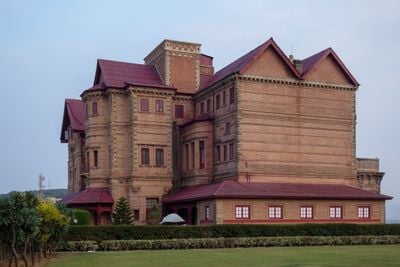
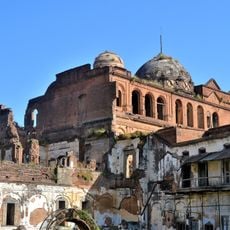
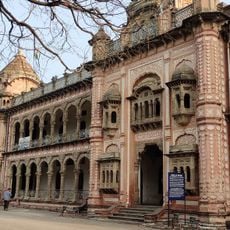
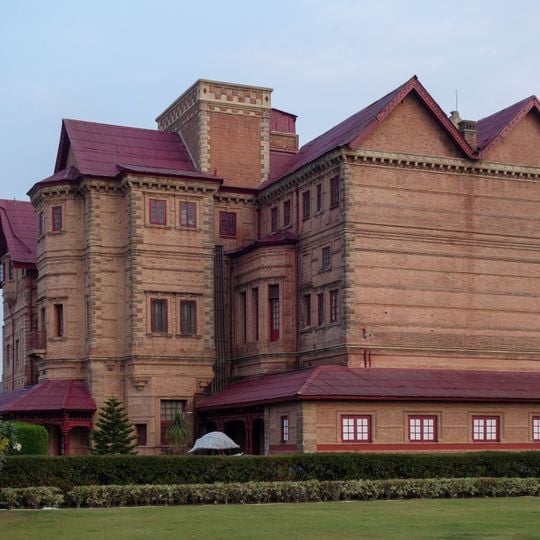
Amar Mahal Palace is a red sandstone building on Palace Road in Jammu, India, now serving as a museum. The architecture recalls Continental castles with turrets, battlements and sloping roofs above the Tawi valley.
The palace was planned in 1862 by a French architect but built only in the 1890s, during the reign of Raja Amar Singh, when it was the tallest building in Jammu. Maharani Tara Devi, widow of Maharaja Hari Singh, lived here until her death in 1967. Her son Karan Singh and his wife Yasho Rajya Lakshmi then transferred the property to the Hari-Tara Charitable Trust and turned it into a museum, inaugurated by Prime Minister Indira Gandhi on 13 April 1975.
The collection displays paintings from the Dogra-Pahari school of the late 18th century, created in Jammu and Himachal Pradesh. These works belong to the Kangra tradition and illustrate religious themes and courtly scenes from the region.
The museum occupies only four rooms of the palace, entered through the Durbar Hall gallery where Dogra family portraits hang. The library and the conserved chambers of Maharani Tara Devi lie on the first and second floors. The golden throne is kept in a locked hexagonal room and is viewed through glass panes.
A golden throne weighing 120 kilograms stands behind glass walls in a hexagonal room. Only four rooms of the museum remain open to visitors while the rest stays closed.
The community of curious travelers
AroundUs brings together thousands of curated places, local tips, and hidden gems, enriched daily by 93,264 contributors worldwide.