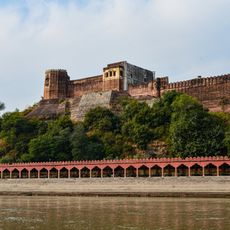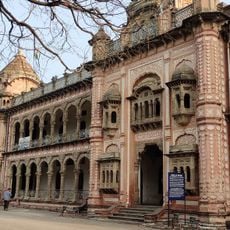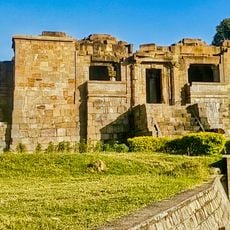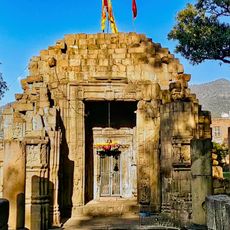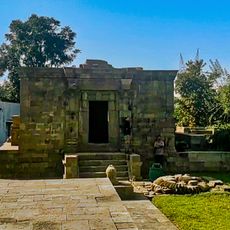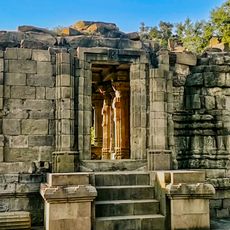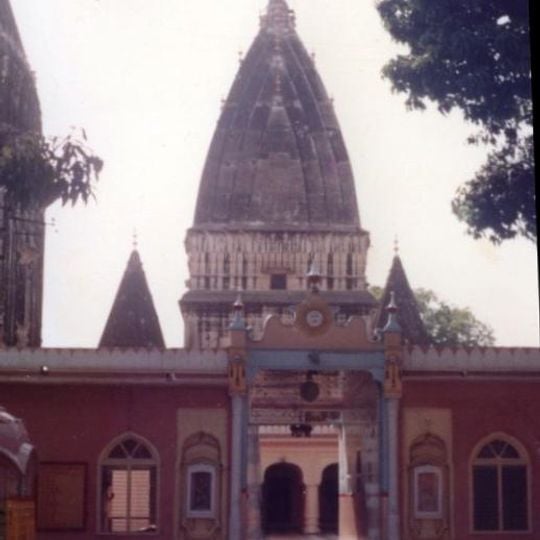
Raghunath Temple, Hindu temple in Jammu, India.
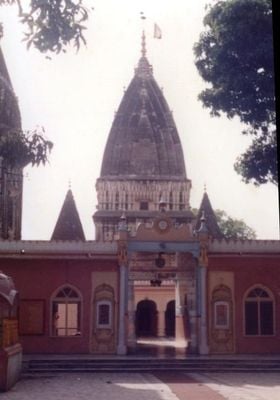
Raghunath Temple is a Hindu complex of seven shrines in Jammu, begun by Maharaja Gulab Singh in 1822 or 1835 and completed by Maharaja Ranbir Singh in 1860. It stands on a raised octagonal platform 1.5 m high, with a 12 m wide front fascia and three entry doors. The main shrine, 6.1 m square, is surrounded by a 3 m circumambulatory passage; its inner chamber is gold plated, and its outer walls carry 15 painted panels, each 2.7 m high, depicting scenes from the Ramayana, Mahabharata and Bhagavad Gita.
A regional ruler began building this temple complex in the 19th century, and his successor continued the work over several decades. The site grew during this long construction period, with additional shrines and courtyards added as the project progressed.
The temple's name honours Rama, called Raghunath, the family deity of the Dogra rulers whose idol stands in the sanctum. The main shrine carries a dome in Sikh architectural style rather than a shikhara, and its 15 wall panels, each 9 feet high, show Jammu School paintings of the Ramayana, Mahabharata and Bhagavad Gita, including the Sita Swayamvara and the saint Kabir weaving.
The temple stands on a raised octagonal platform 1.5 m high in the old part of Jammu, north of the River Tawi. The front fascia is 12 m wide, with three entry doors; the main shrine lies 15 m from the entrance and is ringed by a 3 m circumambulatory passage. The sanctum door faces east.
An extensive collection of old manuscripts is kept in a special room within the complex, including texts written in different scripts and languages. Some of these documents date back centuries and were gathered by scholars over many generations.
The community of curious travelers
AroundUs brings together thousands of curated places, local tips, and hidden gems, enriched daily by 92,790 contributors worldwide.