Halmidi, human settlement in India
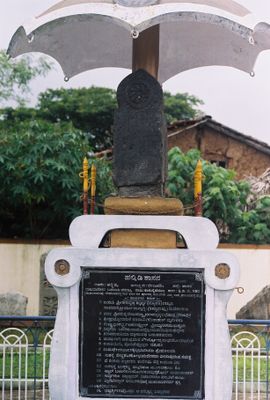
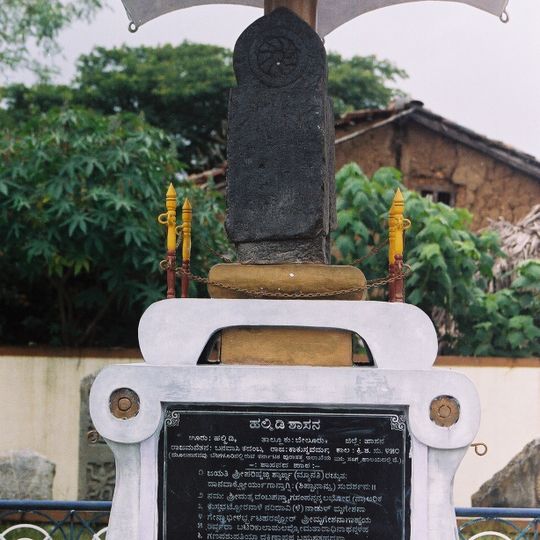
Halmidi is a small village in the Hassan district of Karnataka, India, known for housing the oldest surviving inscription in the Kannada language. The original stone is kept in a museum in Bengaluru, and a replica carved on a sandstone block stands in the village for visitors to see.
The inscription dates to around the 5th century CE and was made under the Kadamba dynasty to record a land grant and the military deeds of King Kakustha. It is one of the earliest known examples of Kannada used as a written language in an official record.
Among Kannada speakers, Halmidi carries a strong sense of pride as the place where their written language first appears in stone. The replica in the village can be read up close, making it possible to observe the old script directly rather than through a photograph or a museum display.
The village is small and easy to walk around, and the replica is not hard to find once you are there. The cooler months between October and January are generally more comfortable for a visit to this part of Karnataka.
The inscription was found in 1936 by Dr. M. H. Krishna, who noticed the carved text while searching through the village without any particular expectation of such a find. Without that chance observation, the stone might have gone unnoticed for much longer.
The community of curious travelers
AroundUs brings together thousands of curated places, local tips, and hidden gems, enriched daily by 92,679 contributors worldwide.