Bundang, Modern administrative district in Seongnam, South Korea.
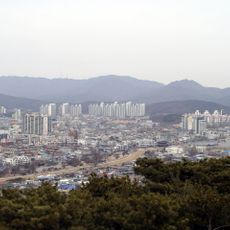
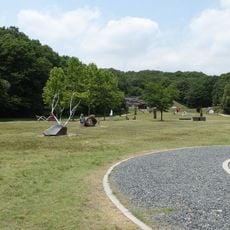
Bundang is a modern district in Seongnam with office towers, residential complexes, and several parks arranged in an organized layout. The area is connected by efficient subway and bus networks throughout.
The district transformed from agricultural farmland with rice fields into a fully planned urban community between 1989 and 1996. This rapid development reflects the construction methods and urban planning approach of that era.
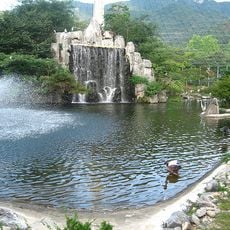
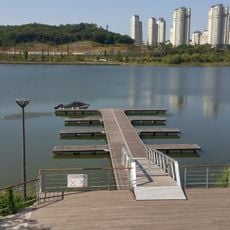
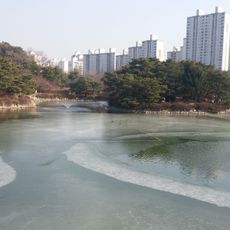
The name Bundang combines the first syllables of Bunjeom-ri and Dangwoo-dong, villages merged in the 1914 administrative reorganization under Japanese rule. Today the district's cafe streets in Jeongja-dong, Baekhyeon-dong and Pangyo's Avenue France, serving brunch and pasta, reflect the many residents who lived overseas. Yuldong Park is built around the Bundang lake.
The district connects to Seoul and surrounding areas through two subway lines, the Bundang and Shinbundang lines, plus numerous bus routes. Expressway access points provide convenient driving options as well.
Bundang was South Korea's first and largest fully artificial city, planned from 1989 and built along a ten-kilometre strip of the Gyeongbu Expressway. Construction ran from 30 August 1989 to 31 December 1996 and cost 4.16 trillion won. The name Bundang was coined in 1914 by joining the first syllables of Bunjeom-ri and Dangu-dong.
The community of curious travelers
AroundUs brings together thousands of curated places, local tips, and hidden gems, enriched daily by 93,465 contributors worldwide.