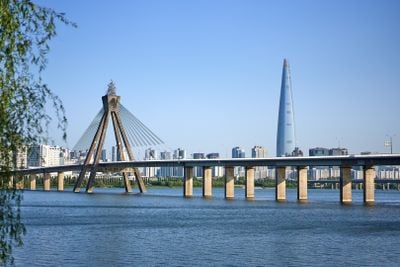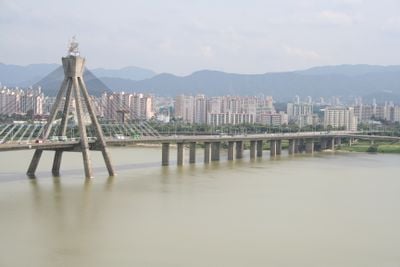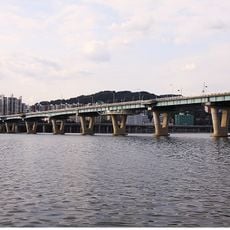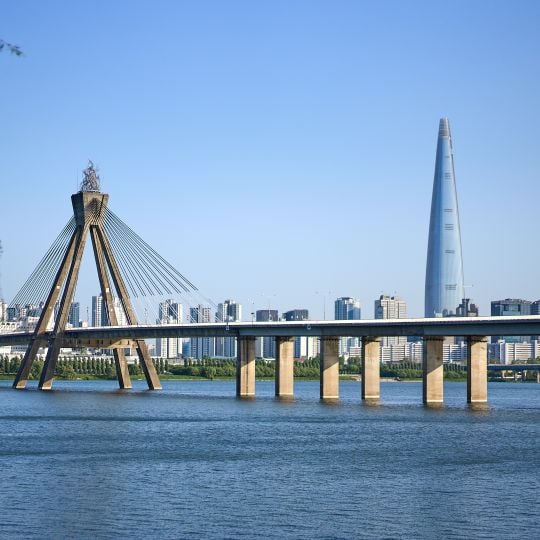
Olympic Bridge, Road bridge across Han River in Seoul, South Korea.
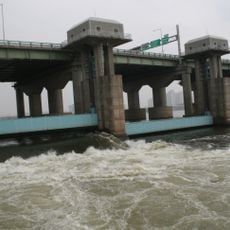
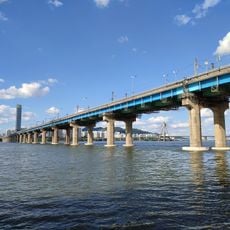
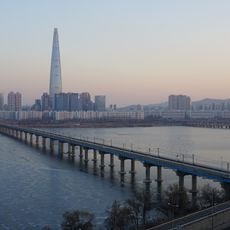
The Olympic Bridge is a road bridge that crosses the Han River and connects the districts of Gwangjin and Songpa with a steel and concrete structure. It has multiple lanes for traffic and is traveled daily by thousands of vehicles moving between eastern parts of the city.
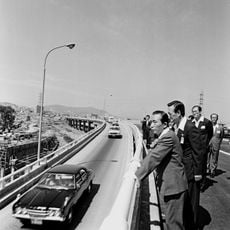
A design contest for the bridge was held from 1984, with the winning design chosen by April 1985, and construction began in November 1985. The opening came on November 15, 1989, after the 1988 Seoul Olympics, delayed when part of the foundation collapsed. The bridge was built to handle rising traffic in the Gangdong area and was South Korea's first cable-stayed bridge.
The bridge takes its name from the 1988 Seoul Olympics and symbolizes the ambitious infrastructure projects of that era. It shapes the city skyline and is a daily sight for commuters and visitors crossing between eastern districts.
The bridge carries road traffic between Gwangjin's Gwangjang-dong and Songpa's Pungnap-dong, and pedestrians cross on the sidewalks beside the railings. The four central pylons rise 88 m, and the deck is 30 m wide over a total length of 1,470 m. Riverside paths on both banks give views of the cable-stayed span.
The four 88-metre pylons at the centre of the bridge were built to commemorate the 1988 Seoul Olympics. On 29 May 2001 a CH-47D Chinook of the ROK Army crashed while lowering a 13-metre, 10.8-tonne sculpture shaped like an Olympic flame onto the central pylon; all three crew members died.
The community of curious travelers
AroundUs brings together thousands of curated places, local tips, and hidden gems, enriched daily by 93,446 contributors worldwide.