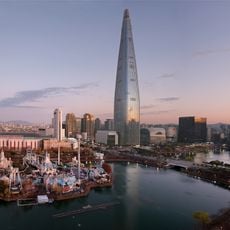
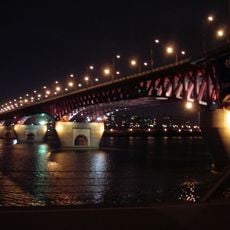
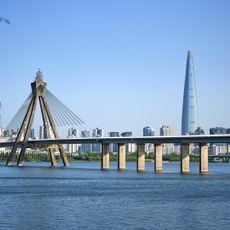
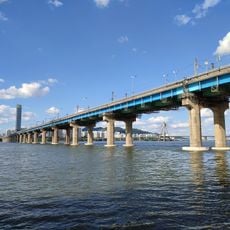
Cheongdam Bridge, Combined road and rail bridge across Han River in Seoul, South Korea.
Cheongdam Bridge is a combined road and rail structure that spans the Han River, connecting Gwangjin and Gangnam districts in Seoul. The bridge is over 1,200 meters long with vehicle lanes on the upper level and railway tracks positioned underneath.
The bridge originated in the 1989 second-phase subway plan, which first proposed a subaqueous tunnel for Line 7 at this location; the tunnel was cancelled over air-pollution concerns for Ttukseom Resort and budget and land-compensation issues. It was merged with a planned Dongbu Expressway crossing between Yeongdong and Jamsil bridges. Construction started on 31 December 1993; the road deck opened on 23 December 1999 and the Line 7 rail deck on 1 August 2000.
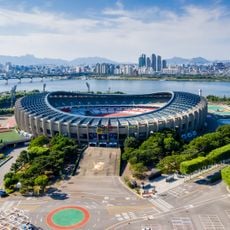
The bridge's name comes from Cheongdam-dong, the Gangnam-side neighbourhood it lands in; its Gwangjin end is Jayang-dong. Its underside carries Line 7 between Cheongdam and Jayang stations, so subway riders cross the Han beneath the road deck. On the Ttukseom park side, the bridge connects to the Ttukseom lookout culture complex, a caterpillar-shaped building linked to Ttukseom Resort Station exit 3.
Pedestrians cannot use the bridge directly as it is reserved for vehicles and trains only. The best views are from nearby riverbanks or from other crossings where you can observe the full structure.
The bridge's double-deck design came from a cancelled plan: Line 7 was to run in a subaqueous tunnel, but the city opposed it over feared air pollution near Ttukseom Resort. The tunnel was dropped and the subway line was merged with the Dongbu Expressway crossing, producing South Korea's first duplex bridge. Its 1,211 m span opened to road traffic on 23 December 1999 and to trains on 1 August 2000.
The community of curious travelers
AroundUs brings together thousands of curated places, local tips, and hidden gems, enriched daily by 93,469 contributors worldwide.