Haemieupseong, Historic fortress in Seosan, South Korea.
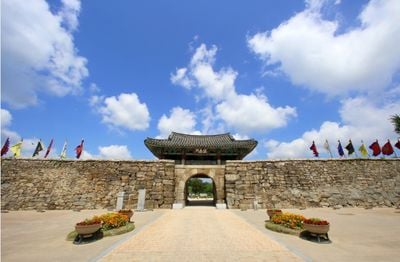
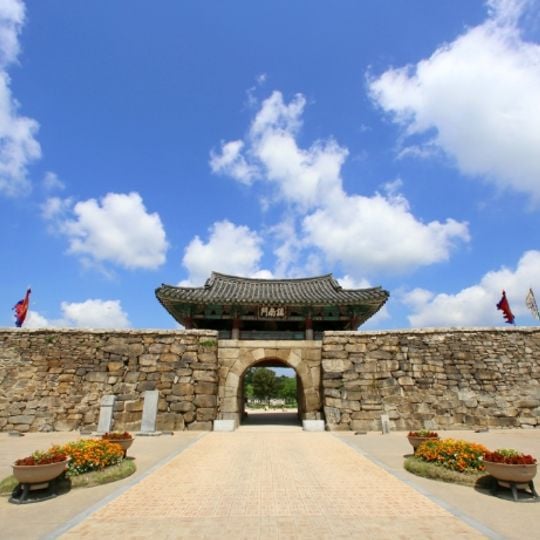
Haemieupseong is a Joseon-era fortress in Haemi-eup, Seosan, with a 1,800-meter stone wall about 5 meters high and a 2-meter-deep moat outside it. Its oval plan follows a flat site. At the south center stands the two-story Gwanamun gate, also called Jinnammun, with a wooden pavilion above its arch. Inside are the Dongheon, Gaeksa, Naea, and a 300-year-old pagoda tree.
The fortress was built between 1417 and 1421 during the Joseon Dynasty as a military command center against naval attacks. It later served as a defensive stronghold during periods of conflict and upheaval in the region.
The name Haemieupseong combines the characters for "sea" and "beauty", taken from the two counties merged in 1407. Each October the fortress hosts a history-experience festival, and from April to October traditional performances are staged inside the walls. A 300-year-old pagoda tree (hoehwa namu) near the prison is said to have been used to torture Catholics during the 1866 persecution.
The fortress is open from 05:00 to 21:00 in summer and from 06:00 to 19:00 in winter. The wall circuit is 1,800 metres long and 5 metres high, with a flat walkway on top; the inner grounds are mostly level, with slopes at the gates and ramps.
Visitors can participate in traditional Korean activities such as archery and wrestling within the fortress grounds, bringing ancient practices to life. These hands-on experiences connect the past directly to modern visitors.
The community of curious travelers
AroundUs brings together thousands of curated places, local tips, and hidden gems, enriched daily by 93,795 contributors worldwide.