Ganwolam, Buddhist hermitage in Buseok-myeon, South Korea
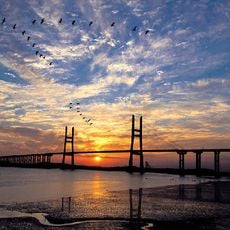
Ganwolam is a hermitage built upon a large rock formation near Cheonsu Bay. The structure provides views across surrounding waters and coastal landscapes, and becomes isolated by water during high tide.
Muhak, a monk at the start of the Joseon dynasty, is credited by tradition with founding the hermitage; a legend says he prepared salted baby oysters here and presented them to King Taejo. The 1530 Sinjeung Dongguk Yeoji Seungnam mentions only Ganwoldo, not the hermitage, so it was likely built later in the Joseon period. It was abandoned at the end of Joseon and rebuilt in 1914 by the monk Mangong.
The name Ganwolam (看月庵) means "hermitage for viewing the moon." Legend holds that the monk Muhak, who practiced here, presented salted baby oysters (eoriguljeot) to King Taejo, the founder of Joseon. The hermitage keeps a wooden seated Bodhisattva statue, Chungcheongnam-do Tangible Cultural Property No. 184, enshrined in the Gwaneum hall.
Check tide schedules before visiting, as the hermitage becomes an island at high tide and connects to the mainland through a walkable path at low tide. Understanding these conditions is essential for planning a safe visit.
The wooden seated Bodhisattva in the Gwaneum hall was made around 1600 and named Chungcheongnam-do Tangible Cultural Property No. 184 on 20 September 2007. Its slim oval face, tall topknot and soft drapery differ from the more rigid post-Imjin War statues. The figure has a wood-and-paper frame covered with gilding.
The community of curious travelers
AroundUs brings together thousands of curated places, local tips, and hidden gems, enriched daily by 94,430 contributors worldwide.