Ulsan Castle, Japanese fortification in Hakseong-dong, Ulsan, South Korea
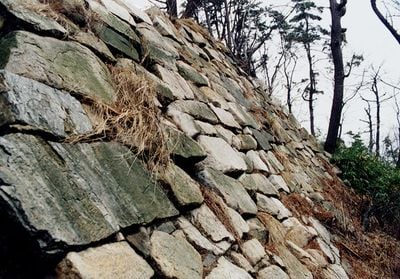
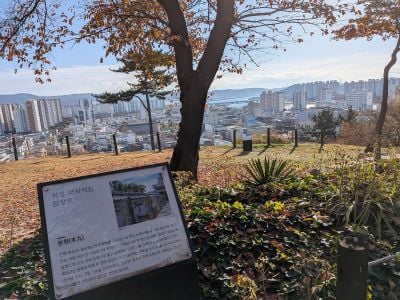
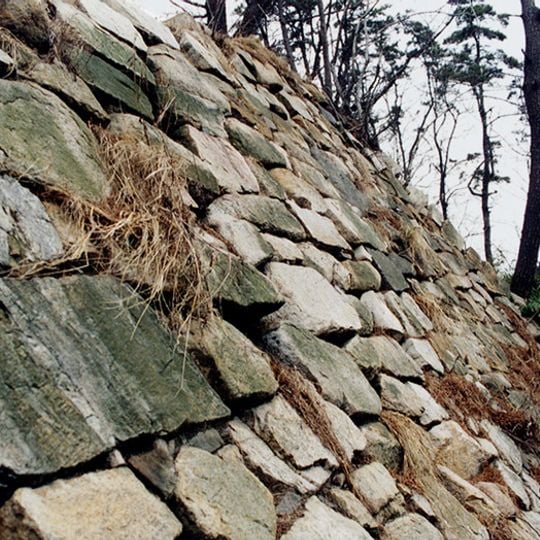
Ulsan Castle is a Japanese-style hilltop fortress on a 50-metre hill in Hakseong-dong, Ulsan. Its honmaru, ninomaru and sannomaru were enclosed by stone walls 10 to 15 metres high, totalling about 1,300 metres, with 12 yagura watchtowers. The walls were built with large dressed stones over a stepped core of packed rubble, a technique combining Japanese and Korean methods. Remains of the honmaru walls and riverside traces survive in Hakseong Park.
Katō Kiyomasa planned the castle and work began in late 1597 under Ōta Kazuyoshi, with Mori Hidemoto, Asano Yoshinaga and Kiyomasa's troops building it in about 40 days; stone from Byeongyeong and Ulsan town walls was reused. In December a Ming-Korean army of nearly 60,000 besieged the unfinished castle; the garrison held until relief forces arrived and routed the allies. A second attack in 1598 was also repelled, but the Japanese burned the castle in November 1598 after Toyotomi Hideyoshi's death.
The castle shows how Japanese soldiers maintained control over the southern Korean coast through military strongholds. Visitors can still see the remains of this defense installation that served as a key outpost during the occupation.
The site has limited accessibility due to surrounding urban development and is partially integrated into modern city structures. Visitors should coordinate with local authorities in advance to view the remaining structures and potentially join a guided tour.
The fortress's weakness during the 1597 siege, when the besieged Japanese ran out of food and water, taught Katō Kiyomasa a lesson he later applied at Kumamoto Castle, where he had about 120 wells dug and tatami mats made from edible taro stems.
The community of curious travelers
AroundUs brings together thousands of curated places, local tips, and hidden gems, enriched daily by 93,467 contributors worldwide.