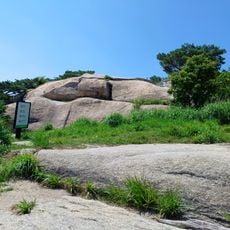
Bukhansan, Mountain peak in northern Seoul, South Korea.
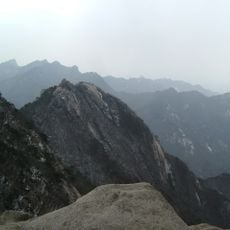
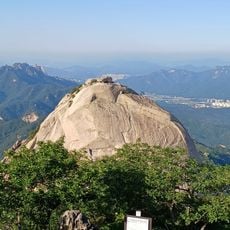
Bukhansan is a mountain in northern Seoul with three granite peaks: Baegundae, Insubong, and Mangyeongdae form a natural boundary above the capital. Dense forest covers the slopes, while steep rock faces and narrow ridges mark the upper sections.
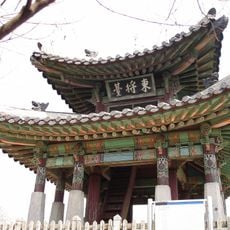
During the Joseon Dynasty the mountain marked the northern boundary of Seoul and housed fortifications to protect the capital. Remnants of old fortress walls and gates still stand along the ridges today.
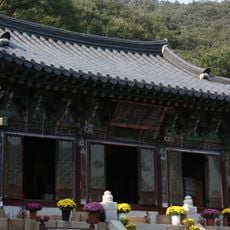
Buddhist monks once regarded the peaks as sacred places for retreat and meditation in secluded valleys. Today families and hikers follow the same paths, often pausing at temples tucked between rock formations.
Trails begin at several entrances reachable by public transport and range from easy paths to demanding climbing routes. Good shoes and enough water matter, as some sections grow steep and rocky.
Bukhansan National Park was designated in 1983 as South Korea's 15th national park, covering about 77.334 km2 across Seoul and Gyeonggi Province. It is split by the Uiryeong ridge into the Bukhansan area to the south and the Dobongsan area to the north. The park's granite is Seoul granite, dated by Park Byeong-gwon in 1972 to 160±10 million years.
The community of curious travelers
AroundUs brings together thousands of curated places, local tips, and hidden gems, enriched daily by 93,469 contributors worldwide.