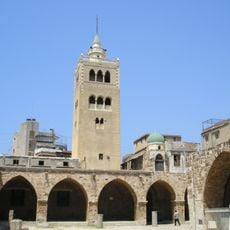
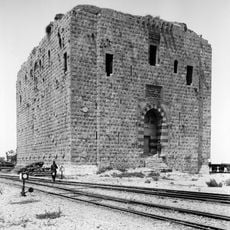
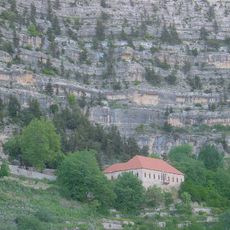
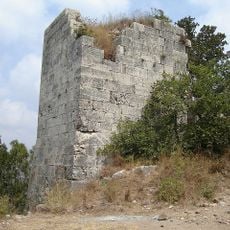
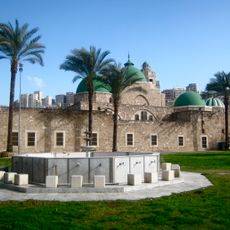
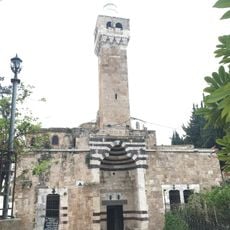
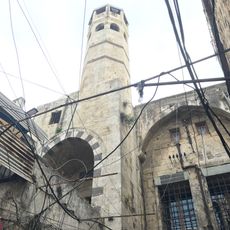
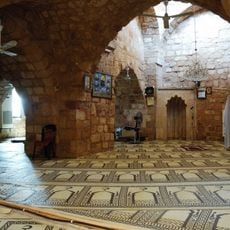
Tell Arqa, Archaeological site in Akkar District, Lebanon.
Tell Arqa is an archaeological site in Akkar District containing nearly 9,000 years of occupation from the Neolithic period through the Crusader era. The excavations reveal different layers stacked on top of each other, each showing a different time and culture.
The earliest excavated levels date to the Early Bronze Age II (2800–2650 BC), when the settlement was already a structured small urban centre. A destruction by fire around 2300 BC preserved houses over three metres high, with cedar and palm wood beams and dozens of pottery vessels found in place. In the Late Bronze Age the town was destroyed by Thutmose III around 1450 BC. In the Amarna letters the elders of Irqata wrote to Pharaoh Akhenaten asking for help against the Apiru. The Roman city, called Arca Caesarea, was the birthplace of Emperor Severus Alexander in 208. Crusader forces besieged Arqa in 1099 and took it in 1108; the Mamluk sultan Baybars captured it in 1266.
The pottery and building remains from the Bronze Age show this was a major trading hub connected to Cyprus and other Mediterranean regions. You can see in the excavation layers how much exchange happened between different cultures.
Tell Arqa lies near the village of Minyara, about 12 km northeast of Tripoli according to the French source, while the Italian source puts it roughly 20 km from the city and about 1 km west of Miniara. The tell rises above the river that runs at the foot of the hill, and the surrounding plain is cultivated alluvial land. Excavations were carried out in 1978-1981 and again from 1992 to 1998.
The site's name appears in the Amarna letters: the elders of Irqata wrote to Pharaoh Akhenaten asking for help against the Habiru attacks. The letter is among the diplomatic tablets found at Tell el-Amarna in Egypt.
The community of curious travelers
AroundUs brings together thousands of curated places, local tips, and hidden gems, enriched daily by 93,528 contributors worldwide.