Bundala National Park, Biosphere reserve and national park in Southern Province, Sri Lanka
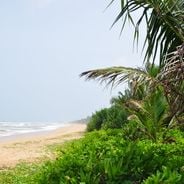
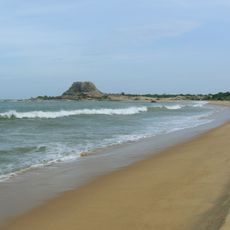
Bundala National Park is a protected area with coastal wetlands, lagoons, and sandy beaches stretching roughly 20 kilometers along the southern coast. The landscape features flat water surfaces and marshland used by a range of bird and marine species.
The protected area began as a wildlife sanctuary in 1969 and was later recognized in 1991 as Sri Lanka's first Ramsar wetland site. Its designation as a national park in 1993 reflected growing recognition of the ecological importance of this coastal region.
The park's name comes from the nearby village of Bundala, whose Palu tree forest on the sand dunes east of the village is a forest type found nowhere else in Sri Lanka. The lagoons at Koholankala and Mahalewaya are almost entirely developed for salt production, a long-standing local use of the wetlands. In 2005 the Department of Wildlife Conservation and the Field Ornithology Group of Sri Lanka launched the National Bird Ringing Programme here.
The park lies 245 km southeast of Colombo, with the dry season running from May to September and annual rainfall of 900–1,300 mm. The terrain is flat, from sea level to 10 metres, and humidity averages 80%. Bird numbers peak when migratory species arrive for the northern winter, so plan drives around the lagoons then.
All five marine turtle species recorded in Sri Lanka lay eggs on the beach beside the park, according to the Russian-language source. The park also shelters two crocodile species, the saltwater crocodile and the marsh crocodile, alongside two endemic reptiles: the toad Bufo atukoralei and the snake Xenochrophis asperrimus.
The community of curious travelers
AroundUs brings together thousands of curated places, local tips, and hidden gems, enriched daily by 93,553 contributors worldwide.