Lunugamvehera National Park, National park in southern Sri Lanka.
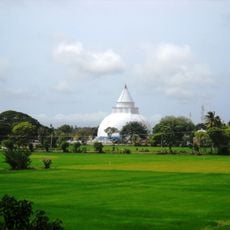
Lunugamvehera National Park covers 23,498 hectares in Sri Lanka's dry zone, at an elevation of 91 metres. Its forest is a mosaic of scrubland and grassland with layered tree cover, and 3,283 hectares of the park lie under the Lunugamvehera reservoir, with two smaller reservoirs adding 50 hectares.
The park was established in 1995 by the Sri Lankan government to protect the water catchment of the reservoir and preserve local wildlife populations. This designation marked the beginning of formal protection for this important ecological area.
The park serves as a vital passage for animals moving between two other major protected areas, reflecting Sri Lanka's commitment to wildlife protection. This role as a connecting corridor between different habitats is visible to visitors through the variety of wildlife encounters throughout the visit.
The park lies 261 km southwest of Colombo, in Sri Lanka's dry zone, where annual drought is relieved by the southwest monsoon and the mean temperature is 30 °C. The reservoir covers 3,283 ha of the 23,498 ha total, with two smaller tanks adding 50 ha. Rainfall decreases from north to south and west to east, and the nearby Thanamalvila area receives about 1,000 mm a year.
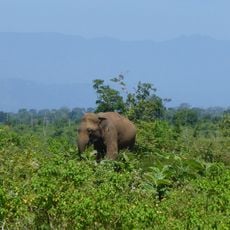
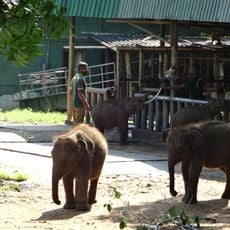
Lunugamvehera is one of the protected areas where the tufted gray langur lives in the wild. The park also recorded 21 fish species, 12 amphibians, 33 reptiles, 183 birds and 43 mammals. Reports note that several translocated elephants have starved to death here.
The community of curious travelers
AroundUs brings together thousands of curated places, local tips, and hidden gems, enriched daily by 93,635 contributors worldwide.