Vänern, Lake in central Sweden
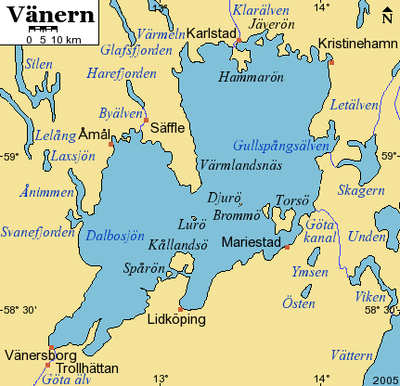
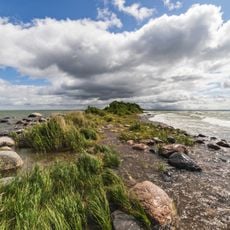
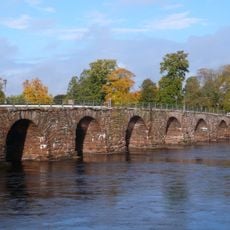
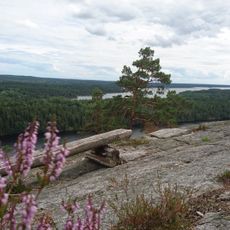
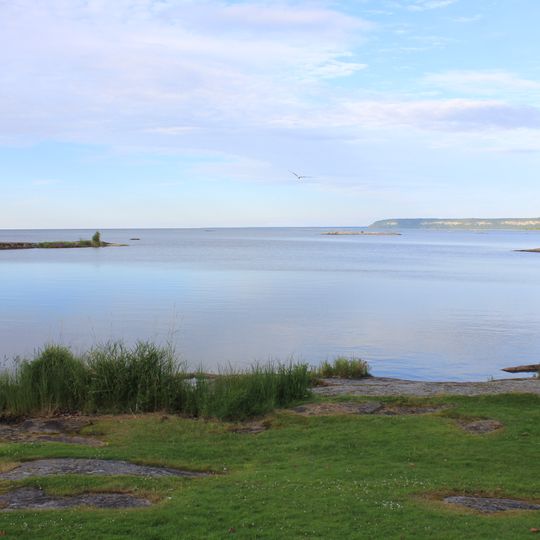
Vänern is a lake in southwestern Sweden, bordered by Värmland, Dalsland and Västergötland. It covers 5,655 km², reaches 106 m deep and lies 44 m above sea level. A chain of islands between Kållandsö and Värmlandsnäs divides it into the western Dalbosjön and eastern Värmlandsjön. Its branching shoreline forms many bays and inlets, with a small island in the open water.
Vänern reached its present form about 10,000 years ago after the Quaternary glaciation, when melting ice left a strait between the Kattegat and the Gulf of Bothnia. Post-glacial rebound later cut the lake off from the Baltic; a former link at Degerfors, Värmland, explains freshwater species such as the amphipod Monoporeia affinis. The southeastern basin was shaped by erosion of Paleozoic sedimentary rock, and the western shore follows the Vänern-Göta Fault.
The name Vänern appears as Lacus Wener in a document from 932 and as Væni in 12th-century transcriptions; it may derive from Old Swedish vænir, linked to vån ('hope') or vän ('beautiful'). In local speech the name always carries grave accent (accent 2), while elsewhere it often takes acute accent (accent 1).
Sport fishing is free and unregulated from shore and from boats, with a limit of three salmon or trout per person per day; commercial fishing needs permission. Bird skerries are protected: approach no closer than 100 m between 1 April and 31 July. The water level is regulated by the Vargön hydroelectric power station, and some bays suffer from eutrophication and overgrowth of algae.
Archaeologists discovered a well-preserved Viking ship on the lakebed in 2009 that remains there today, offering insight into Nordic seafaring over a thousand years ago. The ship stays underwater because raising it could cause damage.
The community of curious travelers
AroundUs brings together thousands of curated places, local tips, and hidden gems, enriched daily by 94,123 contributors worldwide.