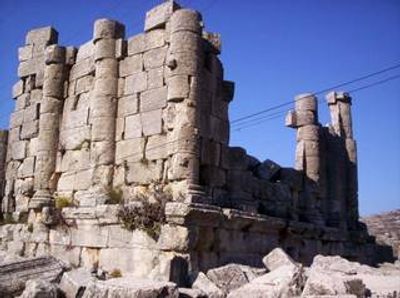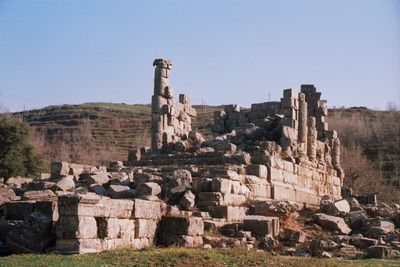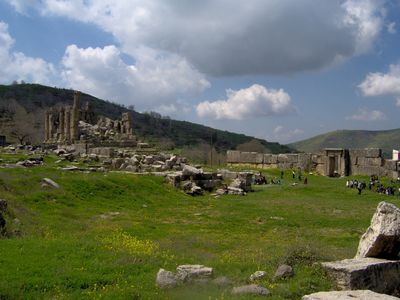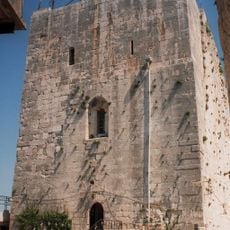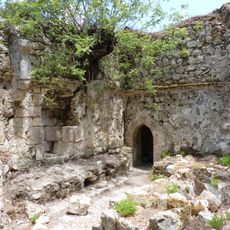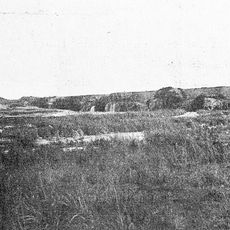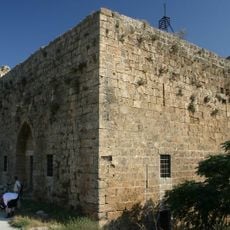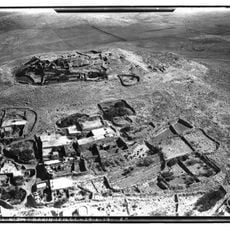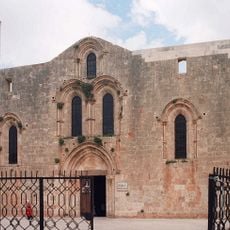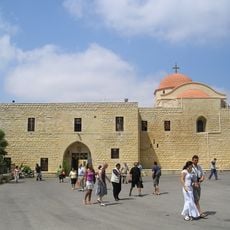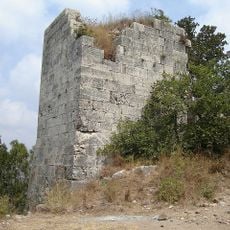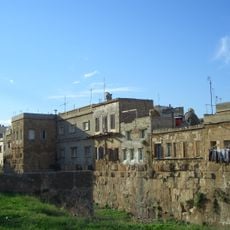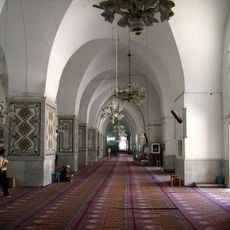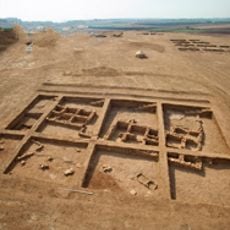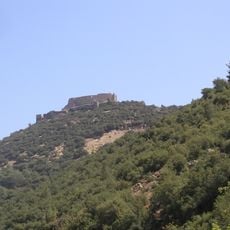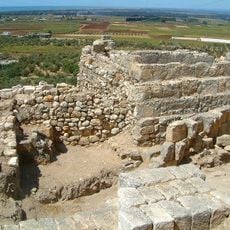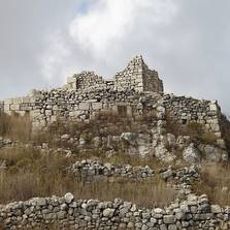
Hosn Suleiman, Archaeological site in Safita District, Syria.
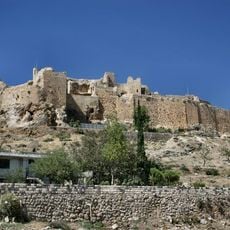
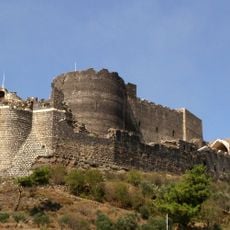
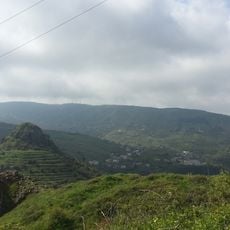
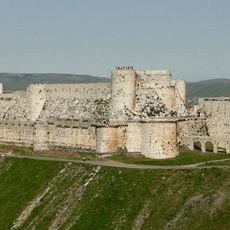
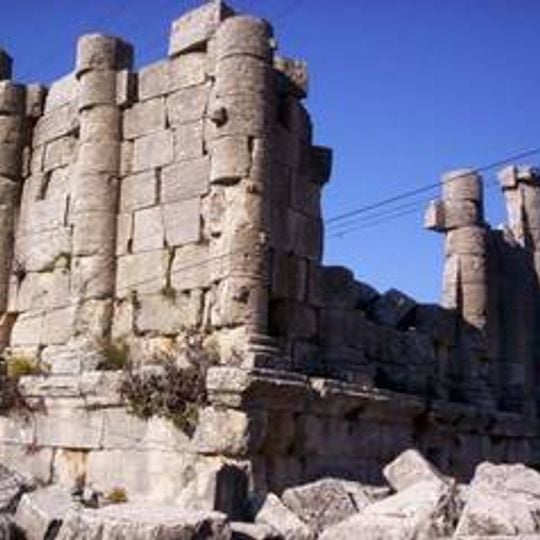
Hosn Suleiman is an archaeological site in the Safita District of western Syria, made up of massive stone walls, towers, and the remains of an ancient temple dedicated to Zeus. The complex sits on Al-Nabi Saleh mountain and is surrounded by rural countryside.
The site was known as Baetocaece during the Hellenistic period and grew into a major sanctuary from the 2nd century BC under Seleucid rule. It continued to be used as a religious center through the following centuries under several ancient powers.
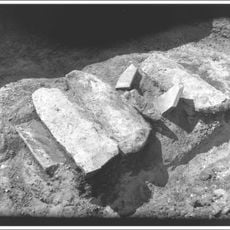
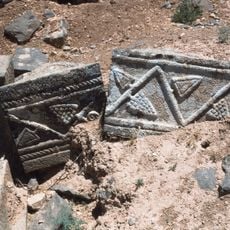
Greek and Latin inscriptions carved into the stone walls record the privileges that different rulers granted to the sanctuary over the centuries. These texts are still readable today and offer a direct connection to the people who once governed this place.
The site sits in a rural mountain area of western Syria and is reached by regional roads. The ground is uneven throughout, so sturdy footwear is helpful when walking among the ruins.
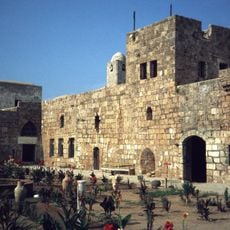
Some of the stone blocks used here are among the largest ever found in Syria, second only to those at Baalbek. What surprises many visitors is that some of these blocks were clearly taken from older structures and reused when the temple was built or expanded.
The community of curious travelers
AroundUs brings together thousands of curated places, local tips, and hidden gems, enriched daily by 91,256 contributors worldwide.