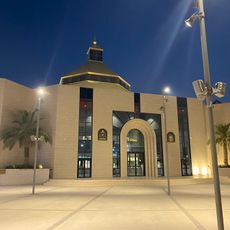
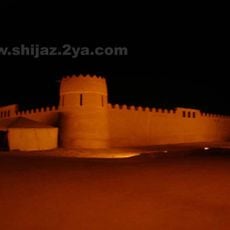
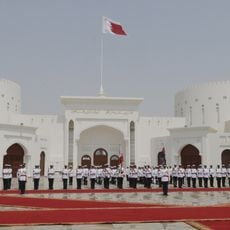
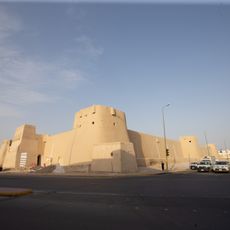
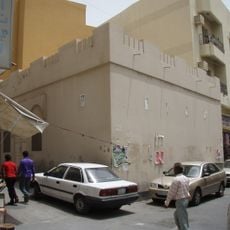
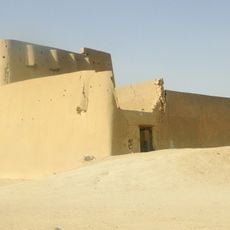
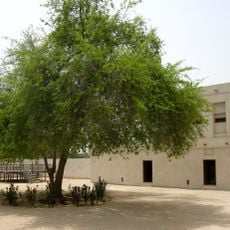
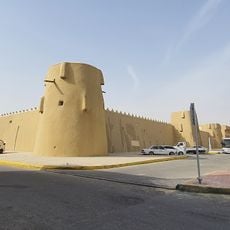
Qasr Ibrahim, Ottoman fort in Al-Hofuf, Saudi Arabia.
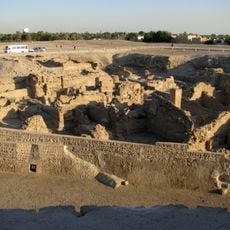
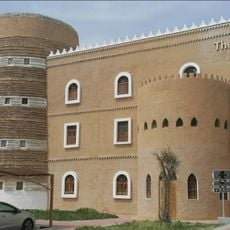
Qasr Ibrahim is a fortress in Al-Hofuf with thick walls made from mud and straw reinforced by palm trunks in the ceiling structure. The building displays semi-circular arches, Islamic domes, and a minaret influenced by Turkish designs from the 16th century.
The fortress was established in 1556 by Ali Ibn Ahmed Ibn Lawand Al-Burayki and later served as a Turkish military base. King Abdul-Aziz Al Saud captured the building in 1913, marking a turning point in its history.
The palace carries several names: Dome Palace and AlQoat Palace, while the name Ibrahim is variously traced to Ottoman commander Ibrahim Pasha or to Ibrahim Ibn 'Ufaysan, who renovated the castle in 1801. Its mosque, with a large dome and a stone minaret reached by a spiral staircase, is one of the 12 sites listed in the UNESCO Cultural Landscape of Al-Ahsa Oasis in 2018.
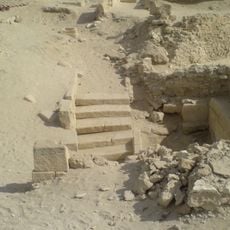
The entrance lies in the middle of the western wall, with a ground-level guardroom and a second room above it reached by the well stair. The well in the same wall is 15 to 20 metres deep, and a guard tower stands beside it. The prayer hall of the mosque has a second mihrab on its east side used in summer.
The building features strategically placed observation windows that allowed soldiers to monitor all activity outside the fortified perimeter. These windows remain visible today and show the military planning that went into the original construction.
The community of curious travelers
AroundUs brings together thousands of curated places, local tips, and hidden gems, enriched daily by 94,701 contributors worldwide.