See the monuments around you in AROpen chests in the app
Around Us is built for your phone — point your camera at the streets and discover the monuments and places around you in augmented reality.Around Us is built for your phone — chests unlock when you walk, explore and capture nearby places.
Southern Japan holds layers of history, natural power, and tradition waiting to be discovered.
Southern Japan invites travelers to discover a region where history runs deep and nature commands attention. Kyushu, the southernmost of Japan's main islands, reveals itself through layers: temples hidden in remote valleys, castles standing watch over bays, towns built around hot springs that have drawn visitors for centuries, and volcanic landscapes that shape the very ground beneath your feet. Okinawa, a subtropical archipelago to the south, offers a different Japan entirely, with coral reefs, ancient forests, and a distinct culture shaped by centuries as an independent kingdom.
This collection gathers the places that define southern Japan. You will find sacred shrines connected to Japan's oldest stories, like the Amanoiwato Shrine where mythology comes alive, and working shrines like Dazaifu Tenmangu where thousands of plum trees bloom each year. You will experience hot spring towns where wooden inns line quiet streets and travelers soak in waters heated by the earth itself. Volcanic wonders dot the landscape: Mount Aso's massive caldera, the colored springs of Beppu, the active volcano of Sakurajima, and dramatic gorges carved by ancient eruptions.
Across this region, you can stand in castle grounds overlooking bays, taste ramen from street stalls that have fed the same neighborhoods for generations, walk through forests where cedar trees have grown for thousands of years, and swim in waters so clear you see straight to the bottom. From the porcelain workshops of Arita to the submarine gardens of the Kerama Islands, from abandoned islands frozen in time to villages that flow along canals just as they did centuries ago, southern Japan rewards those who take time to look beyond the familiar.
Southern Japan holds layers of history, natural power, and tradition waiting to be discovered.
Southern Japan invites travelers to discover a region where history runs deep and nature commands attention. Kyushu, the southernmost of Japan's main islands, reveals itself through layers: temples hidden in remote valleys, castles standing watch over bays, towns built around hot springs that have drawn visitors for centuries, and volcanic landscapes that shape the very ground beneath your feet. Okinawa, a subtropical archipelago to the south, offers a different Japan entirely, with coral reefs, ancient forests, and a distinct culture shaped by centuries as an independent kingdom.
This collection gathers the places that define southern Japan. You will find sacred shrines connected to Japan's oldest stories, like the Amanoiwato Shrine where mythology comes alive, and working shrines like Dazaifu Tenmangu where thousands of plum trees bloom each year. You will experience hot spring towns where wooden inns line quiet streets and travelers soak in waters heated by the earth itself. Volcanic wonders dot the landscape: Mount Aso's massive caldera, the colored springs of Beppu, the active volcano of Sakurajima, and dramatic gorges carved by ancient eruptions.
Across this region, you can stand in castle grounds overlooking bays, taste ramen from street stalls that have fed the same neighborhoods for generations, walk through forests where cedar trees have grown for thousands of years, and swim in waters so clear you see straight to the bottom. From the porcelain workshops of Arita to the submarine gardens of the Kerama Islands, from abandoned islands frozen in time to villages that flow along canals just as they did centuries ago, southern Japan rewards those who take time to look beyond the familiar.
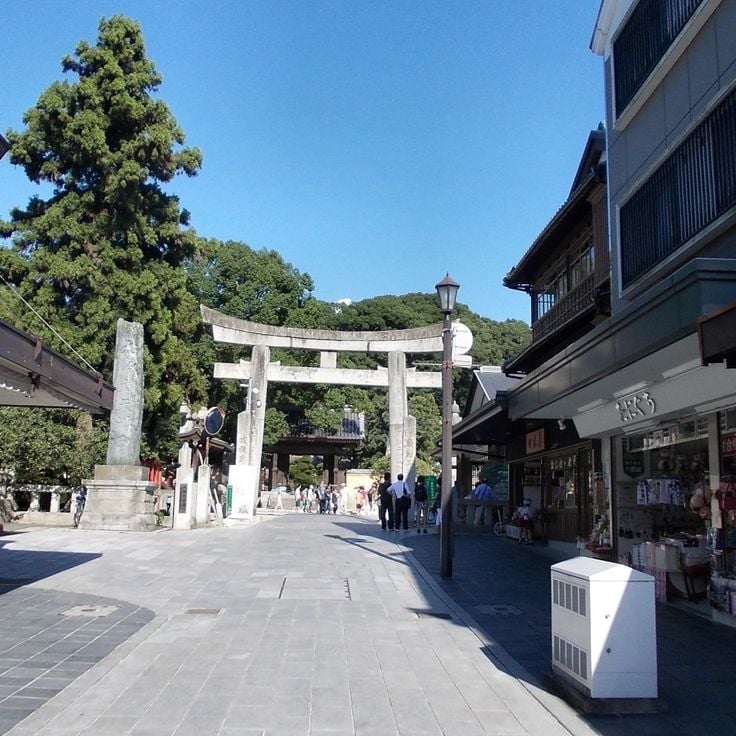
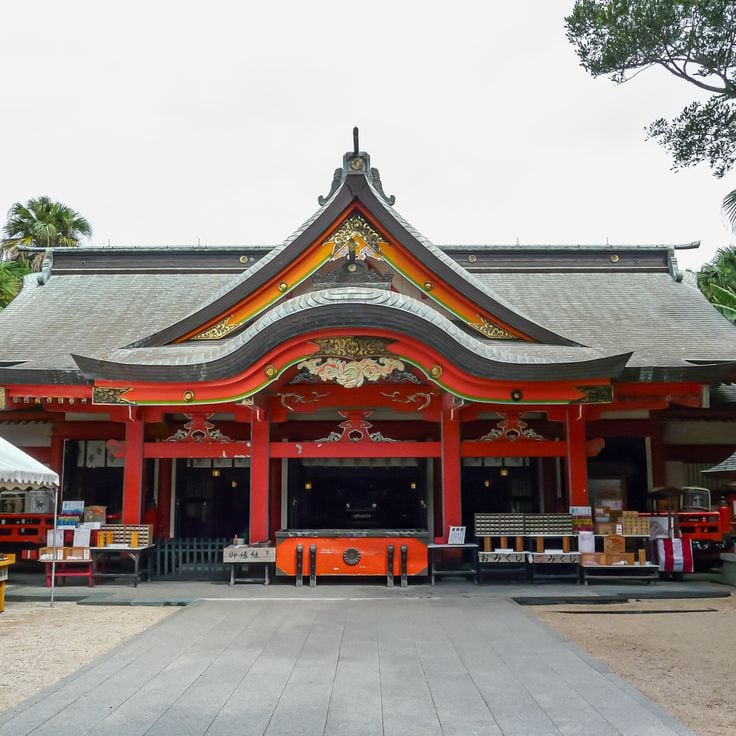
Dazaifu Tenmangu is one of Kyushu's major shrines, dedicated to the scholar Sugawara no Michizane. Thousands of plum trees surround the grounds, blooming each year and drawing visitors from across Japan. People come here to pray for success in studies and exams, making it a lively place during the school year.
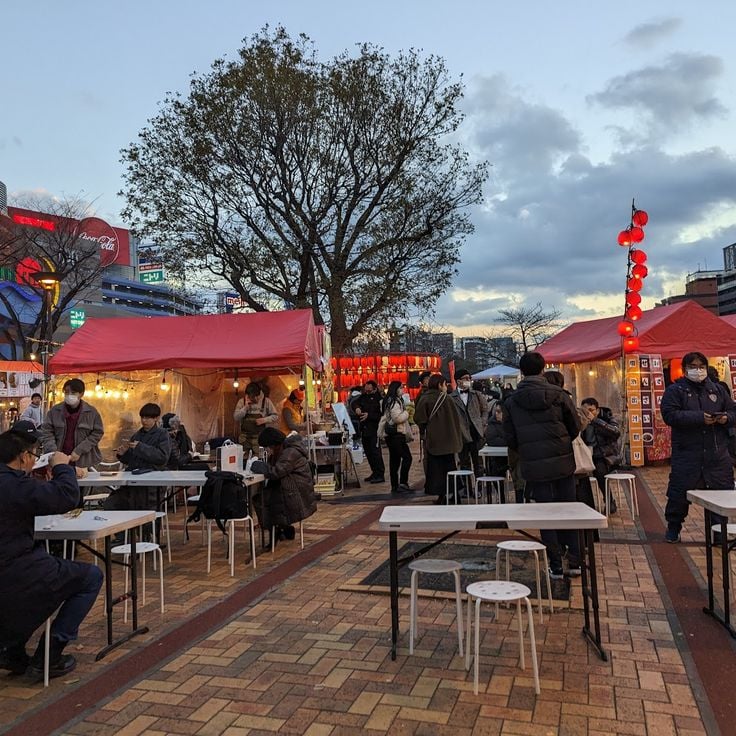
Fukuoka Yatai are small outdoor food stalls that come to life after dark, lining the streets and riverbanks of the city. Sitting down at one means squeezing onto a stool beside locals and travelers, all sharing the same counter over bowls of tonkotsu ramen or skewers fresh off the grill. These stalls have been part of daily life in Fukuoka for generations and remain one of the most direct ways to feel the rhythm of the city.
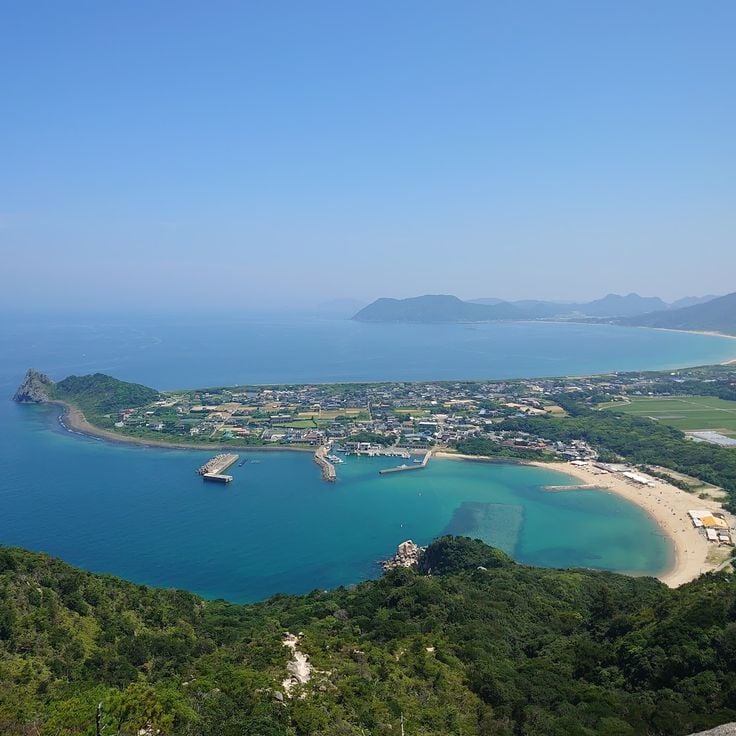
Itoshima is a coastal area west of Fukuoka where sandy beaches meet small cafes and local workshops. The area is known for its torii gates that stand directly in the sea, appearing to rise from the water at low tide. Walking through Itoshima shows a side of Japan that feels unhurried, far from crowded city centers.
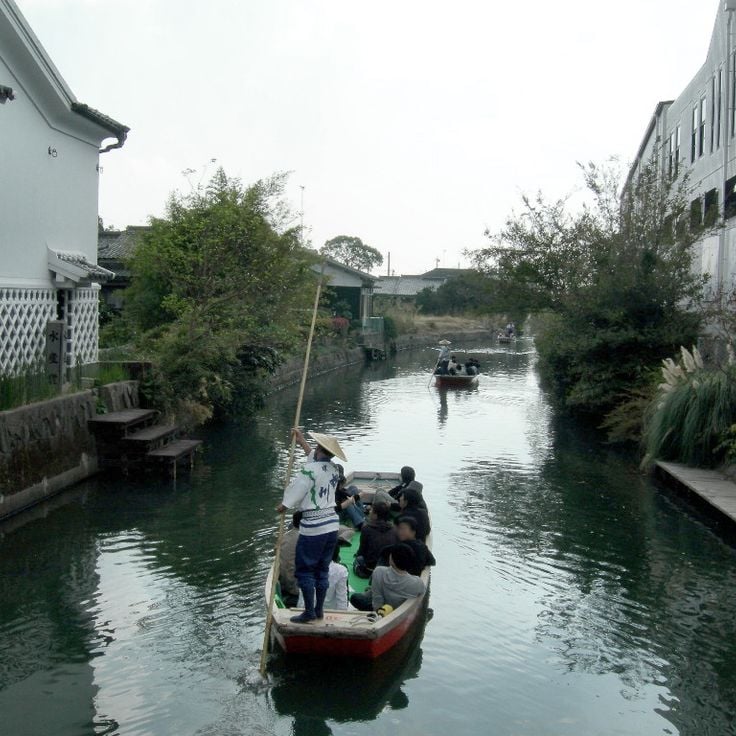
Yanagawa is a town in Fukuoka Prefecture where canals run through the streets as naturally as roads do. Flat wooden boats, steered by boatmen with long poles, carry visitors past old walls, willow trees, and low bridges. The canals were once part of a castle fortification system and are now the main way to experience the town. Life here moves at the pace of the water.
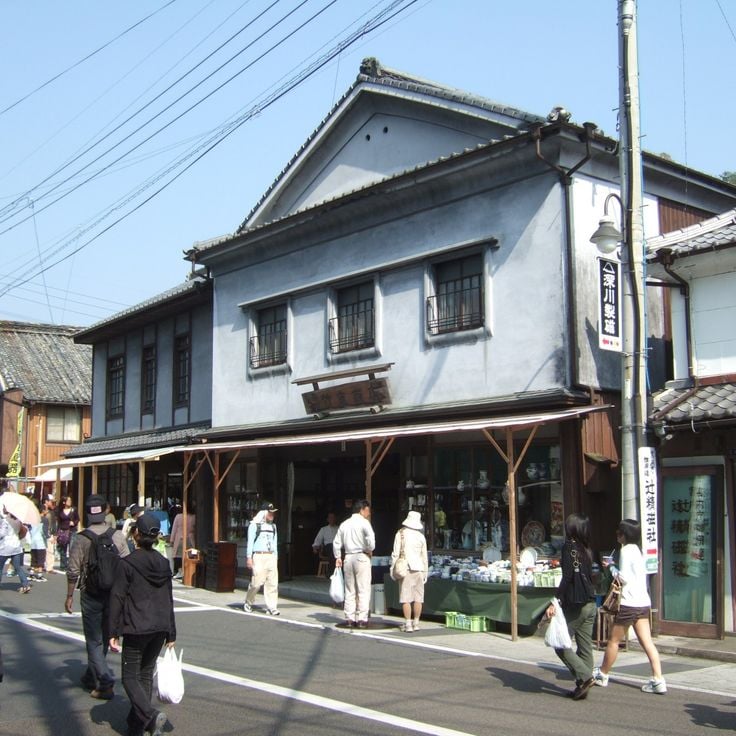
Arita is a small town in Saga Prefecture and the birthplace of Japanese porcelain. Since the early 1600s, kilns have fired pottery here, and today visitors can walk through workshops, watch craftspeople at work, and buy pieces that carry on a tradition deeply rooted in this corner of Kyushu.
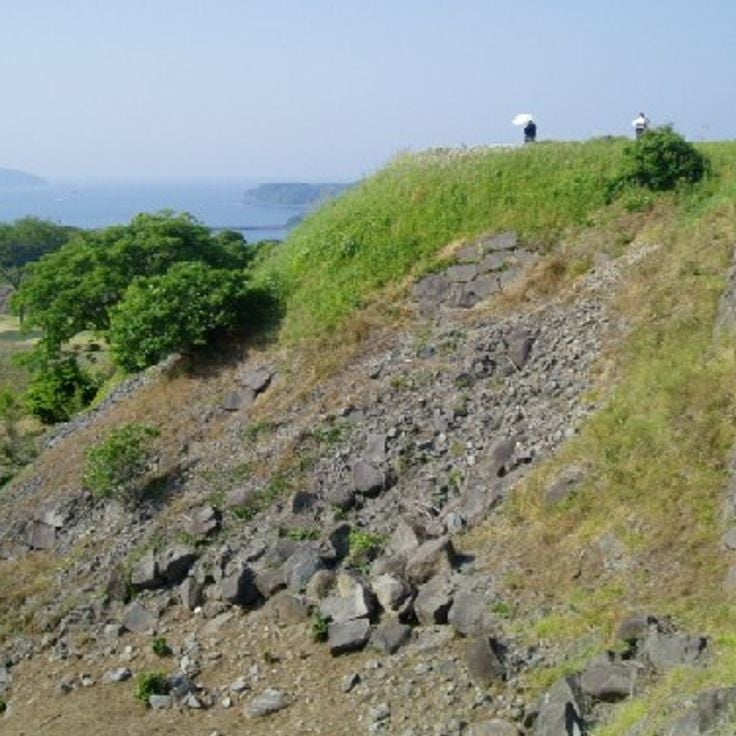
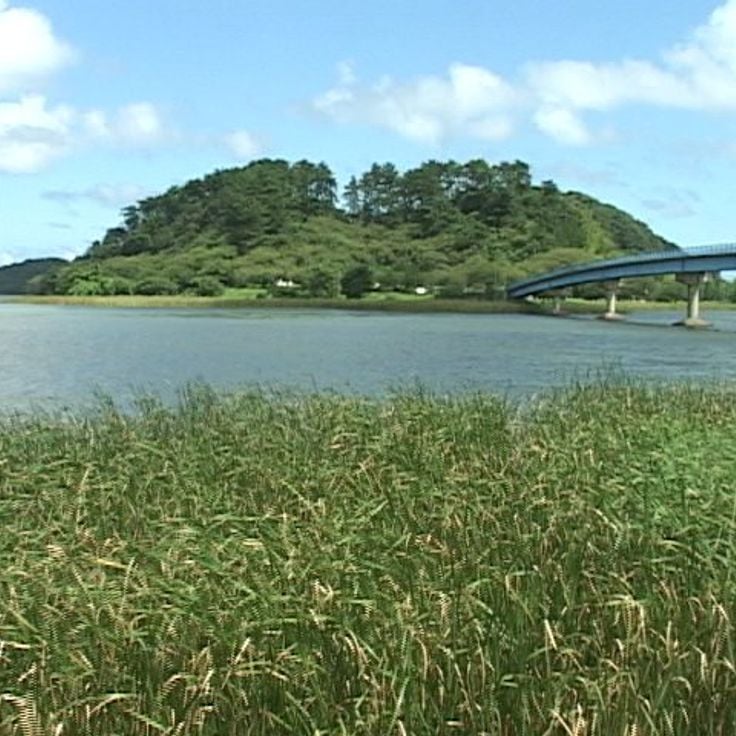
Karatsu Castle sits on a small hill right at the edge of the sea, looking out over Karatsu Bay. Its white walls stand out clearly against the water below. From the top, you can see the coastline, the pine forests along a nearby chain of islands, and the surrounding hills. This castle is one of those places in Kyushu where history and the coast come together in a direct and uncomplicated way.
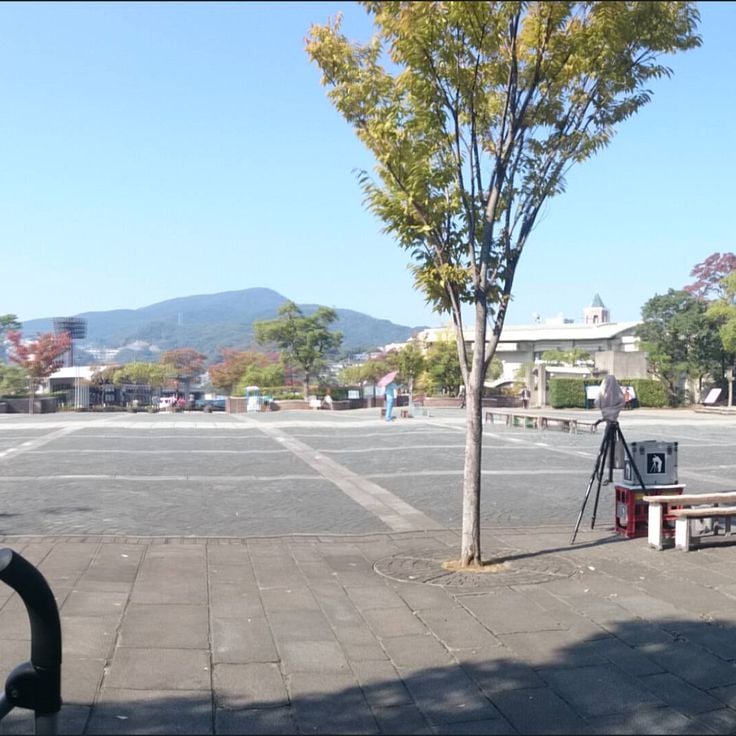
The Nagasaki Peace Park stands at the site where an atomic bomb fell on August 9, 1945. It is a place where visitors come to remember the victims and reflect on what happened that day. Statues, memorials, and inscriptions tell the story of the bombing and of the city that rebuilt itself after.
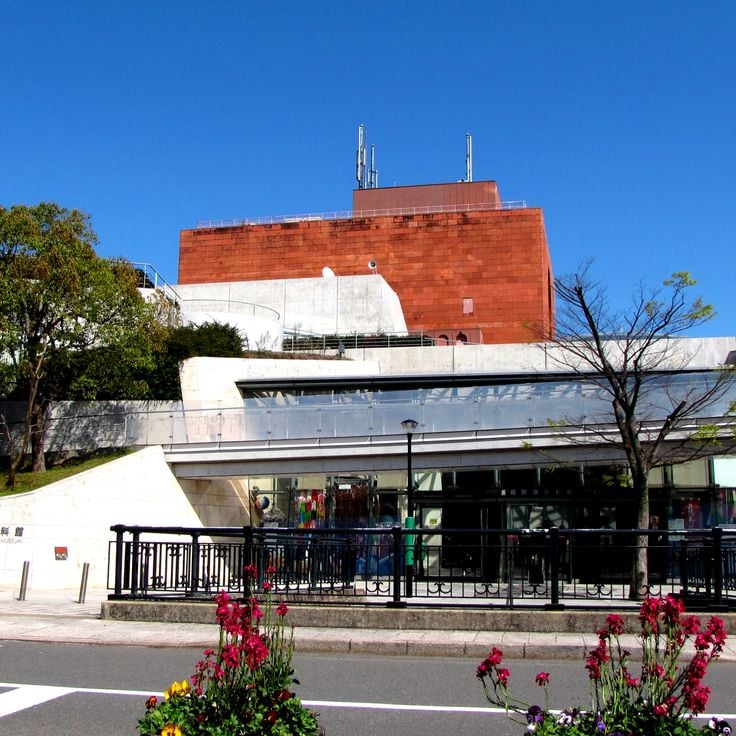
The Atomic Bomb Museum in Nagasaki tells the story of August 9, 1945, the day the city was bombed. Through photographs, personal objects, and survivor accounts, the museum walks visitors through what happened before, during, and after the explosion. It is a sobering place that helps people understand how deeply the bombing changed the lives of those who lived here.
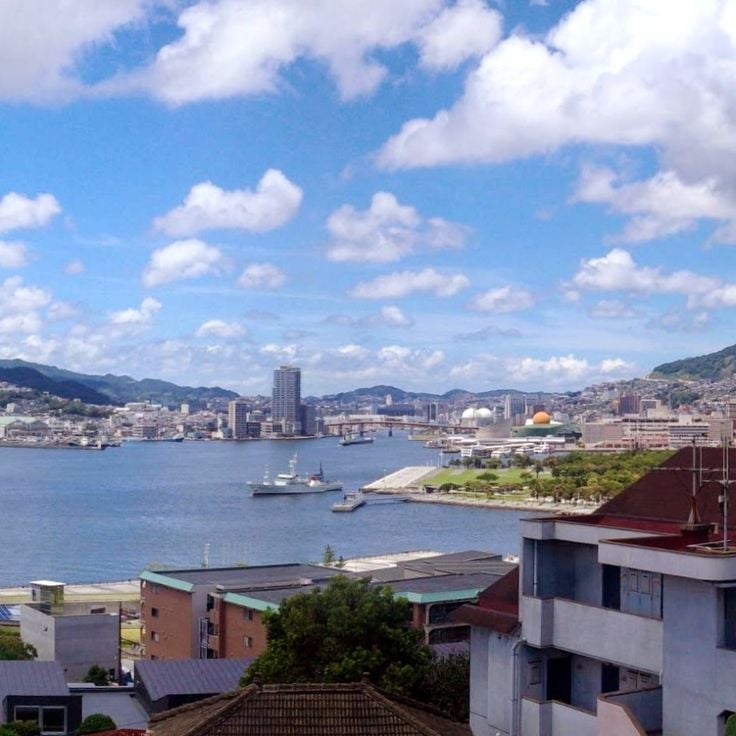
Glover Garden sits on a hillside above Nagasaki Bay and gathers several historic mansions built by Western merchants and businessmen who settled here in the 19th century, when Nagasaki was the only Japanese port open to foreign trade. Walking through the garden, you move between wooden and stone houses that mix Western and Japanese styles, with wide verandas and views over the water below. The garden gives a real sense of the daily life of the foreigners who made this city their home, and of how Nagasaki quietly became a meeting point between Japan and the outside world.
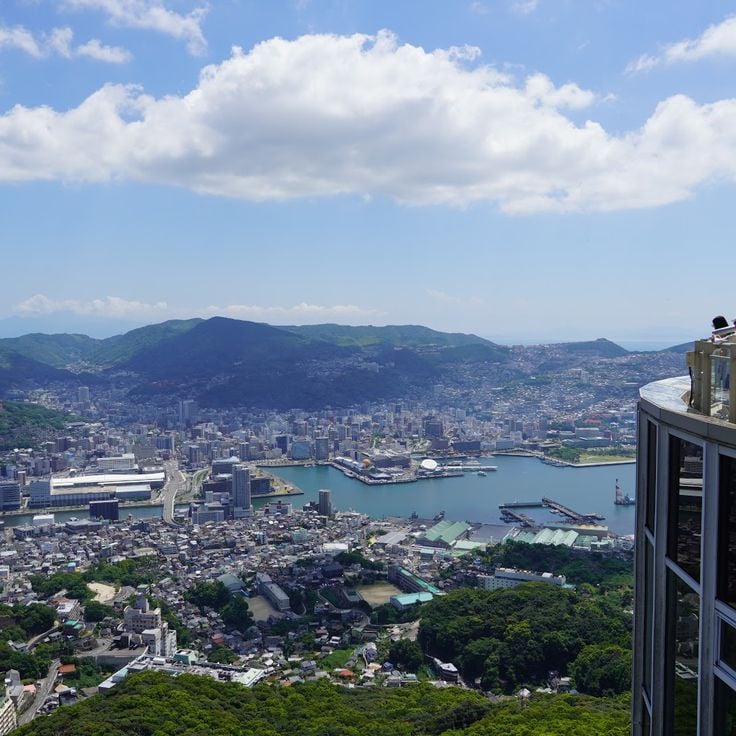
Mont Inasa is a hill on the edge of Nagasaki that looks out over the city and its bay. At night, the view changes completely: city lights reflect on the water below, and the shape of the peninsula becomes clear against the dark sky. Many visitors make the trip up specifically after sunset, when the scene below takes on a different quality altogether.
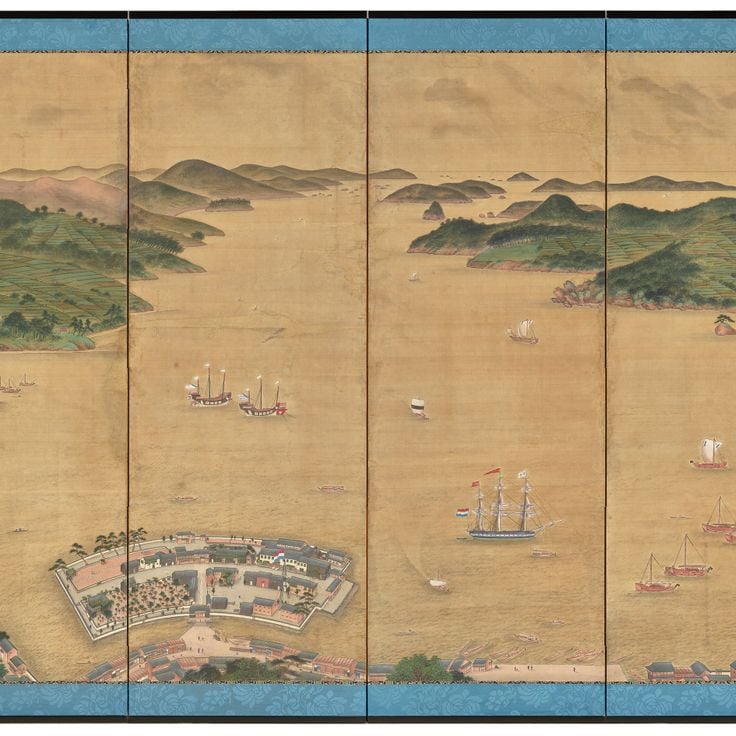
Dejima is a reconstructed artificial island in the heart of Nagasaki that once served as the only official link between Japan and the Western world. During centuries of national seclusion, this small trading post was the one place where Dutch merchants were allowed to live and work on Japanese soil. Today, visitors can walk through rebuilt warehouses and living quarters to understand how this narrow strip of land once connected two very different worlds.
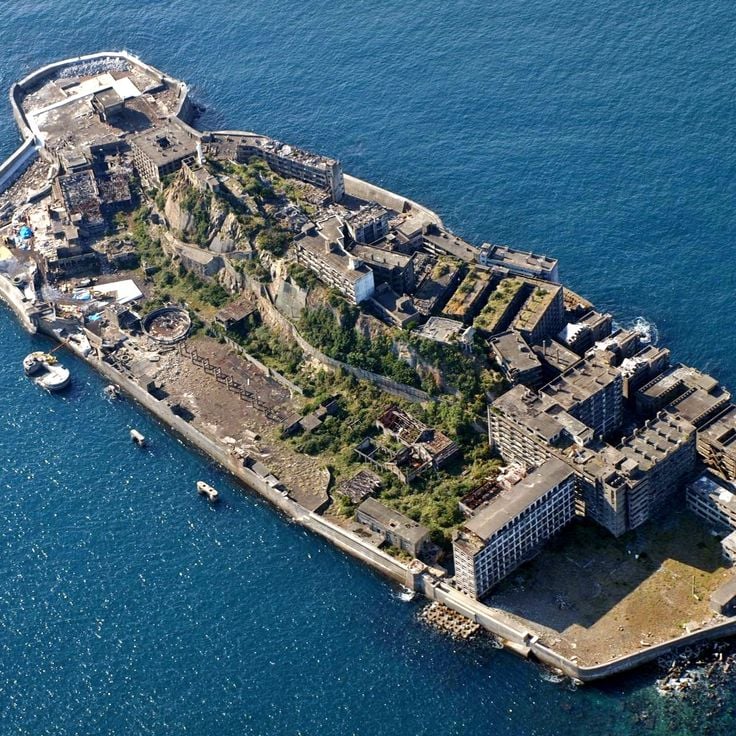
Hashima, also known as Gunkanjima, is an abandoned coal mining island off the coast of Nagasaki. Rows of concrete buildings rise straight from the sea, frozen as they were when workers and their families left decades ago. Walking through it feels like stepping into a place where time simply stopped.
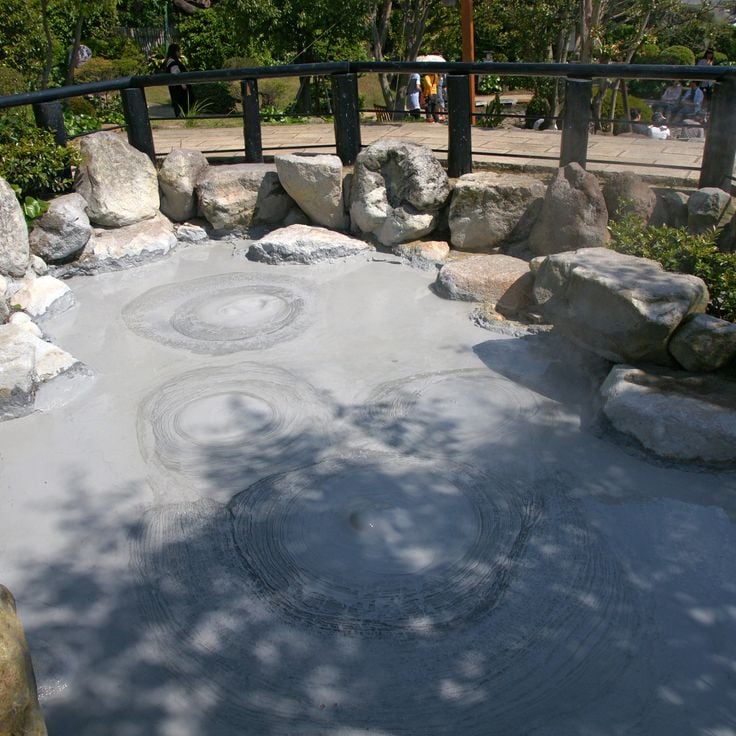
Beppu Onsen, in Oita Prefecture, is a city where steam rises from the ground in every direction. The streets carry a misty feel at all hours of the day. Visitors can soak in public bathhouses, sink into mud pools, or walk among the colored thermal ponds called the Hells, each one a different shade of blue, red, or grey. This is one of southern Japan's most vivid examples of how hot springs have shaped a city and the daily life of everyone in it.
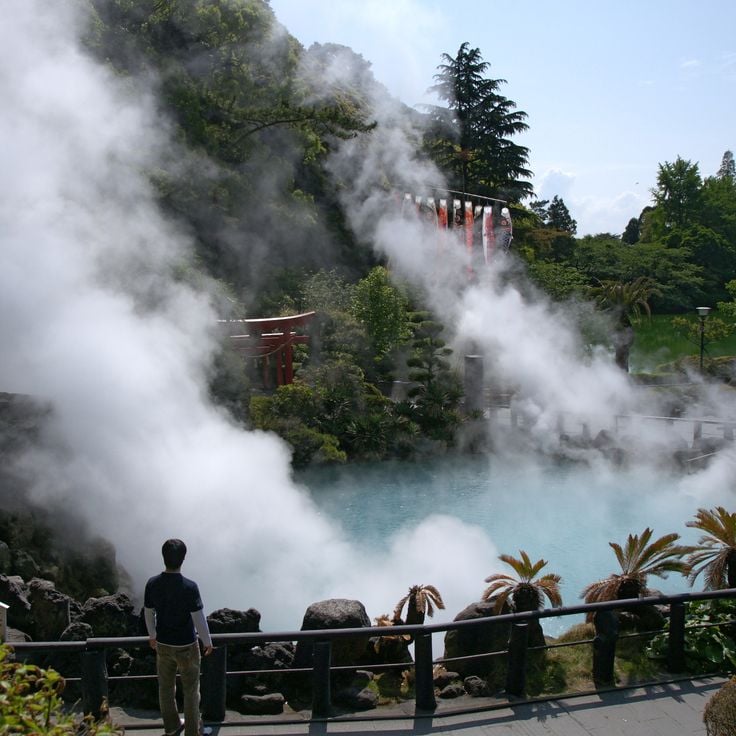
Beppu Jigoku, which translates roughly as the "hells of Beppu," is a group of geothermal springs in Oita Prefecture where the water takes on colors that seem almost unreal. Some pools glow a deep cobalt blue, others run red from iron-rich water, and a few churn with mud or release jets of steam. The water is far too hot to touch, so visitors walk paths between the pools and watch the earth do something extraordinary. This is one of the more unusual ways to experience the geothermal energy that defines the broader Beppu area.
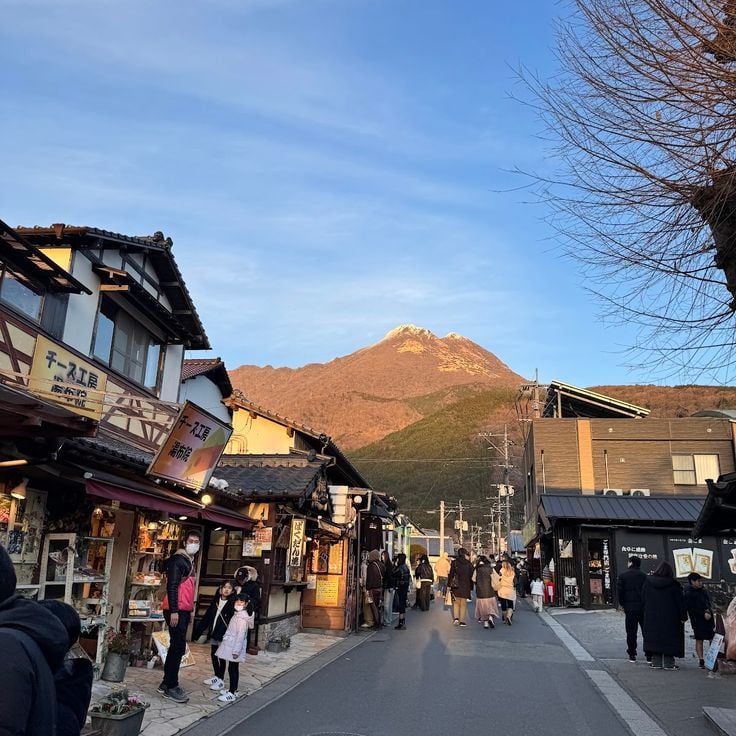
Yufuin is a hot spring town in Oita Prefecture, tucked between green mountains in Kyushu. Its main street is lined with ryokan inns, small cafes, and local galleries. Compared to nearby Beppu, the pace here feels slower and more personal. It is the kind of place where travelers soak in natural hot spring waters, browse handmade crafts, and spend an unhurried day walking through a town that has welcomed visitors for generations.
The Kunisaki Peninsula, in Oita Prefecture, is one of the oldest centers of Buddhist culture in Japan. Temples sit deep in wooded hills, stone statues line ancient pilgrimage paths, and small farming villages spread across the valleys. Walking through this area, you get a sense of how religious life and rural life have existed side by side here for over a thousand years.
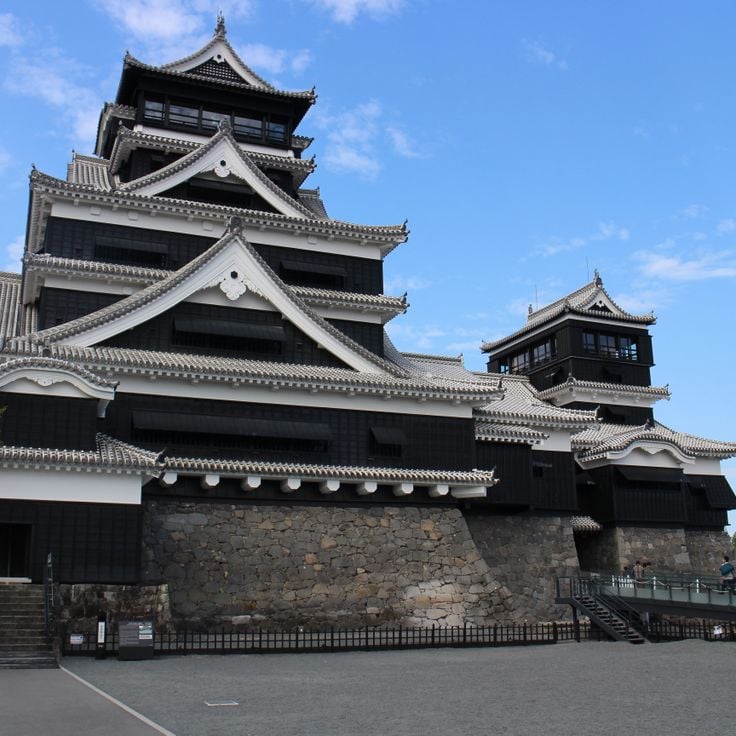
Kumamoto Castle rises on a hill above the city of Kumamoto in Kyushu, its dark walls and curved rooftops shaped by centuries of history. Built in the early 1600s, it served as a fortress, a symbol of power, and a place of fierce battle. A major earthquake in 2016 caused serious damage, but restoration work is ongoing and visitors can walk the grounds and see the main tower up close. In the context of southern Japan, this castle stands as one of the clearest windows into the feudal past of Kyushu.
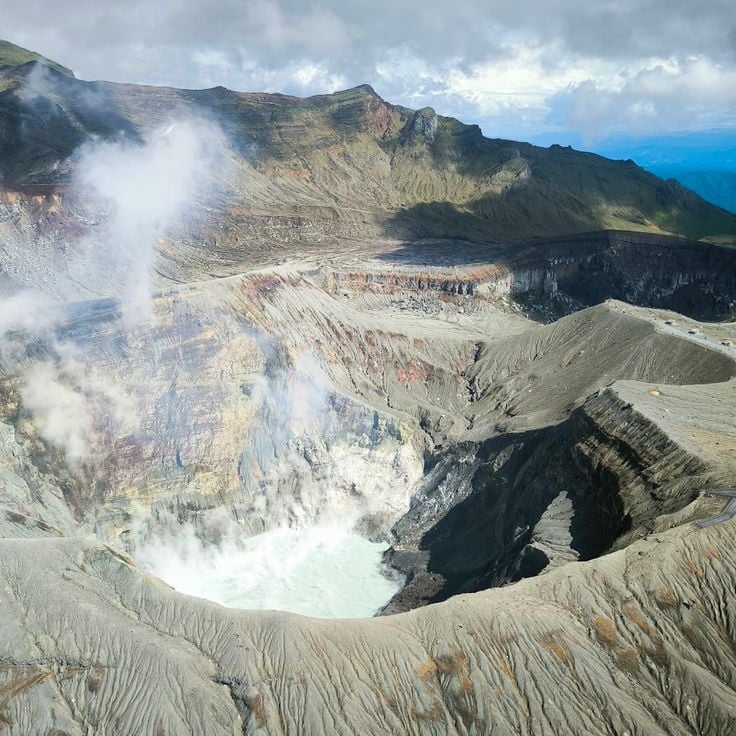
Mount Aso, in Kumamoto Prefecture, holds one of the largest calderas in the world, wide enough that towns and farms sit inside it. The active volcano still vents gases and ash, and the surrounding land shifts between green pastures, dark lava fields, and steaming craters that remind you the ground here is very much alive.
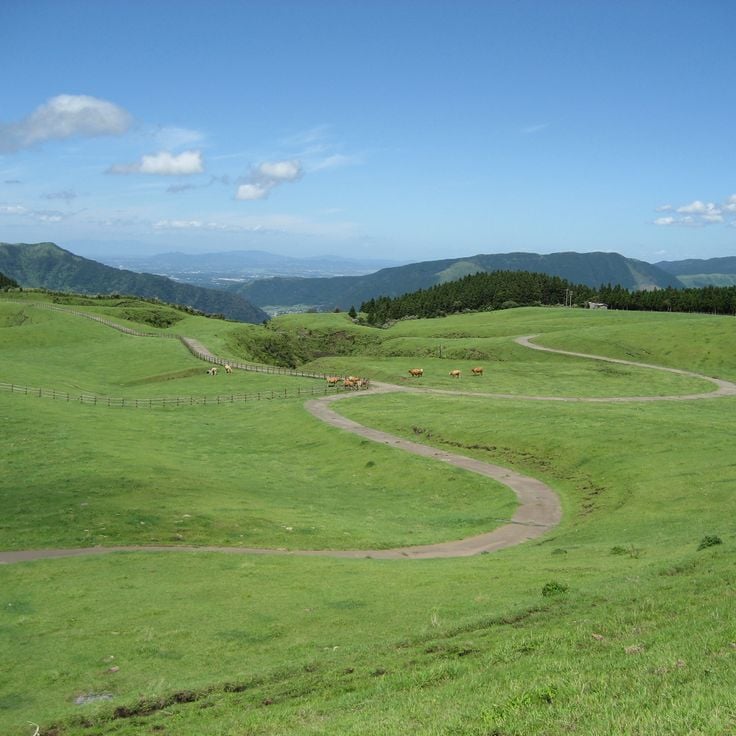
Kusasenri is a wide grassy plain that sits inside an old volcanic crater at the base of Mount Aso. Horses graze freely across the open ground, and two small ponds sit at the center. The place gives a clear sense of how volcanic forces have shaped the land across Kyushu.
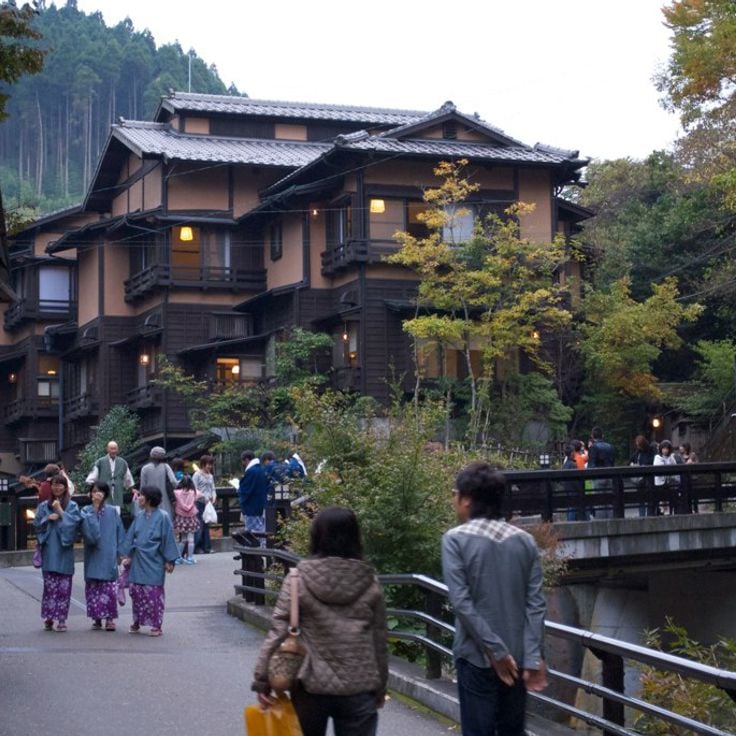
Kurokawa Onsen sits in the hills of Kumamoto Prefecture, wrapped in forest. The streets are narrow and lined with wooden inns, each offering baths fed by natural hot springs that rise from the ground. Visitors come here to soak, slow down, and settle into a pace that feels unchanged for generations.
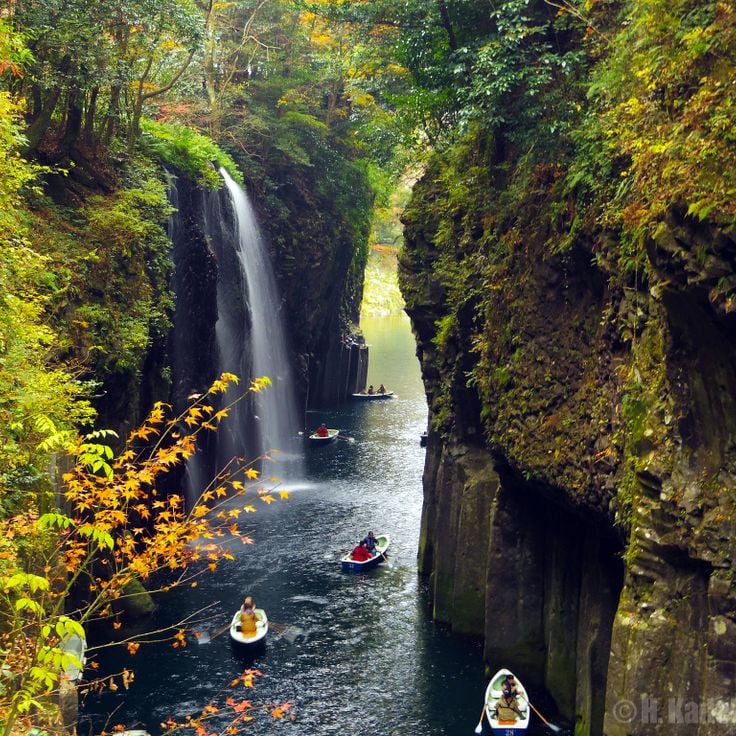
Takachiho Gorge is a valley carved out of old lava rock. The river runs quietly between vertical stone walls, and the Manai Falls drop straight down into the water below. Visitors row small boats through the gorge and look up at the waterfall from below.
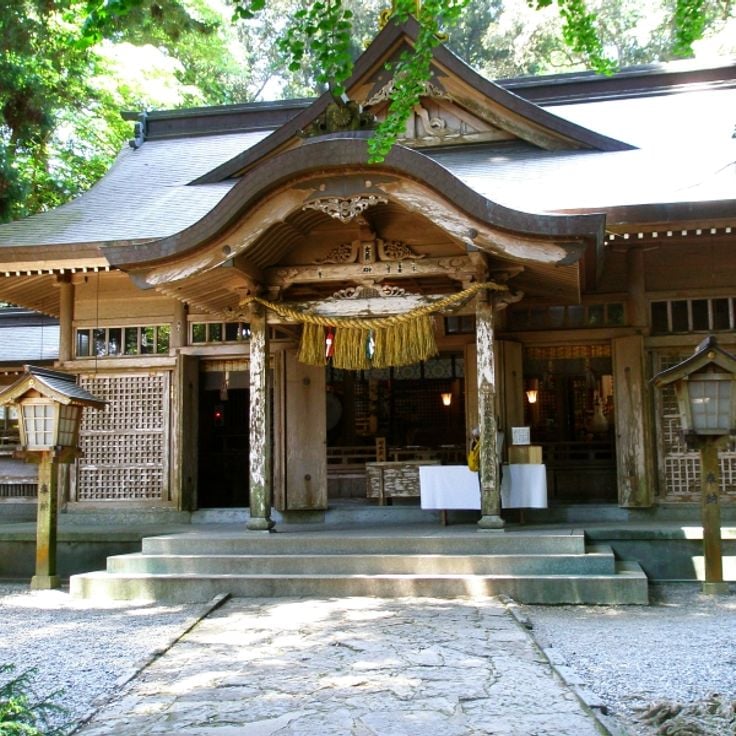
Takachiho Shrine sits at the heart of a town long tied to Japan's oldest creation stories. This is where the gods who shaped the land are said to have first descended to earth. In the evenings, priests at the shrine perform a form of kagura dance, a ritual theater that keeps these stories alive.
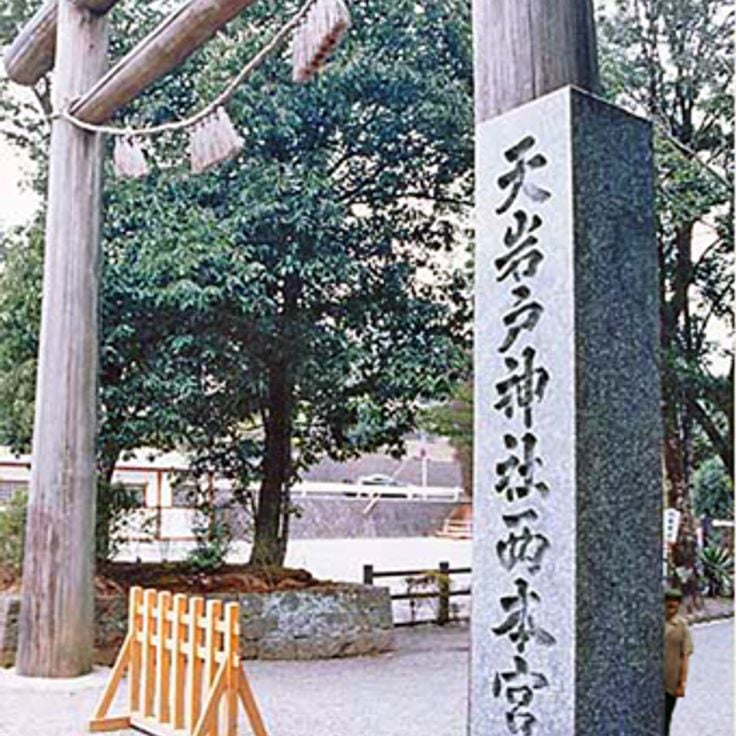
Amanoiwato Shrine sits deep in Miyazaki Prefecture, marking the cave where the sun goddess Amaterasu is said to have hidden herself, casting the world into darkness. This is one of the oldest and most deeply felt places in all of Shinto tradition. Walking the forested path along the river to reach it feels like stepping into Japan's oldest stories.
Aoshima is a small island in Miyazaki Prefecture, ringed by flat rock formations that spread across the sea floor at low tide like natural stepping stones. A sandy path connects it to the mainland. Inside, subtropical plants grow densely around a Shinto shrine tucked into the green.
Aoshima Shrine sits on a small island in Miyazaki Prefecture, ringed by rocky formations that jut out from the sea in flat, wave-like layers. This shrine is one of the places in southern Japan where the natural setting feels as old as the beliefs it houses.
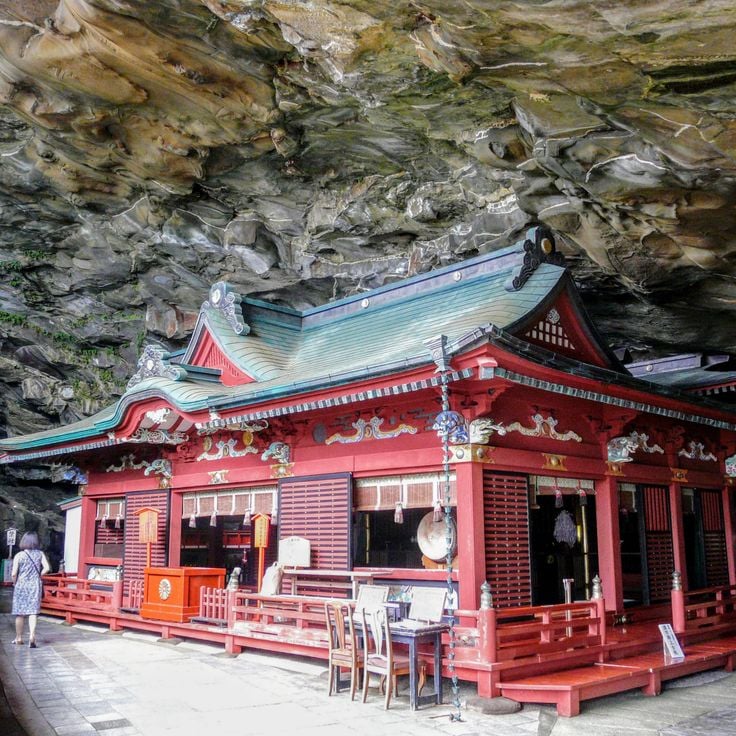
Udo Jingu is a Shinto shrine built inside a sea cave along the Pacific coast of Miyazaki Prefecture. Waves break just outside the entrance, and the path down to it runs along steep stone steps cut into the cliff. The shrine is tied to a story about the birth of an imperial ancestor and has drawn pilgrims from across Japan for a very long time.
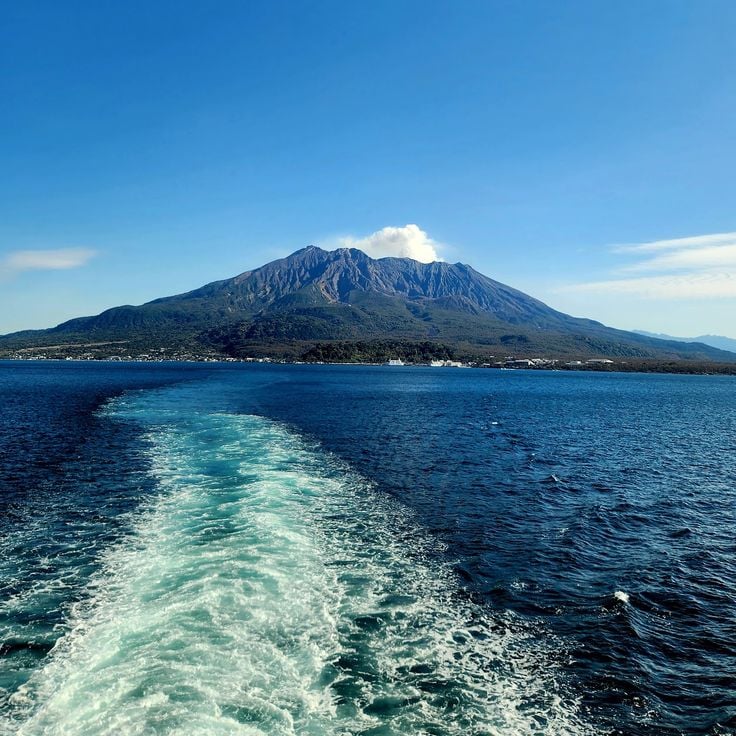
Sakurajima is an active volcano that rises over Kagoshima Bay, regularly sending ash and smoke into the surrounding towns. People here have learned to live alongside it, and daily life on the peninsula carries the marks of that proximity. It is one of the most watched and monitored volcanoes in Japan.
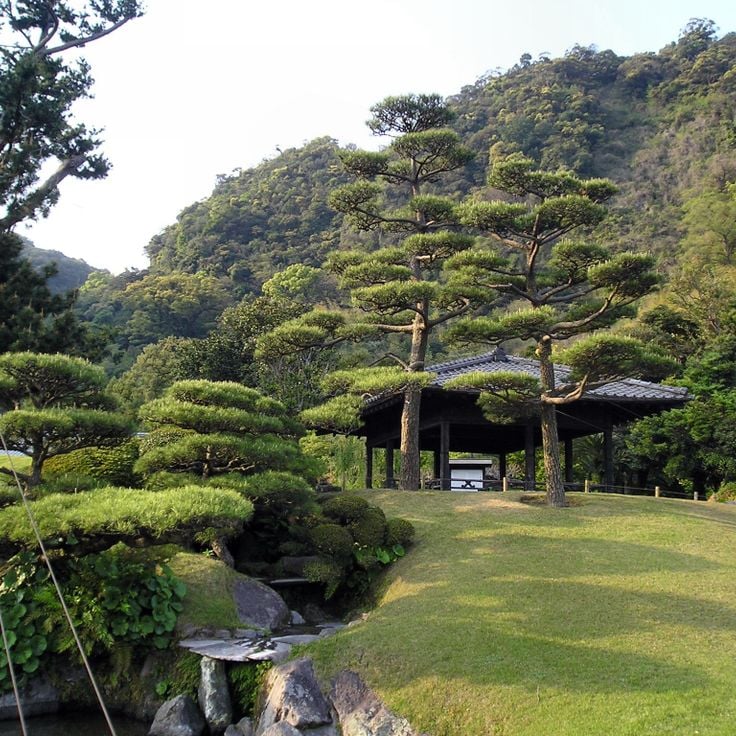
Sengan-en is a historic garden on the shore of Kagoshima Bay, laid out so that the volcano Sakurajima and the water appear as part of the garden itself. Trees, ponds, and small pavilions are arranged to draw the eye outward toward the bay. The garden once belonged to the Shimazu clan, who ruled this region for centuries.
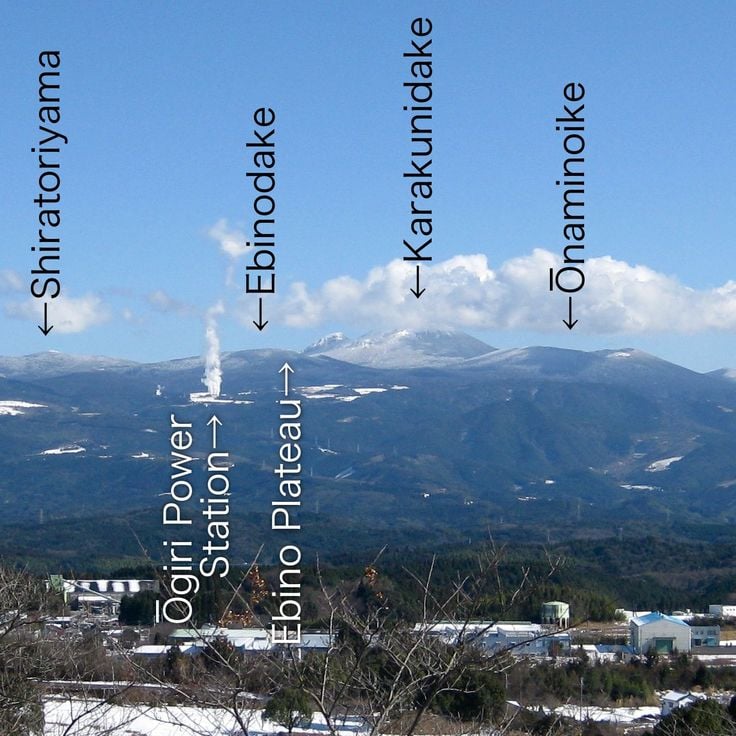
Kirishima is a chain of volcanoes in Kagoshima Prefecture, where rugged peaks and steaming vents shape the land. At the foot of these mountains stands Kirishima Jingu, one of Japan's oldest shrines, deeply tied to the country's founding myths. People come here to walk mountain trails, breathe in sulfurous air, and visit a shrine that has drawn pilgrims for well over a thousand years.
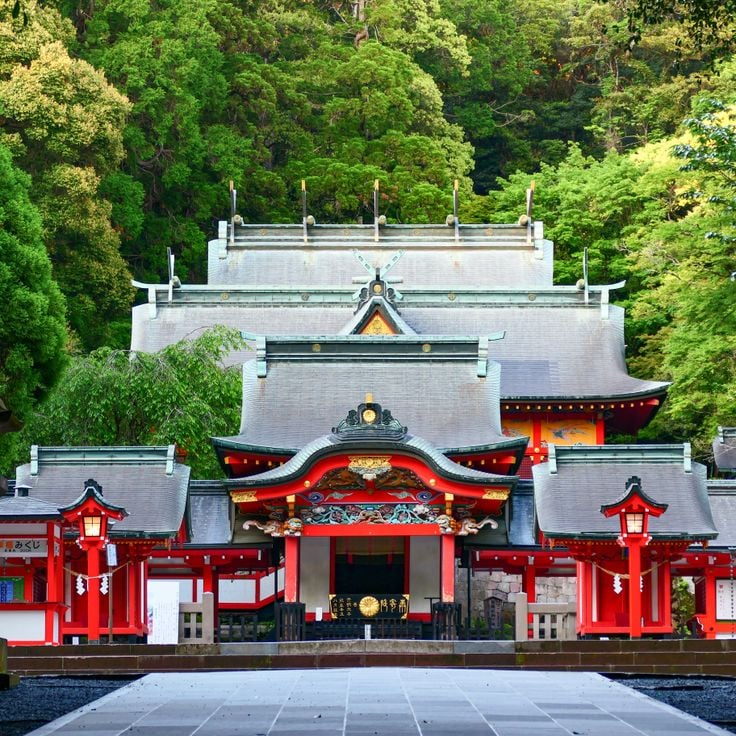
Kirishima Jingu is a major Shinto shrine sitting deep in the forests of the Kirishima volcanic range. The path to it winds through trees, and the shrine itself feels rooted in the land, a place where old rituals and raw volcanic nature exist side by side.
Yakushima is an island off the southern coast of Japan, covered in ancient cedar forests that feel untouched by time. The yakusugi cedars, some over a thousand years old, grow thick and gnarled across slopes wrapped in mist and moss. The island is a UNESCO World Natural Heritage site and draws hikers who want to walk through a forest that looks much as it did centuries ago.
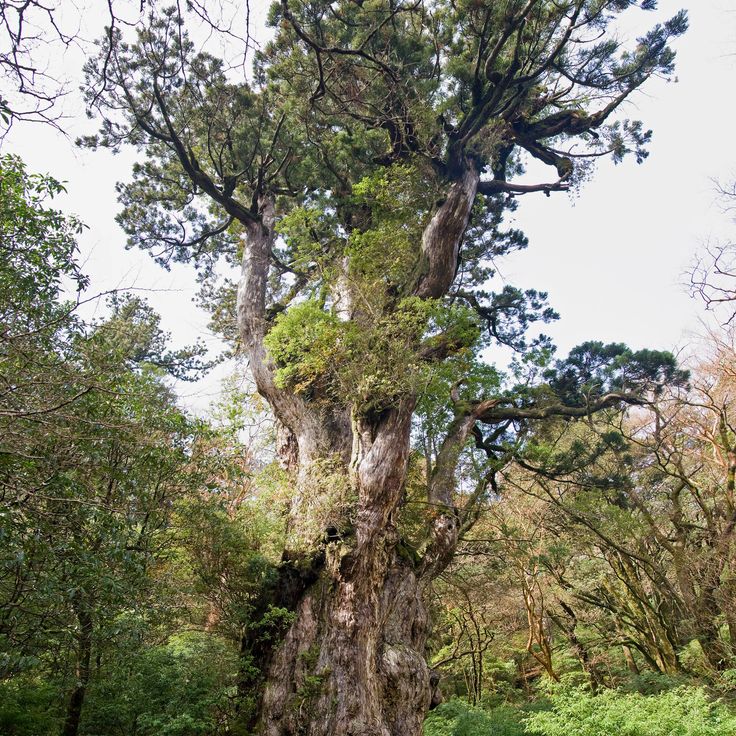
Jomon Sugi is one of the oldest cedar trees in Japan, growing deep inside the forest of Yakushima. Reaching it means a long hike through dense woods, across mossy rocks and roots, with smaller ancient trees lining the path. When you finally arrive, the tree stands quietly in its clearing, massive and old, a living reminder of how long this forest has been growing undisturbed.
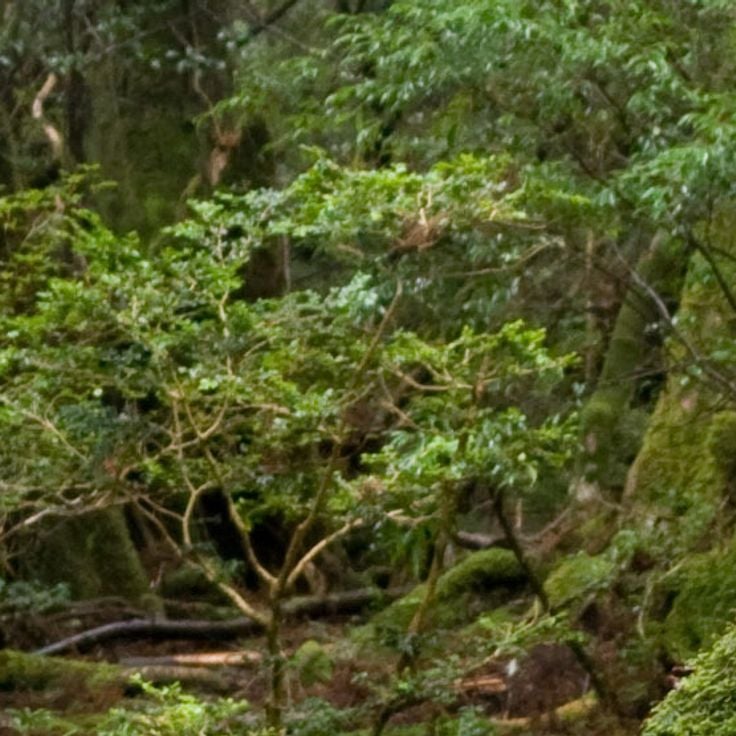
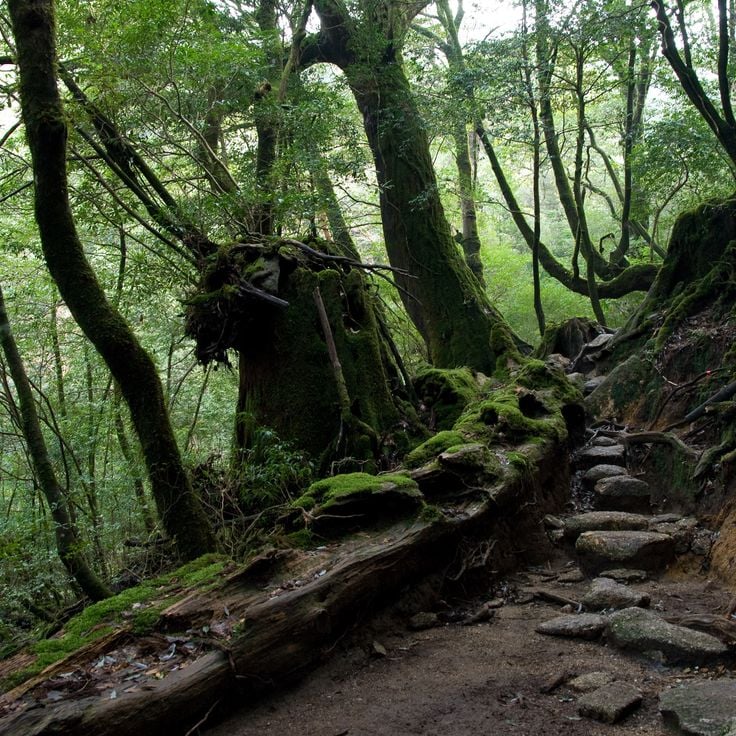
Shiratani Unsuikyo is a river gorge on Yakushima island where thick moss covers the ground, rocks, and roots of ancient cedar trees. Streams run through the valley, and some of the cedars here have been growing for thousands of years. Walking through this forest feels like stepping into a world apart from the rest of Japan.
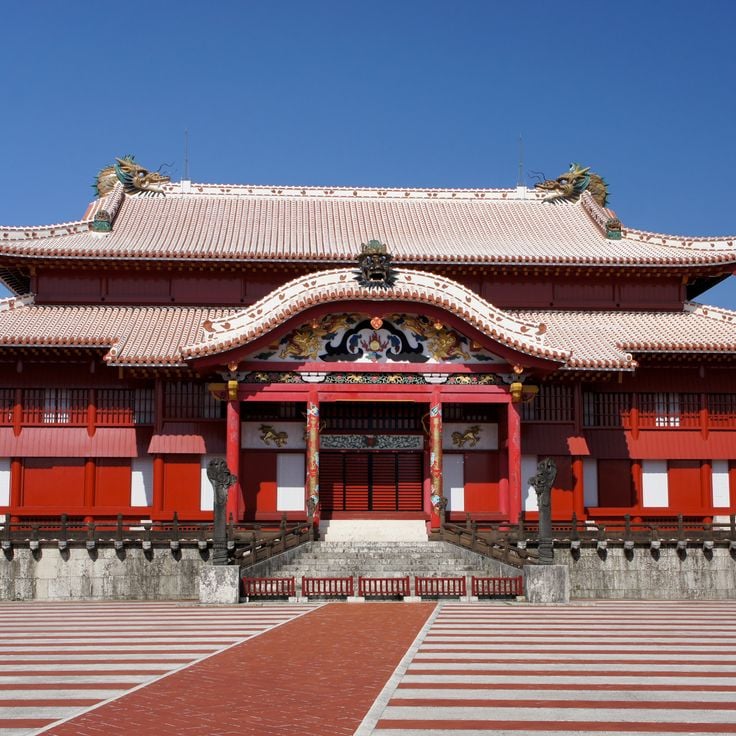
Shuri Castle was once the seat of the Ryukyu Kingdom and stands as a key part of Okinawa's story within the broader history of southern Japan. A fire in 2019 caused serious damage, and the rebuilding work is now open to visitors. Watching the castle come back together, stone by stone, is itself a reason to visit.
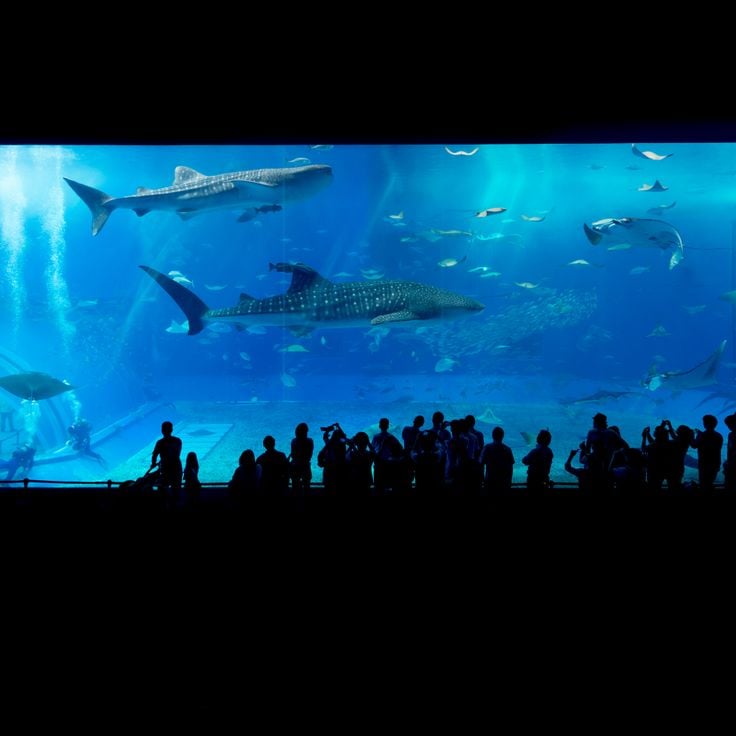
The Okinawa Churaumi Aquarium sits on the northern tip of Okinawa and is one of Japan's most recognized aquariums. Whale sharks and manta rays move through one of the largest tanks in the world, giving visitors a close look at the ocean life that surrounds this subtropical archipelago. It is a natural complement to the coral reefs and clear waters that define the region.
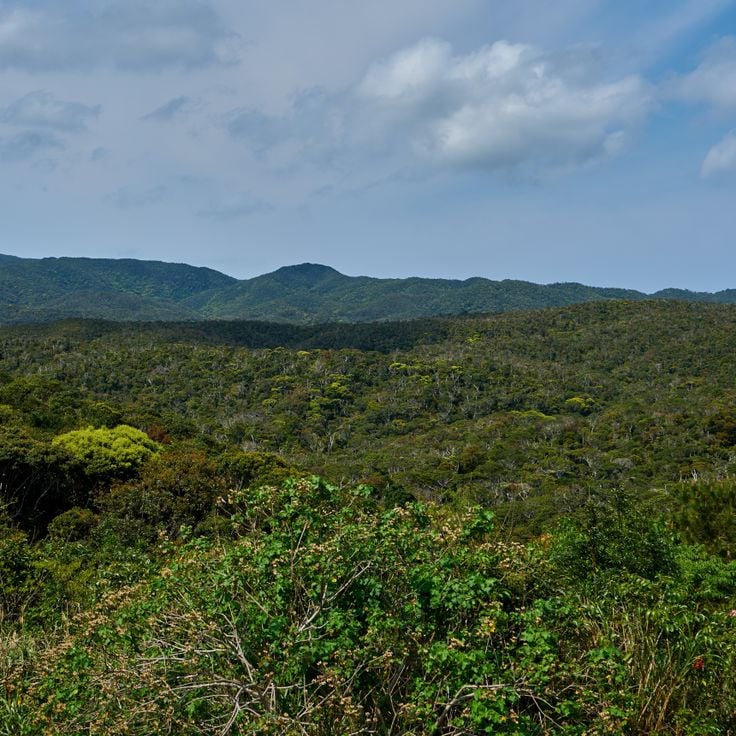
Yanbaru National Park covers the northern tip of Okinawa's main island with subtropical forest that feels far removed from the resort beaches to the south. Old trees rise over steep hillsides, and the forest is home to birds and animals found nowhere else on Earth. The area was recognized as a natural World Heritage Site, a rare honor for a forest of this kind in Japan.
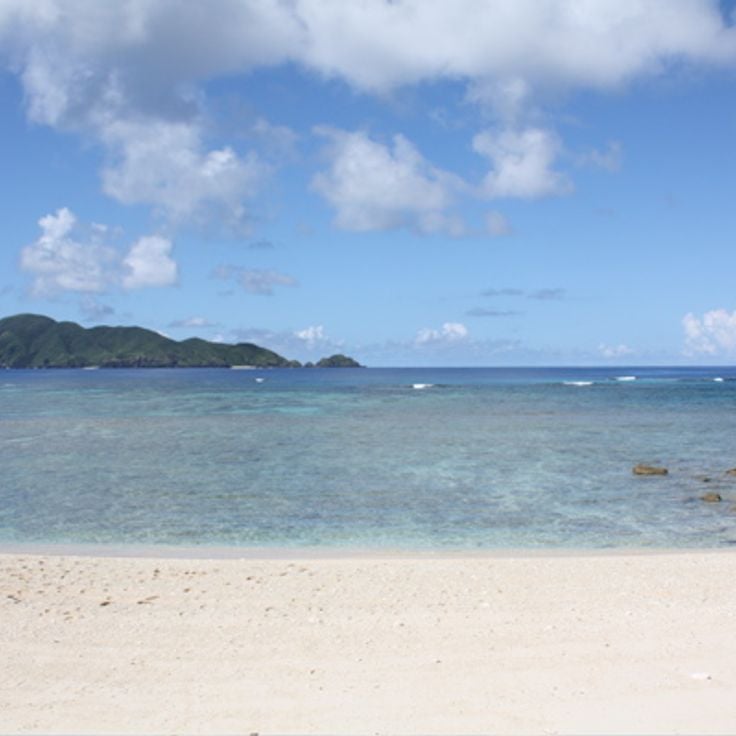
The Kerama Islands sit off the coast of Okinawa, and they represent one of southern Japan's more remote corners. The water here carries a deep blue color that locals call Kerama Blue. Below the surface, coral reefs grow close to shore, and sea turtles swim near enough to watch clearly. In winter, humpback whales come to these waters to raise their young. On land, small beaches wait, many reachable only by boat.
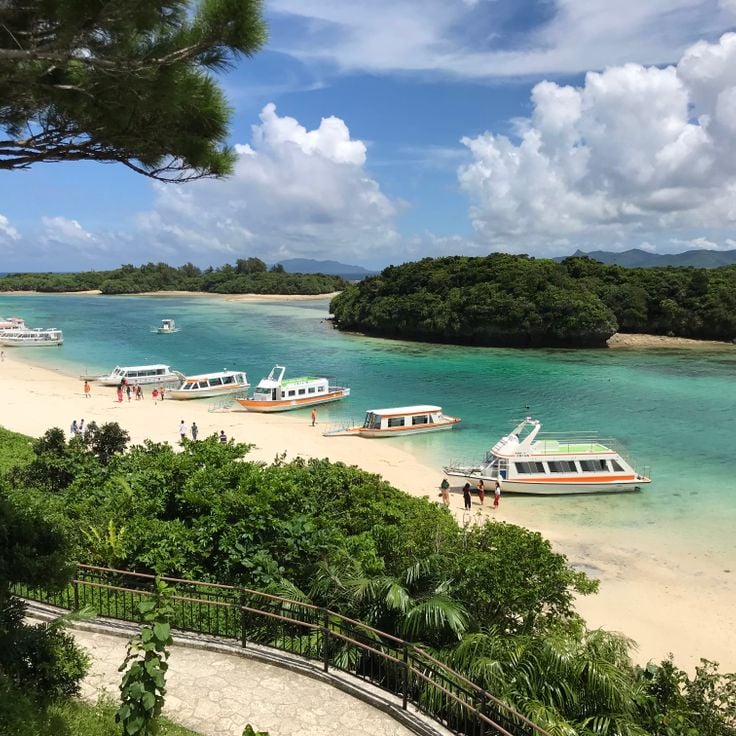
Kabira Bay sits on the north shore of Ishigaki Island and gives a clear sense of what subtropical Okinawa looks like up close. The water is shallow and shifts between shades of blue and green depending on the light. Dense trees press close to the shore. Swimming is not allowed here because of strong currents, so most visitors take glass-bottom boats or simply stand at the water's edge and look out.
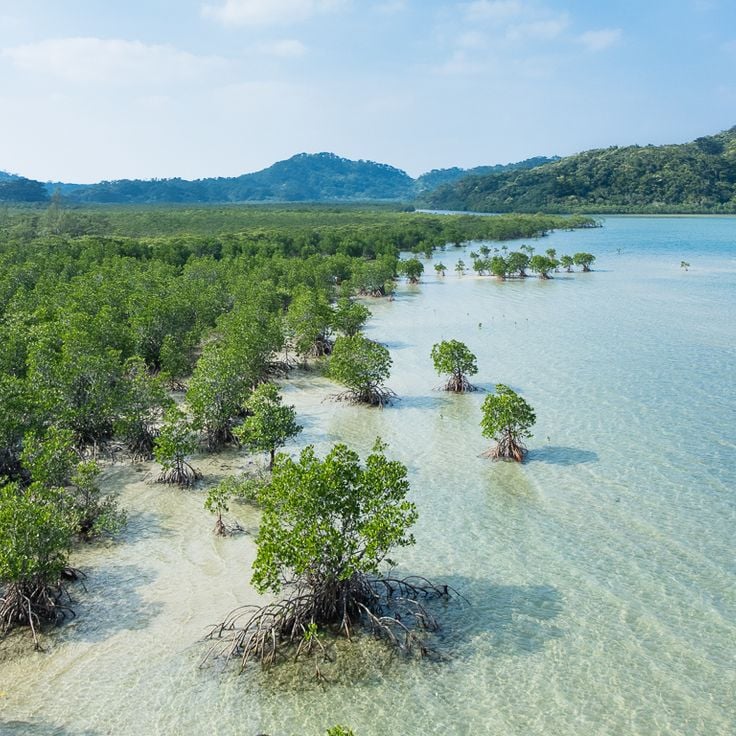
Iriomote Island sits at the far southwest of Okinawa Prefecture, covered almost entirely by subtropical jungle. Mangroves line its rivers, waterfalls drop through forested gorges, and rare animals live here that exist nowhere else in the world. The island is part of a UNESCO World Natural Heritage site, and it feels like a place where nature sets the pace.
Dazaifu Tenmangu is one of Kyushu's major shrines, dedicated to the scholar Sugawara no Michizane. Thousands of plum trees surround the grounds, blooming each year and drawing visitors from across Japan. People come here to pray for success in studies and exams, making it a lively place during the school year.
Fukuoka Yatai are small outdoor food stalls that come to life after dark, lining the streets and riverbanks of the city. Sitting down at one means squeezing onto a stool beside locals and travelers, all sharing the same counter over bowls of tonkotsu ramen or skewers fresh off the grill. These stalls have been part of daily life in Fukuoka for generations and remain one of the most direct ways to feel the rhythm of the city.
Itoshima is a coastal area west of Fukuoka where sandy beaches meet small cafes and local workshops. The area is known for its torii gates that stand directly in the sea, appearing to rise from the water at low tide. Walking through Itoshima shows a side of Japan that feels unhurried, far from crowded city centers.
Yanagawa is a town in Fukuoka Prefecture where canals run through the streets as naturally as roads do. Flat wooden boats, steered by boatmen with long poles, carry visitors past old walls, willow trees, and low bridges. The canals were once part of a castle fortification system and are now the main way to experience the town. Life here moves at the pace of the water.
Arita is a small town in Saga Prefecture and the birthplace of Japanese porcelain. Since the early 1600s, kilns have fired pottery here, and today visitors can walk through workshops, watch craftspeople at work, and buy pieces that carry on a tradition deeply rooted in this corner of Kyushu.
Karatsu Castle sits on a small hill right at the edge of the sea, looking out over Karatsu Bay. Its white walls stand out clearly against the water below. From the top, you can see the coastline, the pine forests along a nearby chain of islands, and the surrounding hills. This castle is one of those places in Kyushu where history and the coast come together in a direct and uncomplicated way.
The Nagasaki Peace Park stands at the site where an atomic bomb fell on August 9, 1945. It is a place where visitors come to remember the victims and reflect on what happened that day. Statues, memorials, and inscriptions tell the story of the bombing and of the city that rebuilt itself after.
The Atomic Bomb Museum in Nagasaki tells the story of August 9, 1945, the day the city was bombed. Through photographs, personal objects, and survivor accounts, the museum walks visitors through what happened before, during, and after the explosion. It is a sobering place that helps people understand how deeply the bombing changed the lives of those who lived here.
Glover Garden sits on a hillside above Nagasaki Bay and gathers several historic mansions built by Western merchants and businessmen who settled here in the 19th century, when Nagasaki was the only Japanese port open to foreign trade. Walking through the garden, you move between wooden and stone houses that mix Western and Japanese styles, with wide verandas and views over the water below. The garden gives a real sense of the daily life of the foreigners who made this city their home, and of how Nagasaki quietly became a meeting point between Japan and the outside world.
Mont Inasa is a hill on the edge of Nagasaki that looks out over the city and its bay. At night, the view changes completely: city lights reflect on the water below, and the shape of the peninsula becomes clear against the dark sky. Many visitors make the trip up specifically after sunset, when the scene below takes on a different quality altogether.
Dejima is a reconstructed artificial island in the heart of Nagasaki that once served as the only official link between Japan and the Western world. During centuries of national seclusion, this small trading post was the one place where Dutch merchants were allowed to live and work on Japanese soil. Today, visitors can walk through rebuilt warehouses and living quarters to understand how this narrow strip of land once connected two very different worlds.
Hashima, also known as Gunkanjima, is an abandoned coal mining island off the coast of Nagasaki. Rows of concrete buildings rise straight from the sea, frozen as they were when workers and their families left decades ago. Walking through it feels like stepping into a place where time simply stopped.
Beppu Onsen, in Oita Prefecture, is a city where steam rises from the ground in every direction. The streets carry a misty feel at all hours of the day. Visitors can soak in public bathhouses, sink into mud pools, or walk among the colored thermal ponds called the Hells, each one a different shade of blue, red, or grey. This is one of southern Japan's most vivid examples of how hot springs have shaped a city and the daily life of everyone in it.
Beppu Jigoku, which translates roughly as the "hells of Beppu," is a group of geothermal springs in Oita Prefecture where the water takes on colors that seem almost unreal. Some pools glow a deep cobalt blue, others run red from iron-rich water, and a few churn with mud or release jets of steam. The water is far too hot to touch, so visitors walk paths between the pools and watch the earth do something extraordinary. This is one of the more unusual ways to experience the geothermal energy that defines the broader Beppu area.
Yufuin is a hot spring town in Oita Prefecture, tucked between green mountains in Kyushu. Its main street is lined with ryokan inns, small cafes, and local galleries. Compared to nearby Beppu, the pace here feels slower and more personal. It is the kind of place where travelers soak in natural hot spring waters, browse handmade crafts, and spend an unhurried day walking through a town that has welcomed visitors for generations.
The Kunisaki Peninsula, in Oita Prefecture, is one of the oldest centers of Buddhist culture in Japan. Temples sit deep in wooded hills, stone statues line ancient pilgrimage paths, and small farming villages spread across the valleys. Walking through this area, you get a sense of how religious life and rural life have existed side by side here for over a thousand years.
Kumamoto Castle rises on a hill above the city of Kumamoto in Kyushu, its dark walls and curved rooftops shaped by centuries of history. Built in the early 1600s, it served as a fortress, a symbol of power, and a place of fierce battle. A major earthquake in 2016 caused serious damage, but restoration work is ongoing and visitors can walk the grounds and see the main tower up close. In the context of southern Japan, this castle stands as one of the clearest windows into the feudal past of Kyushu.
Mount Aso, in Kumamoto Prefecture, holds one of the largest calderas in the world, wide enough that towns and farms sit inside it. The active volcano still vents gases and ash, and the surrounding land shifts between green pastures, dark lava fields, and steaming craters that remind you the ground here is very much alive.
Kusasenri is a wide grassy plain that sits inside an old volcanic crater at the base of Mount Aso. Horses graze freely across the open ground, and two small ponds sit at the center. The place gives a clear sense of how volcanic forces have shaped the land across Kyushu.
Kurokawa Onsen sits in the hills of Kumamoto Prefecture, wrapped in forest. The streets are narrow and lined with wooden inns, each offering baths fed by natural hot springs that rise from the ground. Visitors come here to soak, slow down, and settle into a pace that feels unchanged for generations.
Takachiho Gorge is a valley carved out of old lava rock. The river runs quietly between vertical stone walls, and the Manai Falls drop straight down into the water below. Visitors row small boats through the gorge and look up at the waterfall from below.
Takachiho Shrine sits at the heart of a town long tied to Japan's oldest creation stories. This is where the gods who shaped the land are said to have first descended to earth. In the evenings, priests at the shrine perform a form of kagura dance, a ritual theater that keeps these stories alive.
Amanoiwato Shrine sits deep in Miyazaki Prefecture, marking the cave where the sun goddess Amaterasu is said to have hidden herself, casting the world into darkness. This is one of the oldest and most deeply felt places in all of Shinto tradition. Walking the forested path along the river to reach it feels like stepping into Japan's oldest stories.
Aoshima is a small island in Miyazaki Prefecture, ringed by flat rock formations that spread across the sea floor at low tide like natural stepping stones. A sandy path connects it to the mainland. Inside, subtropical plants grow densely around a Shinto shrine tucked into the green.
Aoshima Shrine sits on a small island in Miyazaki Prefecture, ringed by rocky formations that jut out from the sea in flat, wave-like layers. This shrine is one of the places in southern Japan where the natural setting feels as old as the beliefs it houses.
Udo Jingu is a Shinto shrine built inside a sea cave along the Pacific coast of Miyazaki Prefecture. Waves break just outside the entrance, and the path down to it runs along steep stone steps cut into the cliff. The shrine is tied to a story about the birth of an imperial ancestor and has drawn pilgrims from across Japan for a very long time.
Sakurajima is an active volcano that rises over Kagoshima Bay, regularly sending ash and smoke into the surrounding towns. People here have learned to live alongside it, and daily life on the peninsula carries the marks of that proximity. It is one of the most watched and monitored volcanoes in Japan.
Sengan-en is a historic garden on the shore of Kagoshima Bay, laid out so that the volcano Sakurajima and the water appear as part of the garden itself. Trees, ponds, and small pavilions are arranged to draw the eye outward toward the bay. The garden once belonged to the Shimazu clan, who ruled this region for centuries.
Kirishima is a chain of volcanoes in Kagoshima Prefecture, where rugged peaks and steaming vents shape the land. At the foot of these mountains stands Kirishima Jingu, one of Japan's oldest shrines, deeply tied to the country's founding myths. People come here to walk mountain trails, breathe in sulfurous air, and visit a shrine that has drawn pilgrims for well over a thousand years.
Kirishima Jingu is a major Shinto shrine sitting deep in the forests of the Kirishima volcanic range. The path to it winds through trees, and the shrine itself feels rooted in the land, a place where old rituals and raw volcanic nature exist side by side.
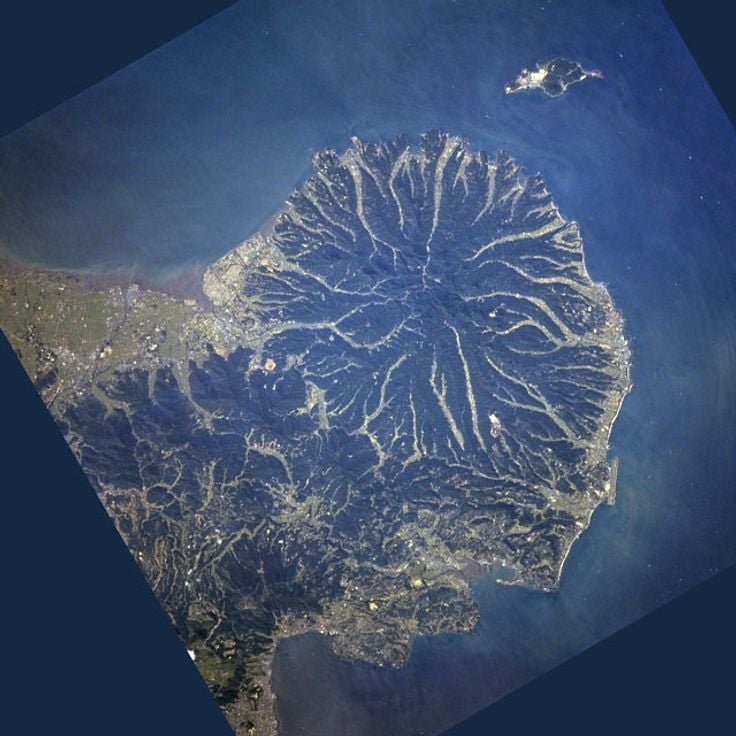
Yakushima is an island off the southern coast of Japan, covered in ancient cedar forests that feel untouched by time. The yakusugi cedars, some over a thousand years old, grow thick and gnarled across slopes wrapped in mist and moss. The island is a UNESCO World Natural Heritage site and draws hikers who want to walk through a forest that looks much as it did centuries ago.
Jomon Sugi is one of the oldest cedar trees in Japan, growing deep inside the forest of Yakushima. Reaching it means a long hike through dense woods, across mossy rocks and roots, with smaller ancient trees lining the path. When you finally arrive, the tree stands quietly in its clearing, massive and old, a living reminder of how long this forest has been growing undisturbed.
Shiratani Unsuikyo is a river gorge on Yakushima island where thick moss covers the ground, rocks, and roots of ancient cedar trees. Streams run through the valley, and some of the cedars here have been growing for thousands of years. Walking through this forest feels like stepping into a world apart from the rest of Japan.
Shuri Castle was once the seat of the Ryukyu Kingdom and stands as a key part of Okinawa's story within the broader history of southern Japan. A fire in 2019 caused serious damage, and the rebuilding work is now open to visitors. Watching the castle come back together, stone by stone, is itself a reason to visit.
The Okinawa Churaumi Aquarium sits on the northern tip of Okinawa and is one of Japan's most recognized aquariums. Whale sharks and manta rays move through one of the largest tanks in the world, giving visitors a close look at the ocean life that surrounds this subtropical archipelago. It is a natural complement to the coral reefs and clear waters that define the region.
Yanbaru National Park covers the northern tip of Okinawa's main island with subtropical forest that feels far removed from the resort beaches to the south. Old trees rise over steep hillsides, and the forest is home to birds and animals found nowhere else on Earth. The area was recognized as a natural World Heritage Site, a rare honor for a forest of this kind in Japan.
The Kerama Islands sit off the coast of Okinawa, and they represent one of southern Japan's more remote corners. The water here carries a deep blue color that locals call Kerama Blue. Below the surface, coral reefs grow close to shore, and sea turtles swim near enough to watch clearly. In winter, humpback whales come to these waters to raise their young. On land, small beaches wait, many reachable only by boat.
Kabira Bay sits on the north shore of Ishigaki Island and gives a clear sense of what subtropical Okinawa looks like up close. The water is shallow and shifts between shades of blue and green depending on the light. Dense trees press close to the shore. Swimming is not allowed here because of strong currents, so most visitors take glass-bottom boats or simply stand at the water's edge and look out.
Iriomote Island sits at the far southwest of Okinawa Prefecture, covered almost entirely by subtropical jungle. Mangroves line its rivers, waterfalls drop through forested gorges, and rare animals live here that exist nowhere else in the world. The island is part of a UNESCO World Natural Heritage site, and it feels like a place where nature sets the pace.
Dazaifu Tenmangu is one of Kyushu's major shrines, dedicated to the scholar Sugawara no Michizane. Thousands of plum trees surround the grounds, blooming each year and drawing visitors from across Japan. People come here to pray for success in studies and exams, making it a lively place during the school year.
Fukuoka Yatai are small outdoor food stalls that come to life after dark, lining the streets and riverbanks of the city. Sitting down at one means squeezing onto a stool beside locals and travelers, all sharing the same counter over bowls of tonkotsu ramen or skewers fresh off the grill. These stalls have been part of daily life in Fukuoka for generations and remain one of the most direct ways to feel the rhythm of the city.
Itoshima is a coastal area west of Fukuoka where sandy beaches meet small cafes and local workshops. The area is known for its torii gates that stand directly in the sea, appearing to rise from the water at low tide. Walking through Itoshima shows a side of Japan that feels unhurried, far from crowded city centers.
Yanagawa is a town in Fukuoka Prefecture where canals run through the streets as naturally as roads do. Flat wooden boats, steered by boatmen with long poles, carry visitors past old walls, willow trees, and low bridges. The canals were once part of a castle fortification system and are now the main way to experience the town. Life here moves at the pace of the water.
Arita is a small town in Saga Prefecture and the birthplace of Japanese porcelain. Since the early 1600s, kilns have fired pottery here, and today visitors can walk through workshops, watch craftspeople at work, and buy pieces that carry on a tradition deeply rooted in this corner of Kyushu.
Karatsu Castle sits on a small hill right at the edge of the sea, looking out over Karatsu Bay. Its white walls stand out clearly against the water below. From the top, you can see the coastline, the pine forests along a nearby chain of islands, and the surrounding hills. This castle is one of those places in Kyushu where history and the coast come together in a direct and uncomplicated way.
The Nagasaki Peace Park stands at the site where an atomic bomb fell on August 9, 1945. It is a place where visitors come to remember the victims and reflect on what happened that day. Statues, memorials, and inscriptions tell the story of the bombing and of the city that rebuilt itself after.
The Atomic Bomb Museum in Nagasaki tells the story of August 9, 1945, the day the city was bombed. Through photographs, personal objects, and survivor accounts, the museum walks visitors through what happened before, during, and after the explosion. It is a sobering place that helps people understand how deeply the bombing changed the lives of those who lived here.
Glover Garden sits on a hillside above Nagasaki Bay and gathers several historic mansions built by Western merchants and businessmen who settled here in the 19th century, when Nagasaki was the only Japanese port open to foreign trade. Walking through the garden, you move between wooden and stone houses that mix Western and Japanese styles, with wide verandas and views over the water below. The garden gives a real sense of the daily life of the foreigners who made this city their home, and of how Nagasaki quietly became a meeting point between Japan and the outside world.
Mont Inasa is a hill on the edge of Nagasaki that looks out over the city and its bay. At night, the view changes completely: city lights reflect on the water below, and the shape of the peninsula becomes clear against the dark sky. Many visitors make the trip up specifically after sunset, when the scene below takes on a different quality altogether.
Dejima is a reconstructed artificial island in the heart of Nagasaki that once served as the only official link between Japan and the Western world. During centuries of national seclusion, this small trading post was the one place where Dutch merchants were allowed to live and work on Japanese soil. Today, visitors can walk through rebuilt warehouses and living quarters to understand how this narrow strip of land once connected two very different worlds.
Hashima, also known as Gunkanjima, is an abandoned coal mining island off the coast of Nagasaki. Rows of concrete buildings rise straight from the sea, frozen as they were when workers and their families left decades ago. Walking through it feels like stepping into a place where time simply stopped.
Beppu Onsen, in Oita Prefecture, is a city where steam rises from the ground in every direction. The streets carry a misty feel at all hours of the day. Visitors can soak in public bathhouses, sink into mud pools, or walk among the colored thermal ponds called the Hells, each one a different shade of blue, red, or grey. This is one of southern Japan's most vivid examples of how hot springs have shaped a city and the daily life of everyone in it.
Beppu Jigoku, which translates roughly as the "hells of Beppu," is a group of geothermal springs in Oita Prefecture where the water takes on colors that seem almost unreal. Some pools glow a deep cobalt blue, others run red from iron-rich water, and a few churn with mud or release jets of steam. The water is far too hot to touch, so visitors walk paths between the pools and watch the earth do something extraordinary. This is one of the more unusual ways to experience the geothermal energy that defines the broader Beppu area.
Yufuin is a hot spring town in Oita Prefecture, tucked between green mountains in Kyushu. Its main street is lined with ryokan inns, small cafes, and local galleries. Compared to nearby Beppu, the pace here feels slower and more personal. It is the kind of place where travelers soak in natural hot spring waters, browse handmade crafts, and spend an unhurried day walking through a town that has welcomed visitors for generations.
The Kunisaki Peninsula, in Oita Prefecture, is one of the oldest centers of Buddhist culture in Japan. Temples sit deep in wooded hills, stone statues line ancient pilgrimage paths, and small farming villages spread across the valleys. Walking through this area, you get a sense of how religious life and rural life have existed side by side here for over a thousand years.
Kumamoto Castle rises on a hill above the city of Kumamoto in Kyushu, its dark walls and curved rooftops shaped by centuries of history. Built in the early 1600s, it served as a fortress, a symbol of power, and a place of fierce battle. A major earthquake in 2016 caused serious damage, but restoration work is ongoing and visitors can walk the grounds and see the main tower up close. In the context of southern Japan, this castle stands as one of the clearest windows into the feudal past of Kyushu.
Mount Aso, in Kumamoto Prefecture, holds one of the largest calderas in the world, wide enough that towns and farms sit inside it. The active volcano still vents gases and ash, and the surrounding land shifts between green pastures, dark lava fields, and steaming craters that remind you the ground here is very much alive.
Kusasenri is a wide grassy plain that sits inside an old volcanic crater at the base of Mount Aso. Horses graze freely across the open ground, and two small ponds sit at the center. The place gives a clear sense of how volcanic forces have shaped the land across Kyushu.
Kurokawa Onsen sits in the hills of Kumamoto Prefecture, wrapped in forest. The streets are narrow and lined with wooden inns, each offering baths fed by natural hot springs that rise from the ground. Visitors come here to soak, slow down, and settle into a pace that feels unchanged for generations.
Takachiho Gorge is a valley carved out of old lava rock. The river runs quietly between vertical stone walls, and the Manai Falls drop straight down into the water below. Visitors row small boats through the gorge and look up at the waterfall from below.
Takachiho Shrine sits at the heart of a town long tied to Japan's oldest creation stories. This is where the gods who shaped the land are said to have first descended to earth. In the evenings, priests at the shrine perform a form of kagura dance, a ritual theater that keeps these stories alive.
Amanoiwato Shrine sits deep in Miyazaki Prefecture, marking the cave where the sun goddess Amaterasu is said to have hidden herself, casting the world into darkness. This is one of the oldest and most deeply felt places in all of Shinto tradition. Walking the forested path along the river to reach it feels like stepping into Japan's oldest stories.
Aoshima is a small island in Miyazaki Prefecture, ringed by flat rock formations that spread across the sea floor at low tide like natural stepping stones. A sandy path connects it to the mainland. Inside, subtropical plants grow densely around a Shinto shrine tucked into the green.
Aoshima Shrine sits on a small island in Miyazaki Prefecture, ringed by rocky formations that jut out from the sea in flat, wave-like layers. This shrine is one of the places in southern Japan where the natural setting feels as old as the beliefs it houses.
Udo Jingu is a Shinto shrine built inside a sea cave along the Pacific coast of Miyazaki Prefecture. Waves break just outside the entrance, and the path down to it runs along steep stone steps cut into the cliff. The shrine is tied to a story about the birth of an imperial ancestor and has drawn pilgrims from across Japan for a very long time.
Sakurajima is an active volcano that rises over Kagoshima Bay, regularly sending ash and smoke into the surrounding towns. People here have learned to live alongside it, and daily life on the peninsula carries the marks of that proximity. It is one of the most watched and monitored volcanoes in Japan.
Sengan-en is a historic garden on the shore of Kagoshima Bay, laid out so that the volcano Sakurajima and the water appear as part of the garden itself. Trees, ponds, and small pavilions are arranged to draw the eye outward toward the bay. The garden once belonged to the Shimazu clan, who ruled this region for centuries.
Kirishima is a chain of volcanoes in Kagoshima Prefecture, where rugged peaks and steaming vents shape the land. At the foot of these mountains stands Kirishima Jingu, one of Japan's oldest shrines, deeply tied to the country's founding myths. People come here to walk mountain trails, breathe in sulfurous air, and visit a shrine that has drawn pilgrims for well over a thousand years.
Kirishima Jingu is a major Shinto shrine sitting deep in the forests of the Kirishima volcanic range. The path to it winds through trees, and the shrine itself feels rooted in the land, a place where old rituals and raw volcanic nature exist side by side.
Yakushima is an island off the southern coast of Japan, covered in ancient cedar forests that feel untouched by time. The yakusugi cedars, some over a thousand years old, grow thick and gnarled across slopes wrapped in mist and moss. The island is a UNESCO World Natural Heritage site and draws hikers who want to walk through a forest that looks much as it did centuries ago.
Jomon Sugi is one of the oldest cedar trees in Japan, growing deep inside the forest of Yakushima. Reaching it means a long hike through dense woods, across mossy rocks and roots, with smaller ancient trees lining the path. When you finally arrive, the tree stands quietly in its clearing, massive and old, a living reminder of how long this forest has been growing undisturbed.
Shiratani Unsuikyo is a river gorge on Yakushima island where thick moss covers the ground, rocks, and roots of ancient cedar trees. Streams run through the valley, and some of the cedars here have been growing for thousands of years. Walking through this forest feels like stepping into a world apart from the rest of Japan.
Shuri Castle was once the seat of the Ryukyu Kingdom and stands as a key part of Okinawa's story within the broader history of southern Japan. A fire in 2019 caused serious damage, and the rebuilding work is now open to visitors. Watching the castle come back together, stone by stone, is itself a reason to visit.
The Okinawa Churaumi Aquarium sits on the northern tip of Okinawa and is one of Japan's most recognized aquariums. Whale sharks and manta rays move through one of the largest tanks in the world, giving visitors a close look at the ocean life that surrounds this subtropical archipelago. It is a natural complement to the coral reefs and clear waters that define the region.
Yanbaru National Park covers the northern tip of Okinawa's main island with subtropical forest that feels far removed from the resort beaches to the south. Old trees rise over steep hillsides, and the forest is home to birds and animals found nowhere else on Earth. The area was recognized as a natural World Heritage Site, a rare honor for a forest of this kind in Japan.
The Kerama Islands sit off the coast of Okinawa, and they represent one of southern Japan's more remote corners. The water here carries a deep blue color that locals call Kerama Blue. Below the surface, coral reefs grow close to shore, and sea turtles swim near enough to watch clearly. In winter, humpback whales come to these waters to raise their young. On land, small beaches wait, many reachable only by boat.
Kabira Bay sits on the north shore of Ishigaki Island and gives a clear sense of what subtropical Okinawa looks like up close. The water is shallow and shifts between shades of blue and green depending on the light. Dense trees press close to the shore. Swimming is not allowed here because of strong currents, so most visitors take glass-bottom boats or simply stand at the water's edge and look out.
Iriomote Island sits at the far southwest of Okinawa Prefecture, covered almost entirely by subtropical jungle. Mangroves line its rivers, waterfalls drop through forested gorges, and rare animals live here that exist nowhere else in the world. The island is part of a UNESCO World Natural Heritage site, and it feels like a place where nature sets the pace.
Before you go, know that some sites require planning ahead. Nagasaki's historical sites demand time and reflection rather than quick visits. Mount Aso's volcanic activity occasionally closes access to certain areas, so check conditions before traveling. Visiting these places becomes more meaningful when you approach them with patience rather than rushing through a checklist.