See the monuments around you in AROpen chests in the app
Around Us is built for your phone — point your camera at the streets and discover the monuments and places around you in augmented reality.Around Us is built for your phone — chests unlock when you walk, explore and capture nearby places.
From the historic heart of Gyeongju to the modern beaches of Busan, Gyeongsang offers a journey between past and present.
The Gyeongsang region offers a wide range of places to visit that tell the story of South Korea. You will find Buddhist temples, some over a thousand years old, villages where people keep the traditions of past dynasties alive, and coastal scenery that shapes daily life in modern cities. This region covers several cities and areas, from Gyeongju with its royal ruins to Busan with its city beaches, as well as the mountain villages of Andong and the coastal parks in the south.
This collection brings together the most important sites for understanding the region. You will find UNESCO-listed places that show its historical importance, temples tucked away in the mountains, busy markets where you can try local food, and sea views where nature meets the city. Whether you want to follow in the footsteps of ancient kingdoms, visit places of prayer and meditation, or simply take in the coastal views, this selection guides you to the spots that travelers naturally come across when they explore Gyeongsang.
From the historic heart of Gyeongju to the modern beaches of Busan, Gyeongsang offers a journey between past and present.
The Gyeongsang region offers a wide range of places to visit that tell the story of South Korea. You will find Buddhist temples, some over a thousand years old, villages where people keep the traditions of past dynasties alive, and coastal scenery that shapes daily life in modern cities. This region covers several cities and areas, from Gyeongju with its royal ruins to Busan with its city beaches, as well as the mountain villages of Andong and the coastal parks in the south.
This collection brings together the most important sites for understanding the region. You will find UNESCO-listed places that show its historical importance, temples tucked away in the mountains, busy markets where you can try local food, and sea views where nature meets the city. Whether you want to follow in the footsteps of ancient kingdoms, visit places of prayer and meditation, or simply take in the coastal views, this selection guides you to the spots that travelers naturally come across when they explore Gyeongsang.
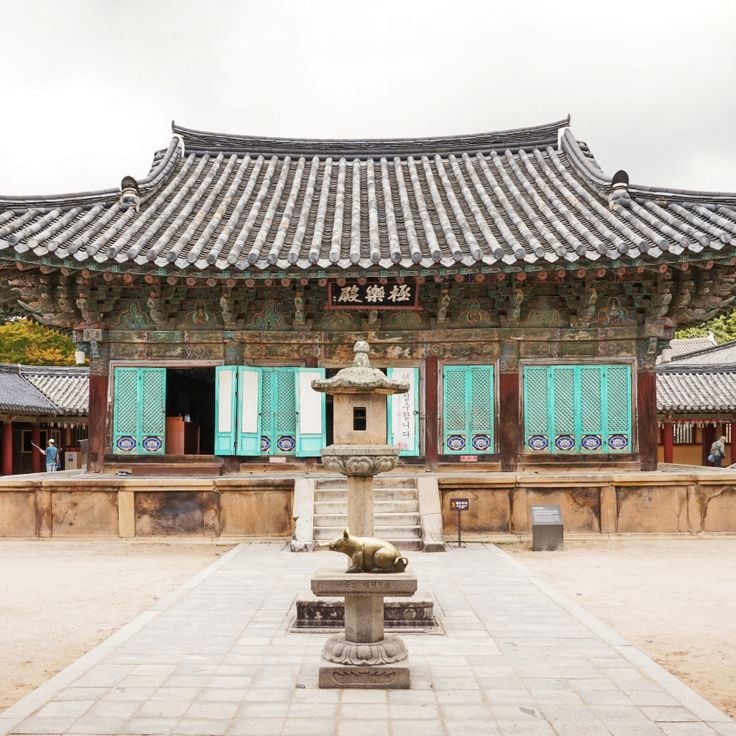
Bulguksa Temple in Gyeongju is one of the most recognized Buddhist temples in South Korea. Built in the 8th century, it sits on a series of stone terraces and features traditional pavilions and pagodas that have stood for over a thousand years. Walking through the grounds, you notice the careful stonework, the layered rooftops, and the way the buildings are arranged around open courtyards. It is a UNESCO World Heritage Site and remains an active place of worship today.
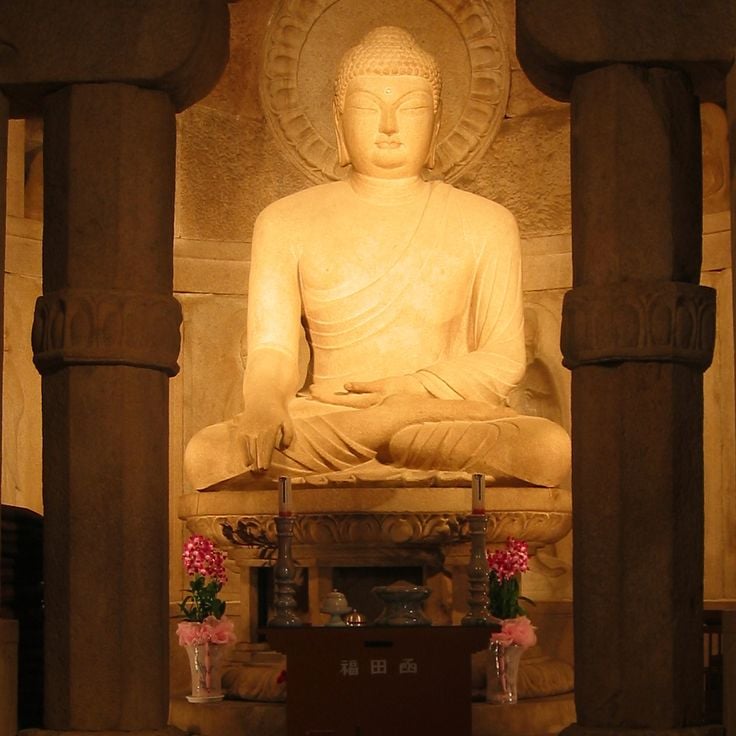
Seokguram Grotto sits on Mount Tohamsan near Gyeongju, sheltering a large granite Buddha statue carved in the 8th century and facing the sea. The domed chamber was built with care and precision, and UNESCO recognized it as a World Heritage Site. Visitors walk up through the forest to reach it, and the stone figure, nearly 11 feet (3.4 meters) tall, stands in a circular sanctuary that feels still and focused. It is one of the clearest examples of Buddhist art from the Silla period.
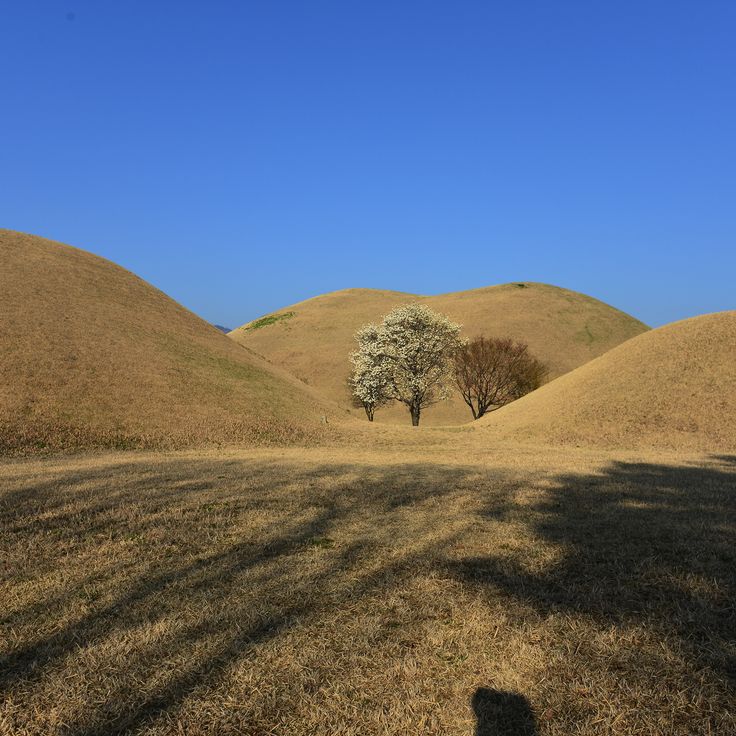
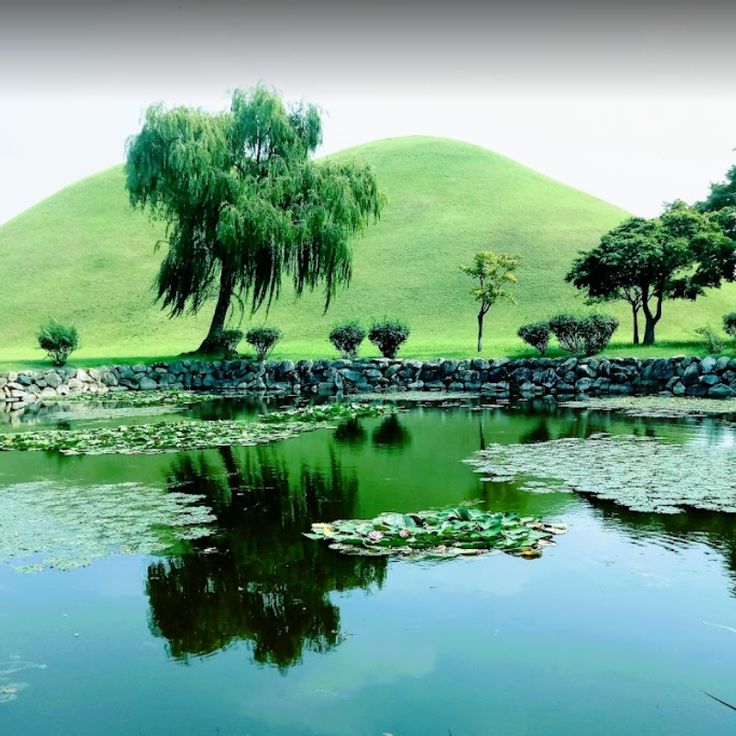
The Daereungwon Tomb Complex in Gyeongju is a group of large grass-covered royal burial mounds from the Silla period. Walking among these rounded hills, you get a sense of how old this place is. Each mound covers a royal tomb filled with jewelry, pottery, and everyday objects. Inside the Cheonmachong mound, visitors can enter a reconstructed tomb and see the objects found during excavation.
Cheonmachong Tomb sits in the middle of Gyeongju, surrounded by a large field of royal burial mounds from the Silla period. Visitors can walk inside and see how these tombs were built, with a wooden chamber covered by layers of earth and stone. When archaeologists opened it, they found gold ornaments, pottery and other objects now displayed in nearby museums. One of the most noted finds was a painting of a horse, which gave the tomb its name.
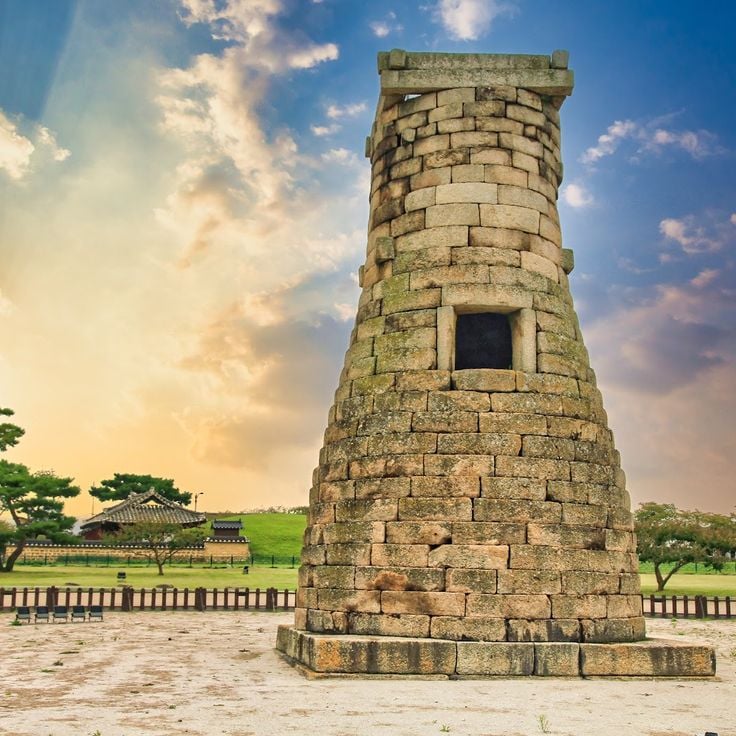
Cheomseongdae Observatory in Gyeongju is a stone tower built in the 7th century during the Silla dynasty. It was used to watch the sky and track the stars. The tower is made of carefully stacked stones in a rounded shape, standing about 30 feet (9 meters) tall. It is one of the oldest known astronomical structures in Asia, and you can walk right up to it across an open field in the middle of the city.
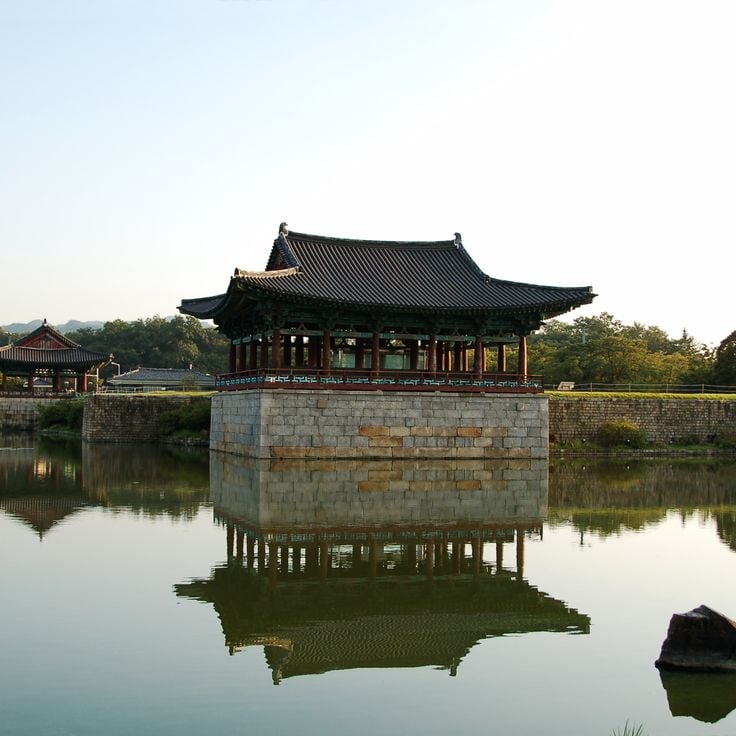
Donggung Palace and Wolji Pond form an ancient royal complex in the heart of Gyeongju. The buildings date back to the Silla dynasty, when this site served as a secondary palace for the crown prince. The pond reflects the pavilions and walls around it, and the scene changes completely after dark when the whole site is lit up. Visitors often come twice, once during the day and once in the evening, to see both sides of the place.
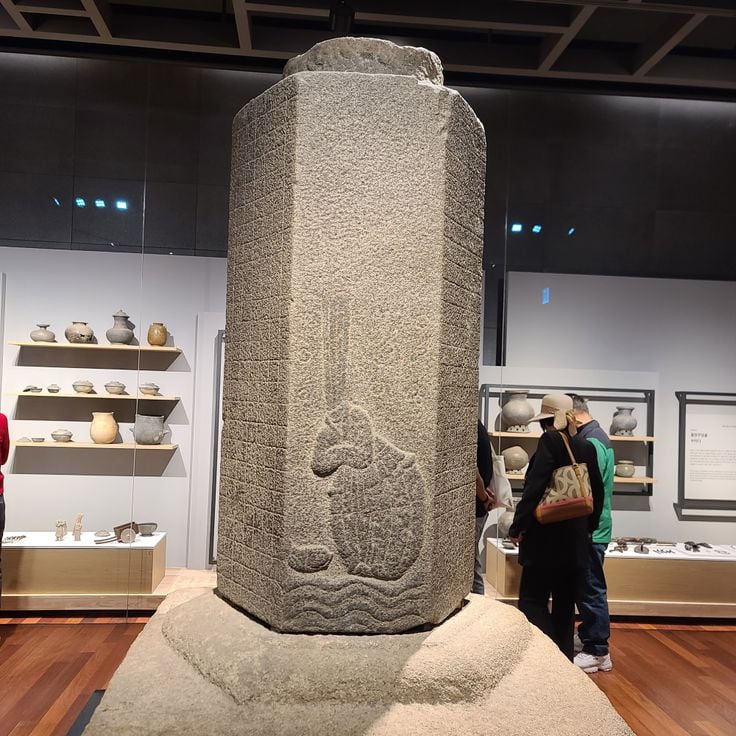
The Gyeongju National Museum holds the most important objects recovered from the Silla Kingdom, which ruled this part of Korea for nearly a thousand years. Golden crowns, jewelry, bronze bells, and pottery fill the halls, all found in tombs and archaeological sites around the city. Walking through the museum gives a clear sense of how people lived and ruled during that era.
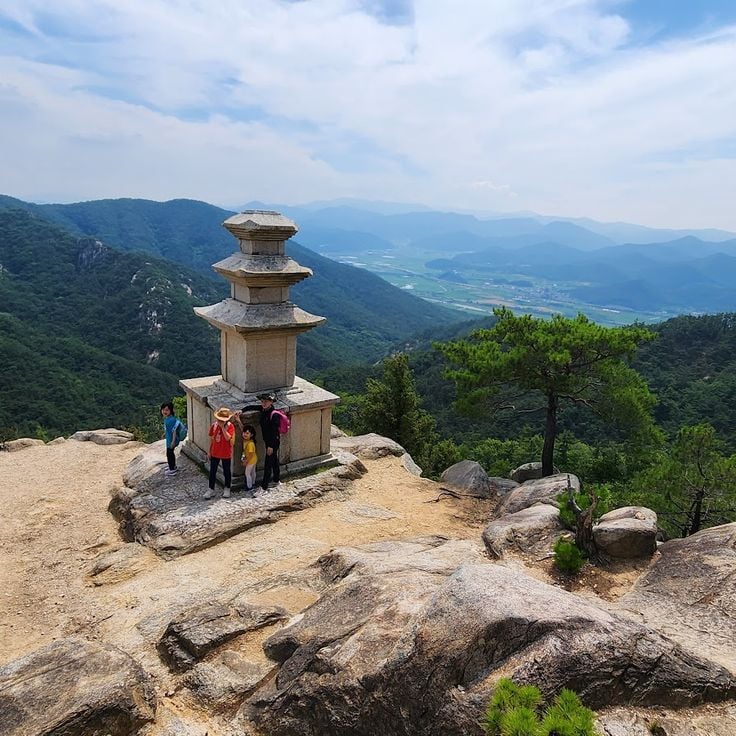
Gyeongju Namsan is a mountain just south of Gyeongju where Buddhist statues, stone pagodas, and temple ruins are scattered across the hillsides. Hiking the trails here feels like walking through an open-air gallery shaped by the Silla kingdom. The stone carvings blend into the rock faces and forest floor, and many locals still come here to pray or simply walk.
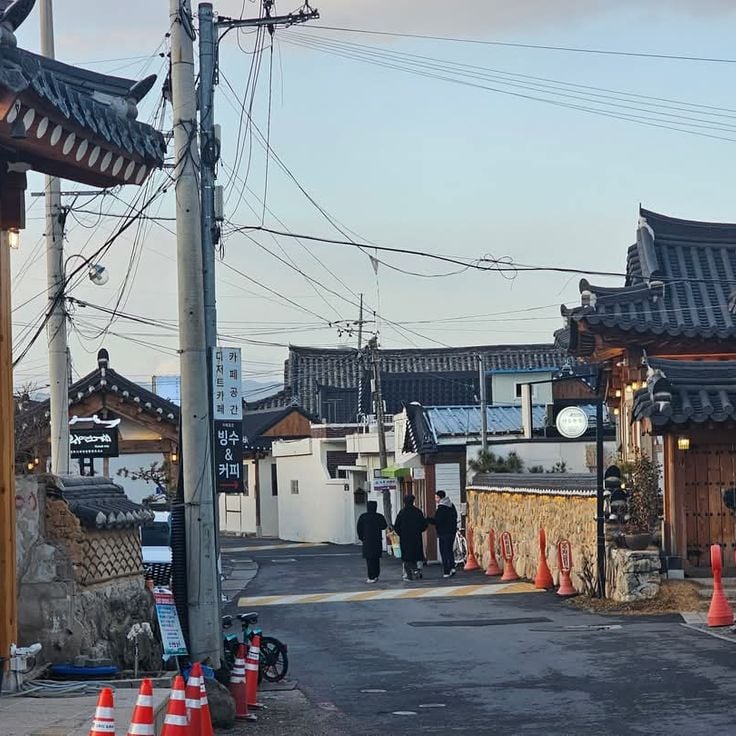
Hwangnidan-gil is a street in Gyeongju where old hanok buildings now house cafés, small restaurants, and shops. The wooden structures have been carefully adapted for everyday use while keeping their original shape and materials. Walking through this lane, you get a sense of how the city blends its daily life with its older layers. It is a good place to stop, eat something local, and take in the feel of Gyeongju at a slower pace.
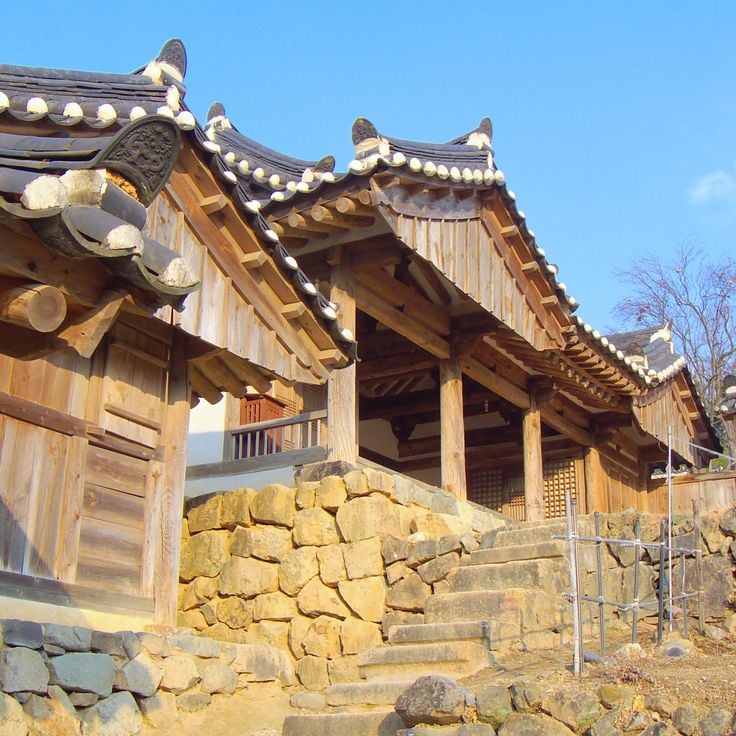
Yangdong Folk Village is one of the oldest and best-preserved clan villages from the Joseon era in South Korea. Located near Gyeongju, it was home to two powerful noble families whose wooden houses, courtyards and stone walls still stand today. Walking through the village, you can see how traditional Hanok homes were arranged along hillside terraces, facing the valley below. The site is recognized by UNESCO and gives a real sense of how aristocratic families lived and organized their daily lives centuries ago.
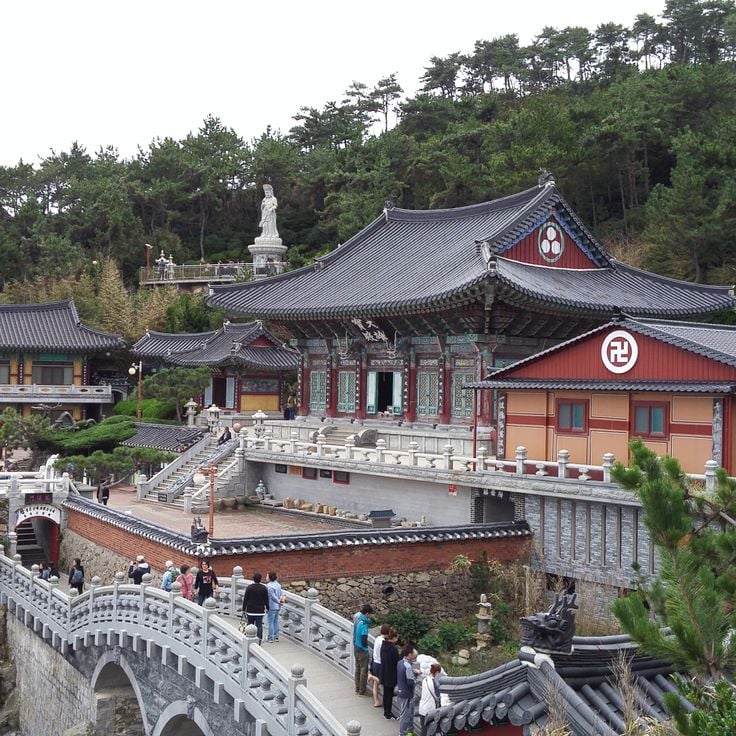
Haedong Yonggungsa Temple sits on rocks right at the edge of the sea, which makes it different from most Buddhist temples in Korea that are built deep in the mountains. The buildings cling to the cliffs, and the sound of the waves follows you everywhere. People come here to pray, walk along the paths, or simply watch the ocean. The site is especially busy on Korean holidays and during the new year.
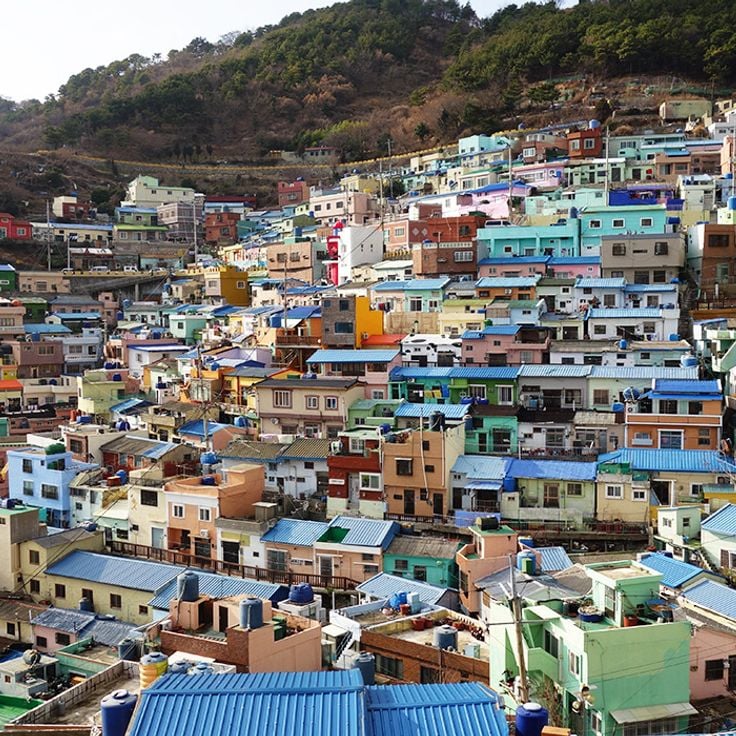
Gamcheon Culture Village sits on a hillside in Busan and was once a working-class neighborhood. Today, its narrow alleys, colorful houses, and stairways are covered with murals and small sculptures. Walking through the village, you pass small shops and cafes tucked between the homes, with occasional viewpoints opening up toward the sea. The place shows how a community can reinvent itself through art while keeping its older identity intact.
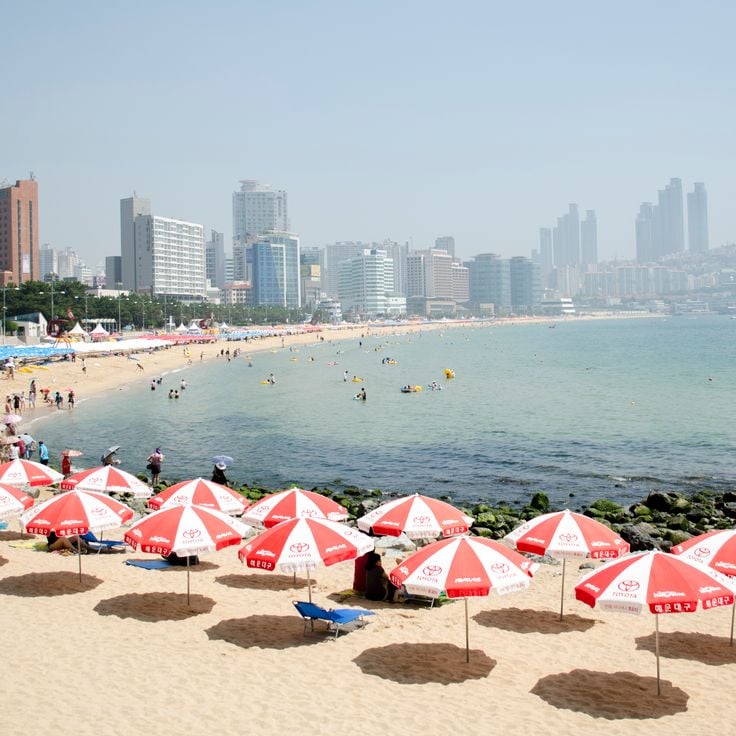
Haeundae Beach sits on the eastern edge of Busan and is the most visited city beach in South Korea. The sand stretches along a wide bay, backed by tall apartment towers and hotels that light up after dark. During summer, the beach fills with people from across the country. In the morning, locals walk along the shore before the crowds arrive. The water is calm enough for swimming, and the seafront promenade connects the beach to nearby restaurants and cafes.
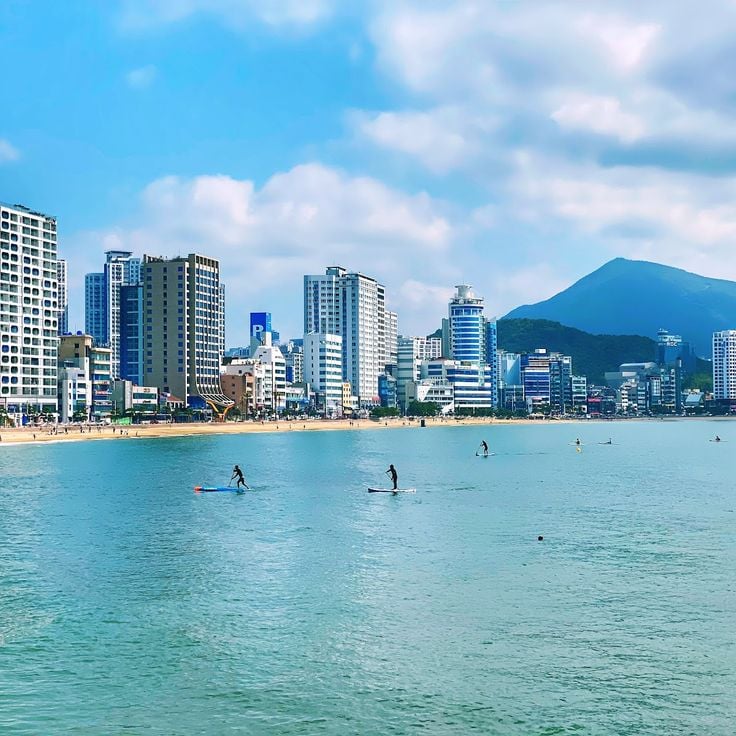
Gwangalli Beach is one of Busan's most visited city beaches. It stretches along a wide bay, with cafes, restaurants and street food stalls lining the seafront. During the day, locals jog, swim and gather on the sand. At night, the Gwangan Bridge lights up over the water in shifting colors, and the beach becomes a popular meeting spot. People sit along the promenade, eat local snacks and watch the reflections on the sea. This beach shows how closely urban life and the coast are intertwined in Busan.
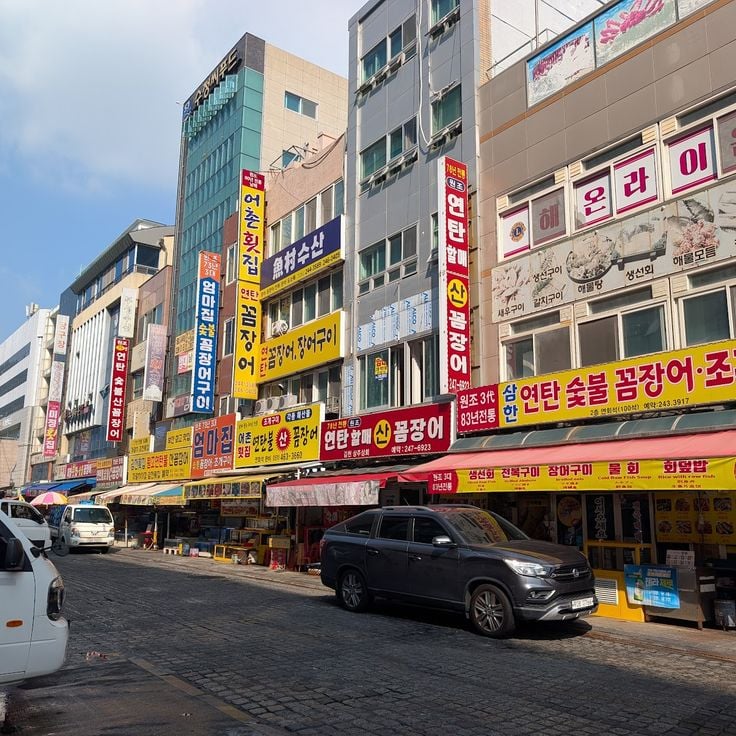
Jagalchi Fish Market is the largest fish market in South Korea and sits right on the waterfront in Busan. Every day, vendors and locals come here to buy fresh fish and seafood straight off the boats. The stalls are packed tightly together, and the smell of salt and fresh catch fills the air. The women who run the stalls, known locally as Jagalchi ajeossi, call out to passersby with energy. Inside the main building, you can have your purchase cooked and eat it on the spot.
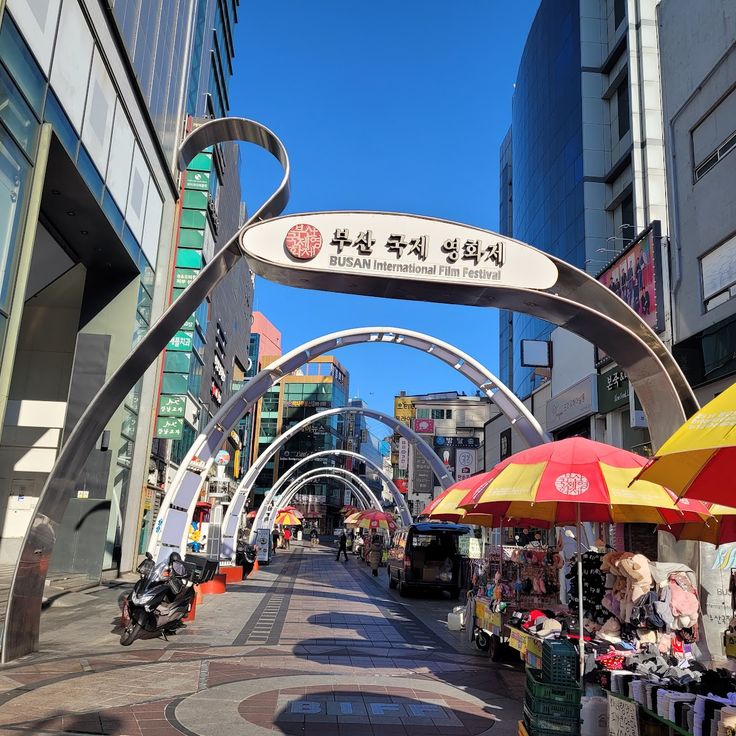
BIFF Square and Gukje Market sit side by side in central Busan, forming one of the most visited parts of the city. BIFF Square takes its name from the Busan International Film Festival and features handprints of directors and actors pressed into the pavement. Street food stalls line the square, serving grilled squid and other local snacks. Just steps away, Gukje Market grew out of the post-war years and has been a working market ever since. Its narrow alleys are packed with stalls selling clothes, household goods, and hot food. Walking through both areas gives a clear sense of everyday life in Busan.
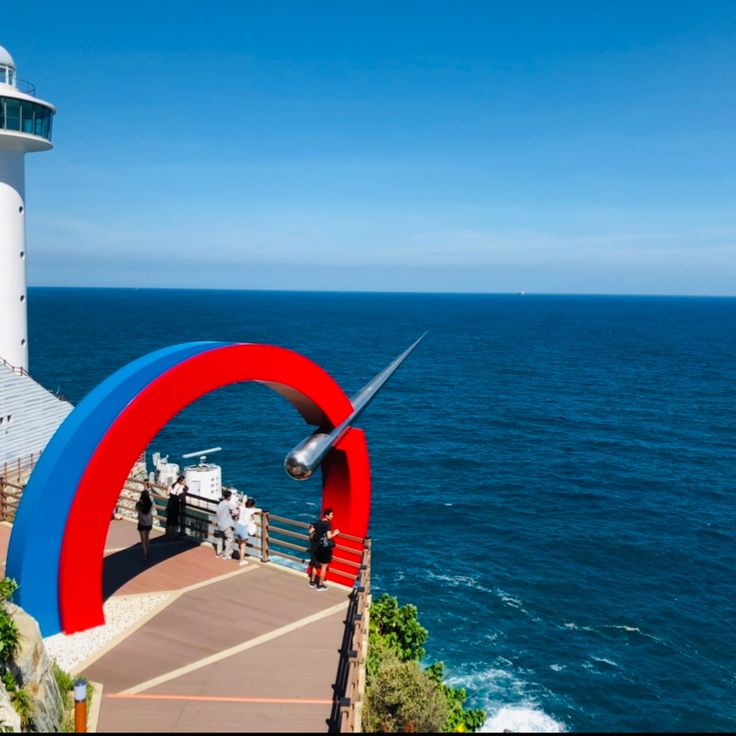
Taejongdae Resort Park sits at the southern tip of Yeongdo Island in Busan. Tall cliffs drop straight into the sea, and a thick forest covers the land behind them. Paths wind along the coast and lead to viewpoints where, on a clear day, you can see as far as the Japanese island of Tsushima. Many locals come here on weekends to walk along the shoreline and watch the waves break against the rocks below.
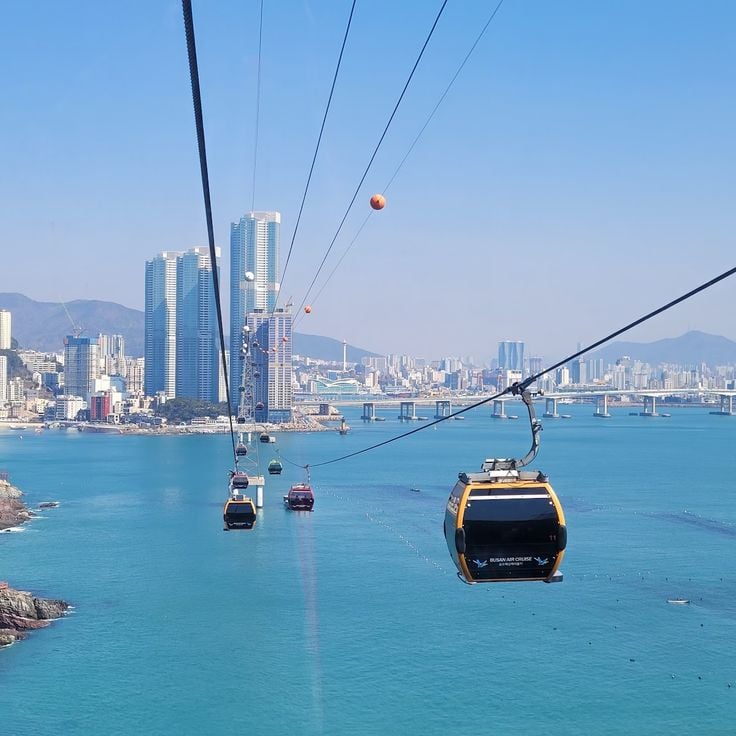
Songdo Beach is one of the oldest city beaches in Busan. It sits in a small bay surrounded by hills and draws many locals on sunny days. Above the water, the Songdo Marine Cable Car runs from one shore to the other. From the gondolas, you can see the coastline, the rocks, and the open sea, giving you a clear sense of how the city sits along the water.
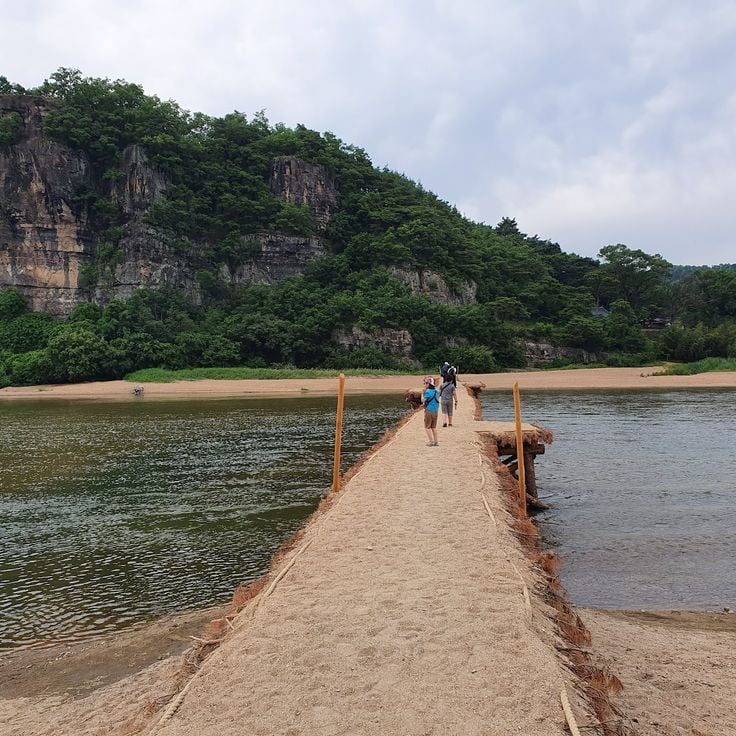
Andong Hahoe Folk Village sits inside a wide bend of the Nakdong River and is one of the best-kept traditional villages in South Korea. The houses date back to the Joseon Dynasty, and the families who lived here passed local customs down through the generations. Walking through the narrow lanes, you can see thatched-roof homes next to the larger compounds of the noble class, giving a clear picture of daily life from centuries ago. The village is a UNESCO World Heritage Site, close to the city of Andong.
Buyongdae Cliff rises above Hahoe village on a steep rocky edge. From the top, you can see how the river bends in a wide curve around the village below. The thatched roofs, the trees, and the slow water all come into view at once. This is the spot where the layout of Hahoe makes complete sense.
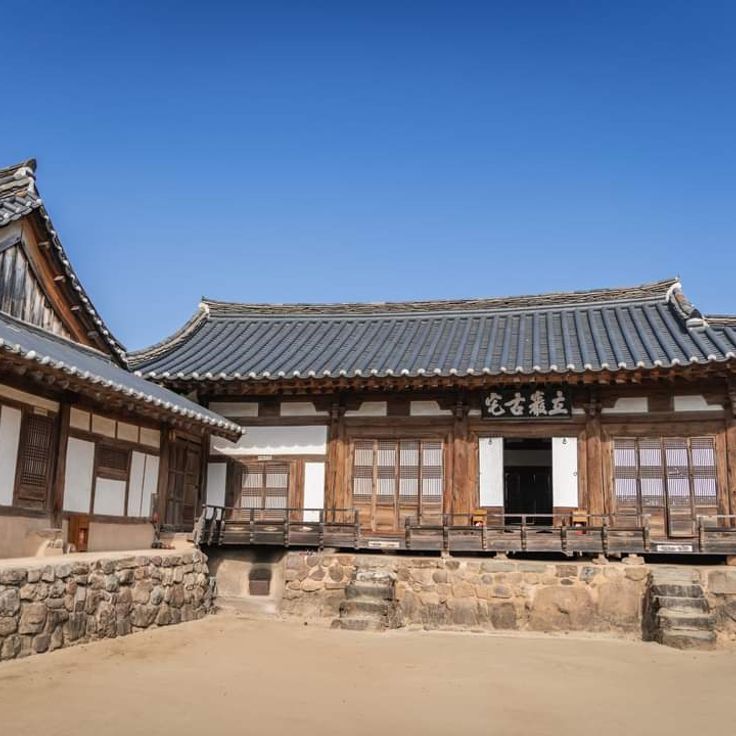
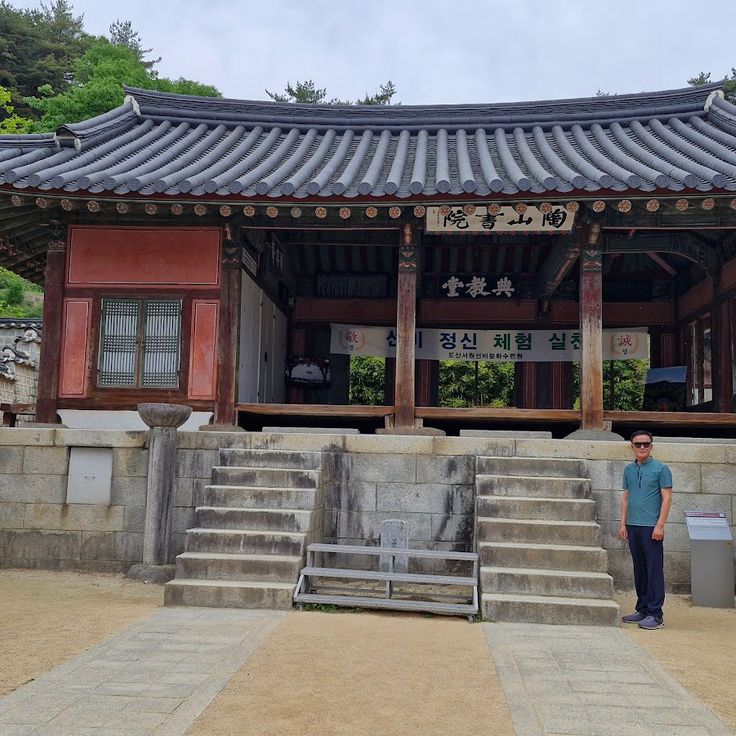
Dosan Seowon Confucian Academy sits just outside Andong, tucked between wooded hills and a river. Founded in the 16th century, it was one of the most respected places of learning in the country during the Joseon dynasty. Scholars came here to study Confucian texts, debate ideas, and train for public life. The wooden buildings, open courtyards, and simple gardens are still standing today. Walking through the grounds gives a real sense of how education and daily life were organized for centuries in this part of Korea.
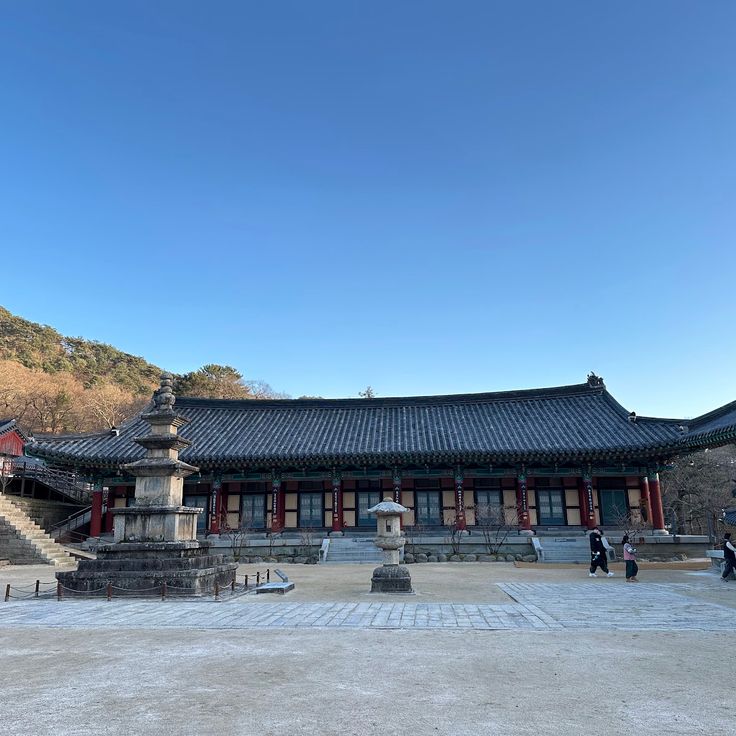
Haeinsa Temple sits deep in the Gayasan mountains and is one of the most important Buddhist temples in Korea. Founded over a thousand years ago, it holds the Tripitaka Koreana, a complete collection of Buddhist scriptures carved onto wooden printing blocks. These blocks have been stored for centuries in special wooden halls that are recognized as a UNESCO World Heritage Site. The walk up to the temple passes through dense forest, and the setting gives the visit a calm, contemplative feel from the very start.
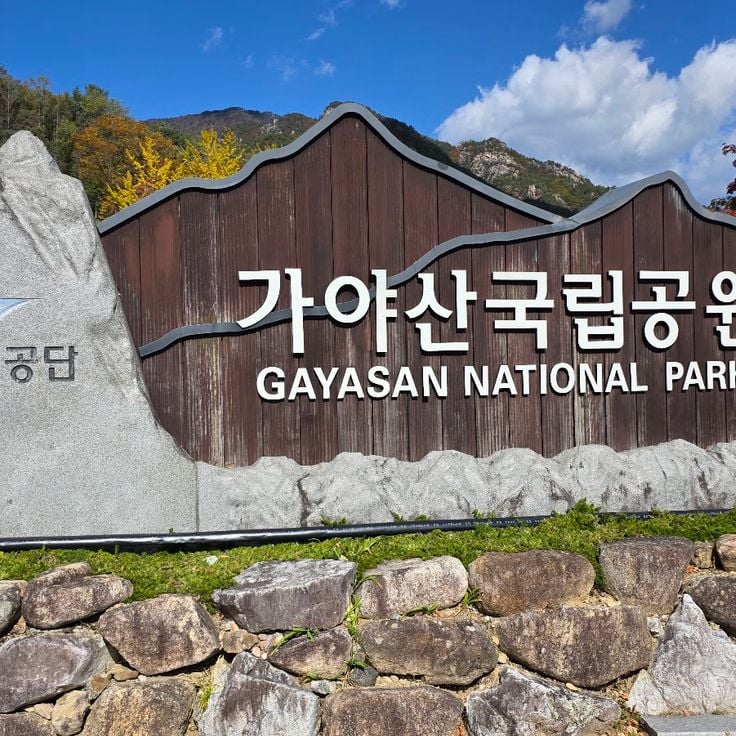
Gayasan National Park sits in the mountains of the Gyeongsang region and wraps around the temple of Haeinsa. Walking through the park, you pass dense forests, rocky outcrops, and streams running between the slopes. The trails change with the seasons: in autumn the trees turn red and gold, in winter snow covers the peaks. The park is a natural starting point for visiting Haeinsa, a temple known for housing the Tripitaka Koreana wooden printing blocks, carved over 700 years ago.
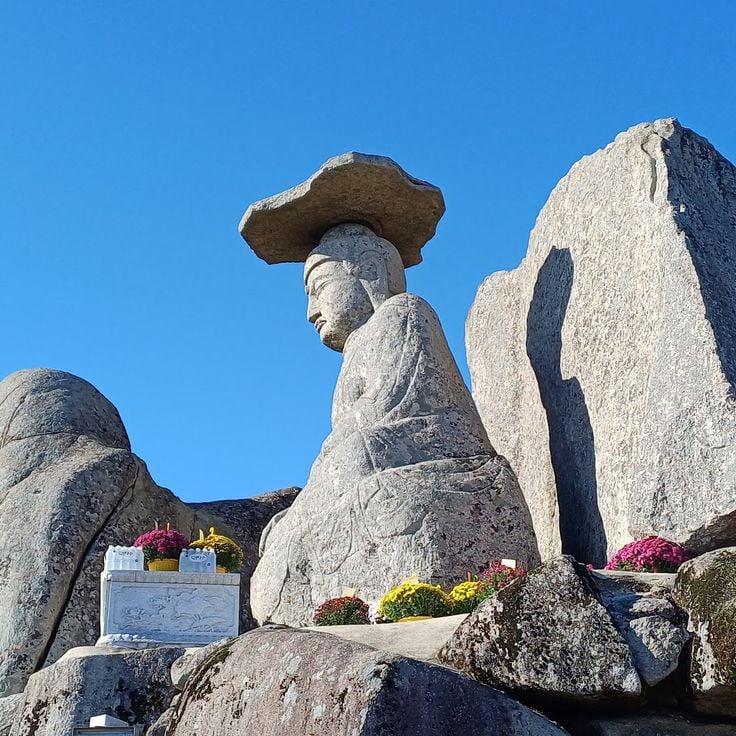
Palgongsan is a mountain on the northern edge of Daegu, popular with locals for day hikes and outdoor walks. At the top of its Gwanbong peak stands the Gatbawi Buddha, a stone figure wearing a flat stone slab on its head. This unusual detail makes the statue easy to recognize and sets it apart from other Buddhist carvings in the region. According to tradition, the Gatbawi Buddha grants sincere wishes, which is why many visitors make the climb to pray or reflect.
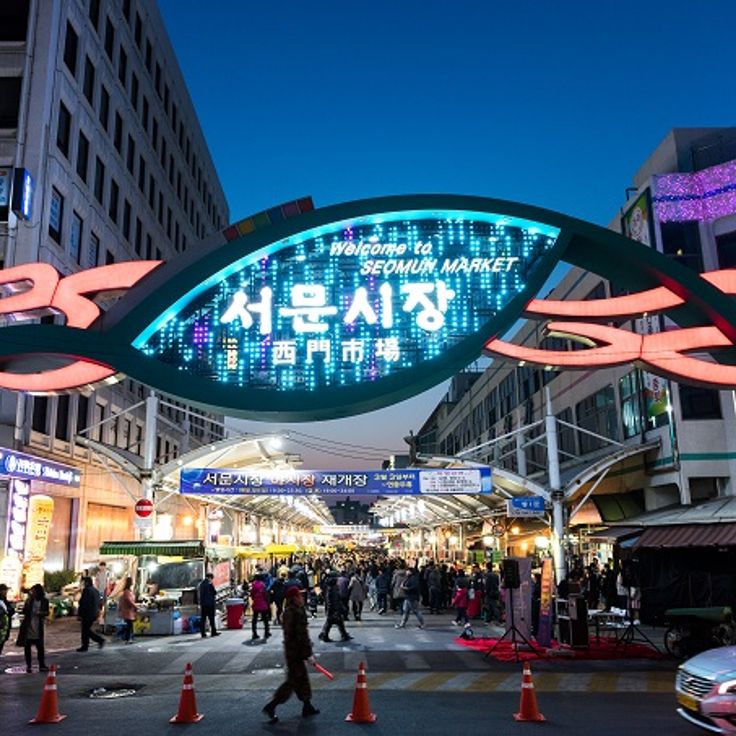
Seomun Market is one of the oldest traditional markets in South Korea and sits in the heart of Daegu. During the day, vendors sell fabrics, clothing, and fresh produce. At night, the alleys fill with food stalls offering local street food: grilled skewers, spicy tteokbokki, and sweet pancakes. The market draws locals and visitors alike, and the evening hours are when it feels most alive. It is a good place to eat, walk around, and get a sense of everyday life in the city.
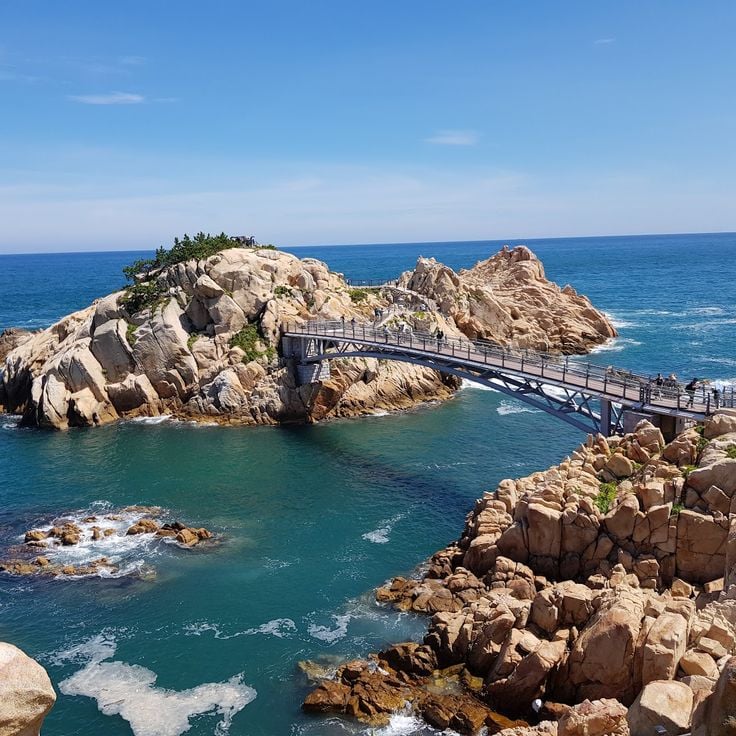
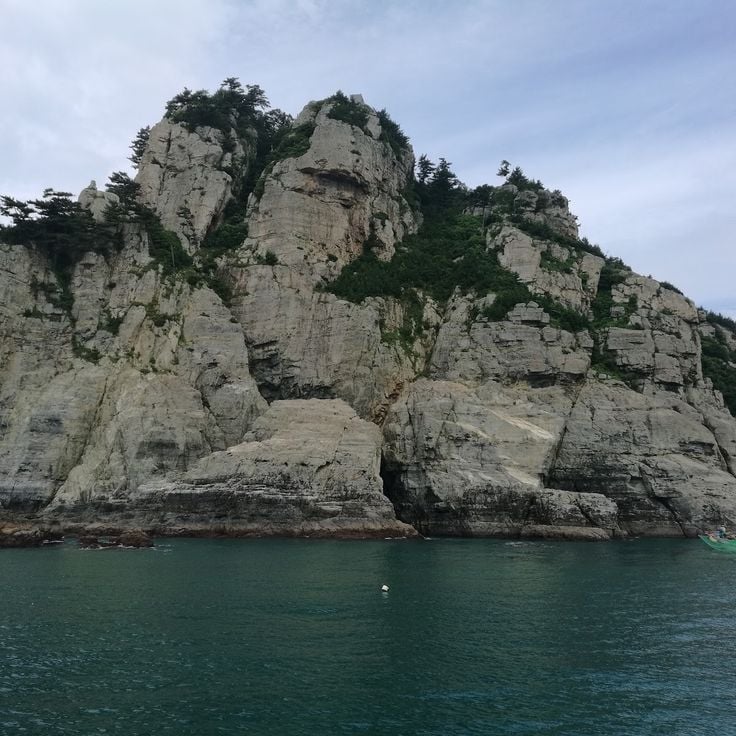
Daewangam Park sits on the coast of Ulsan, where a pine forest leads to the edge of rocky cliffs. The rocks drop straight into the sea, and the water moves around the stone formations below. The paths through the park are easy to walk, and locals often come here on weekends for a stroll along the shore.
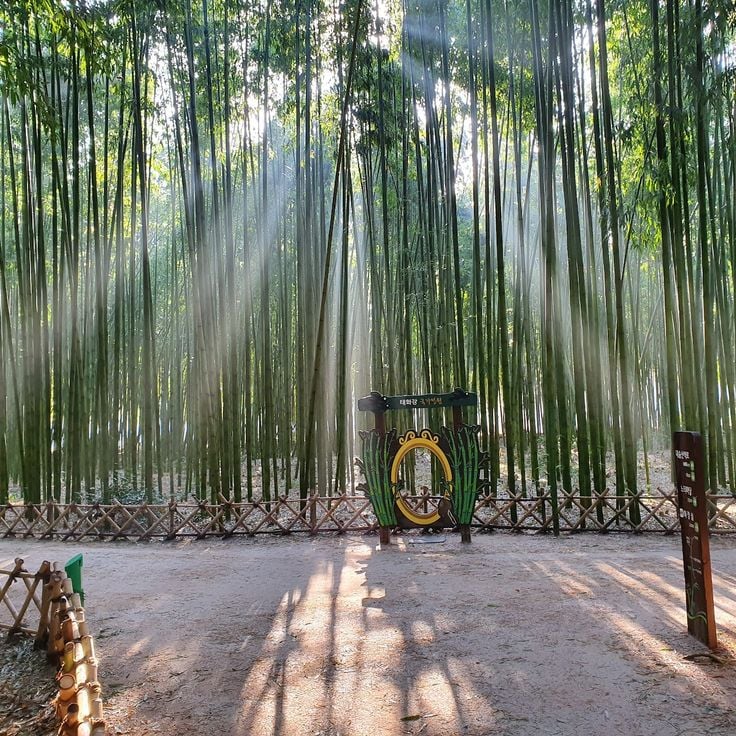
Taehwagang National Garden runs along the Taehwa River in Ulsan and is one of the few national gardens in South Korea. Visitors walk through bamboo groves, cross small bridges, and follow riverside paths where the water sets the pace of the day. Locals come here regularly to stroll, sit, and watch birds along the banks. The garden has a natural, open feel that makes it a welcome break from the urban parts of the city.
Hallyeohaesang National Park covers a stretch of coastline around Tongyeong, where dozens of islands dot the sea. The summit of Mireuksan offers a wide view over this island-filled water, best reached by cable car. From the top, you can see the islands scattered across the sea below, the boats moving between them, and the city of Tongyeong along the shore. It is one of the most visited coastal parks in South Korea.
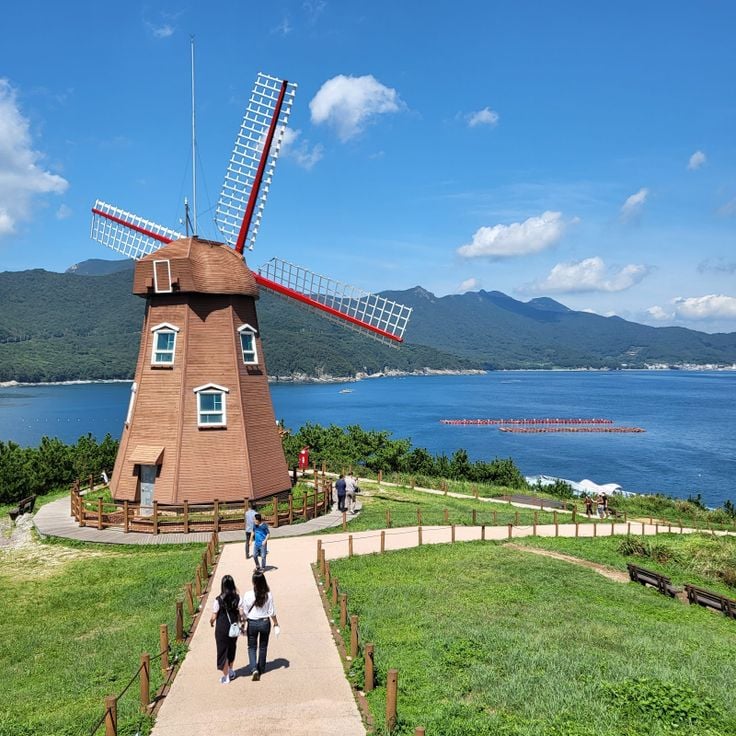
Windy Hill and Sinseondae sit on the coast of Geoje Island in southern South Korea. This stretch of shoreline offers green hills that roll down to the sea, rocky cliffs, and open views toward the southern islands. The paths here are easy to walk, passing viewpoints where you can look out along the coastline in both directions. Many visitors come to breathe in the sea air and take in the broad view over the water and the scattered islands visible in the distance.
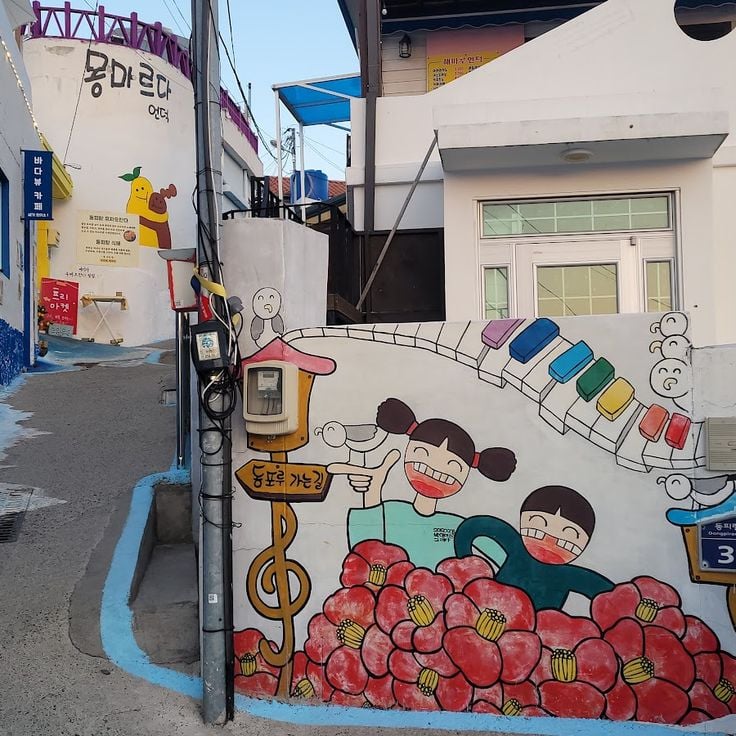
Dongpirang Mural Village sits on a hillside above the port of Tongyeong. Its narrow alleys are covered with paintings made by local and international artists, who came together to save the old neighborhood from demolition. Walking through, you get open views over the harbor and the islands scattered around it.
Bulguksa Temple in Gyeongju is one of the most recognized Buddhist temples in South Korea. Built in the 8th century, it sits on a series of stone terraces and features traditional pavilions and pagodas that have stood for over a thousand years. Walking through the grounds, you notice the careful stonework, the layered rooftops, and the way the buildings are arranged around open courtyards. It is a UNESCO World Heritage Site and remains an active place of worship today.
Seokguram Grotto sits on Mount Tohamsan near Gyeongju, sheltering a large granite Buddha statue carved in the 8th century and facing the sea. The domed chamber was built with care and precision, and UNESCO recognized it as a World Heritage Site. Visitors walk up through the forest to reach it, and the stone figure, nearly 11 feet (3.4 meters) tall, stands in a circular sanctuary that feels still and focused. It is one of the clearest examples of Buddhist art from the Silla period.
The Daereungwon Tomb Complex in Gyeongju is a group of large grass-covered royal burial mounds from the Silla period. Walking among these rounded hills, you get a sense of how old this place is. Each mound covers a royal tomb filled with jewelry, pottery, and everyday objects. Inside the Cheonmachong mound, visitors can enter a reconstructed tomb and see the objects found during excavation.
Cheonmachong Tomb sits in the middle of Gyeongju, surrounded by a large field of royal burial mounds from the Silla period. Visitors can walk inside and see how these tombs were built, with a wooden chamber covered by layers of earth and stone. When archaeologists opened it, they found gold ornaments, pottery and other objects now displayed in nearby museums. One of the most noted finds was a painting of a horse, which gave the tomb its name.
Cheomseongdae Observatory in Gyeongju is a stone tower built in the 7th century during the Silla dynasty. It was used to watch the sky and track the stars. The tower is made of carefully stacked stones in a rounded shape, standing about 30 feet (9 meters) tall. It is one of the oldest known astronomical structures in Asia, and you can walk right up to it across an open field in the middle of the city.
Donggung Palace and Wolji Pond form an ancient royal complex in the heart of Gyeongju. The buildings date back to the Silla dynasty, when this site served as a secondary palace for the crown prince. The pond reflects the pavilions and walls around it, and the scene changes completely after dark when the whole site is lit up. Visitors often come twice, once during the day and once in the evening, to see both sides of the place.
The Gyeongju National Museum holds the most important objects recovered from the Silla Kingdom, which ruled this part of Korea for nearly a thousand years. Golden crowns, jewelry, bronze bells, and pottery fill the halls, all found in tombs and archaeological sites around the city. Walking through the museum gives a clear sense of how people lived and ruled during that era.
Gyeongju Namsan is a mountain just south of Gyeongju where Buddhist statues, stone pagodas, and temple ruins are scattered across the hillsides. Hiking the trails here feels like walking through an open-air gallery shaped by the Silla kingdom. The stone carvings blend into the rock faces and forest floor, and many locals still come here to pray or simply walk.
Hwangnidan-gil is a street in Gyeongju where old hanok buildings now house cafés, small restaurants, and shops. The wooden structures have been carefully adapted for everyday use while keeping their original shape and materials. Walking through this lane, you get a sense of how the city blends its daily life with its older layers. It is a good place to stop, eat something local, and take in the feel of Gyeongju at a slower pace.
Yangdong Folk Village is one of the oldest and best-preserved clan villages from the Joseon era in South Korea. Located near Gyeongju, it was home to two powerful noble families whose wooden houses, courtyards and stone walls still stand today. Walking through the village, you can see how traditional Hanok homes were arranged along hillside terraces, facing the valley below. The site is recognized by UNESCO and gives a real sense of how aristocratic families lived and organized their daily lives centuries ago.
Haedong Yonggungsa Temple sits on rocks right at the edge of the sea, which makes it different from most Buddhist temples in Korea that are built deep in the mountains. The buildings cling to the cliffs, and the sound of the waves follows you everywhere. People come here to pray, walk along the paths, or simply watch the ocean. The site is especially busy on Korean holidays and during the new year.
Gamcheon Culture Village sits on a hillside in Busan and was once a working-class neighborhood. Today, its narrow alleys, colorful houses, and stairways are covered with murals and small sculptures. Walking through the village, you pass small shops and cafes tucked between the homes, with occasional viewpoints opening up toward the sea. The place shows how a community can reinvent itself through art while keeping its older identity intact.
Haeundae Beach sits on the eastern edge of Busan and is the most visited city beach in South Korea. The sand stretches along a wide bay, backed by tall apartment towers and hotels that light up after dark. During summer, the beach fills with people from across the country. In the morning, locals walk along the shore before the crowds arrive. The water is calm enough for swimming, and the seafront promenade connects the beach to nearby restaurants and cafes.
Gwangalli Beach is one of Busan's most visited city beaches. It stretches along a wide bay, with cafes, restaurants and street food stalls lining the seafront. During the day, locals jog, swim and gather on the sand. At night, the Gwangan Bridge lights up over the water in shifting colors, and the beach becomes a popular meeting spot. People sit along the promenade, eat local snacks and watch the reflections on the sea. This beach shows how closely urban life and the coast are intertwined in Busan.
Jagalchi Fish Market is the largest fish market in South Korea and sits right on the waterfront in Busan. Every day, vendors and locals come here to buy fresh fish and seafood straight off the boats. The stalls are packed tightly together, and the smell of salt and fresh catch fills the air. The women who run the stalls, known locally as Jagalchi ajeossi, call out to passersby with energy. Inside the main building, you can have your purchase cooked and eat it on the spot.
BIFF Square and Gukje Market sit side by side in central Busan, forming one of the most visited parts of the city. BIFF Square takes its name from the Busan International Film Festival and features handprints of directors and actors pressed into the pavement. Street food stalls line the square, serving grilled squid and other local snacks. Just steps away, Gukje Market grew out of the post-war years and has been a working market ever since. Its narrow alleys are packed with stalls selling clothes, household goods, and hot food. Walking through both areas gives a clear sense of everyday life in Busan.
Taejongdae Resort Park sits at the southern tip of Yeongdo Island in Busan. Tall cliffs drop straight into the sea, and a thick forest covers the land behind them. Paths wind along the coast and lead to viewpoints where, on a clear day, you can see as far as the Japanese island of Tsushima. Many locals come here on weekends to walk along the shoreline and watch the waves break against the rocks below.
Songdo Beach is one of the oldest city beaches in Busan. It sits in a small bay surrounded by hills and draws many locals on sunny days. Above the water, the Songdo Marine Cable Car runs from one shore to the other. From the gondolas, you can see the coastline, the rocks, and the open sea, giving you a clear sense of how the city sits along the water.
Andong Hahoe Folk Village sits inside a wide bend of the Nakdong River and is one of the best-kept traditional villages in South Korea. The houses date back to the Joseon Dynasty, and the families who lived here passed local customs down through the generations. Walking through the narrow lanes, you can see thatched-roof homes next to the larger compounds of the noble class, giving a clear picture of daily life from centuries ago. The village is a UNESCO World Heritage Site, close to the city of Andong.
Buyongdae Cliff rises above Hahoe village on a steep rocky edge. From the top, you can see how the river bends in a wide curve around the village below. The thatched roofs, the trees, and the slow water all come into view at once. This is the spot where the layout of Hahoe makes complete sense.
Dosan Seowon Confucian Academy sits just outside Andong, tucked between wooded hills and a river. Founded in the 16th century, it was one of the most respected places of learning in the country during the Joseon dynasty. Scholars came here to study Confucian texts, debate ideas, and train for public life. The wooden buildings, open courtyards, and simple gardens are still standing today. Walking through the grounds gives a real sense of how education and daily life were organized for centuries in this part of Korea.
Haeinsa Temple sits deep in the Gayasan mountains and is one of the most important Buddhist temples in Korea. Founded over a thousand years ago, it holds the Tripitaka Koreana, a complete collection of Buddhist scriptures carved onto wooden printing blocks. These blocks have been stored for centuries in special wooden halls that are recognized as a UNESCO World Heritage Site. The walk up to the temple passes through dense forest, and the setting gives the visit a calm, contemplative feel from the very start.
Gayasan National Park sits in the mountains of the Gyeongsang region and wraps around the temple of Haeinsa. Walking through the park, you pass dense forests, rocky outcrops, and streams running between the slopes. The trails change with the seasons: in autumn the trees turn red and gold, in winter snow covers the peaks. The park is a natural starting point for visiting Haeinsa, a temple known for housing the Tripitaka Koreana wooden printing blocks, carved over 700 years ago.
Palgongsan is a mountain on the northern edge of Daegu, popular with locals for day hikes and outdoor walks. At the top of its Gwanbong peak stands the Gatbawi Buddha, a stone figure wearing a flat stone slab on its head. This unusual detail makes the statue easy to recognize and sets it apart from other Buddhist carvings in the region. According to tradition, the Gatbawi Buddha grants sincere wishes, which is why many visitors make the climb to pray or reflect.
Seomun Market is one of the oldest traditional markets in South Korea and sits in the heart of Daegu. During the day, vendors sell fabrics, clothing, and fresh produce. At night, the alleys fill with food stalls offering local street food: grilled skewers, spicy tteokbokki, and sweet pancakes. The market draws locals and visitors alike, and the evening hours are when it feels most alive. It is a good place to eat, walk around, and get a sense of everyday life in the city.
Daewangam Park sits on the coast of Ulsan, where a pine forest leads to the edge of rocky cliffs. The rocks drop straight into the sea, and the water moves around the stone formations below. The paths through the park are easy to walk, and locals often come here on weekends for a stroll along the shore.
Taehwagang National Garden runs along the Taehwa River in Ulsan and is one of the few national gardens in South Korea. Visitors walk through bamboo groves, cross small bridges, and follow riverside paths where the water sets the pace of the day. Locals come here regularly to stroll, sit, and watch birds along the banks. The garden has a natural, open feel that makes it a welcome break from the urban parts of the city.
Hallyeohaesang National Park covers a stretch of coastline around Tongyeong, where dozens of islands dot the sea. The summit of Mireuksan offers a wide view over this island-filled water, best reached by cable car. From the top, you can see the islands scattered across the sea below, the boats moving between them, and the city of Tongyeong along the shore. It is one of the most visited coastal parks in South Korea.
Windy Hill and Sinseondae sit on the coast of Geoje Island in southern South Korea. This stretch of shoreline offers green hills that roll down to the sea, rocky cliffs, and open views toward the southern islands. The paths here are easy to walk, passing viewpoints where you can look out along the coastline in both directions. Many visitors come to breathe in the sea air and take in the broad view over the water and the scattered islands visible in the distance.
Dongpirang Mural Village sits on a hillside above the port of Tongyeong. Its narrow alleys are covered with paintings made by local and international artists, who came together to save the old neighborhood from demolition. Walking through, you get open views over the harbor and the islands scattered around it.
Bulguksa Temple in Gyeongju is one of the most recognized Buddhist temples in South Korea. Built in the 8th century, it sits on a series of stone terraces and features traditional pavilions and pagodas that have stood for over a thousand years. Walking through the grounds, you notice the careful stonework, the layered rooftops, and the way the buildings are arranged around open courtyards. It is a UNESCO World Heritage Site and remains an active place of worship today.
Seokguram Grotto sits on Mount Tohamsan near Gyeongju, sheltering a large granite Buddha statue carved in the 8th century and facing the sea. The domed chamber was built with care and precision, and UNESCO recognized it as a World Heritage Site. Visitors walk up through the forest to reach it, and the stone figure, nearly 11 feet (3.4 meters) tall, stands in a circular sanctuary that feels still and focused. It is one of the clearest examples of Buddhist art from the Silla period.
The Daereungwon Tomb Complex in Gyeongju is a group of large grass-covered royal burial mounds from the Silla period. Walking among these rounded hills, you get a sense of how old this place is. Each mound covers a royal tomb filled with jewelry, pottery, and everyday objects. Inside the Cheonmachong mound, visitors can enter a reconstructed tomb and see the objects found during excavation.
Cheonmachong Tomb sits in the middle of Gyeongju, surrounded by a large field of royal burial mounds from the Silla period. Visitors can walk inside and see how these tombs were built, with a wooden chamber covered by layers of earth and stone. When archaeologists opened it, they found gold ornaments, pottery and other objects now displayed in nearby museums. One of the most noted finds was a painting of a horse, which gave the tomb its name.
Cheomseongdae Observatory in Gyeongju is a stone tower built in the 7th century during the Silla dynasty. It was used to watch the sky and track the stars. The tower is made of carefully stacked stones in a rounded shape, standing about 30 feet (9 meters) tall. It is one of the oldest known astronomical structures in Asia, and you can walk right up to it across an open field in the middle of the city.
Donggung Palace and Wolji Pond form an ancient royal complex in the heart of Gyeongju. The buildings date back to the Silla dynasty, when this site served as a secondary palace for the crown prince. The pond reflects the pavilions and walls around it, and the scene changes completely after dark when the whole site is lit up. Visitors often come twice, once during the day and once in the evening, to see both sides of the place.
The Gyeongju National Museum holds the most important objects recovered from the Silla Kingdom, which ruled this part of Korea for nearly a thousand years. Golden crowns, jewelry, bronze bells, and pottery fill the halls, all found in tombs and archaeological sites around the city. Walking through the museum gives a clear sense of how people lived and ruled during that era.
Gyeongju Namsan is a mountain just south of Gyeongju where Buddhist statues, stone pagodas, and temple ruins are scattered across the hillsides. Hiking the trails here feels like walking through an open-air gallery shaped by the Silla kingdom. The stone carvings blend into the rock faces and forest floor, and many locals still come here to pray or simply walk.
Hwangnidan-gil is a street in Gyeongju where old hanok buildings now house cafés, small restaurants, and shops. The wooden structures have been carefully adapted for everyday use while keeping their original shape and materials. Walking through this lane, you get a sense of how the city blends its daily life with its older layers. It is a good place to stop, eat something local, and take in the feel of Gyeongju at a slower pace.
Yangdong Folk Village is one of the oldest and best-preserved clan villages from the Joseon era in South Korea. Located near Gyeongju, it was home to two powerful noble families whose wooden houses, courtyards and stone walls still stand today. Walking through the village, you can see how traditional Hanok homes were arranged along hillside terraces, facing the valley below. The site is recognized by UNESCO and gives a real sense of how aristocratic families lived and organized their daily lives centuries ago.
Haedong Yonggungsa Temple sits on rocks right at the edge of the sea, which makes it different from most Buddhist temples in Korea that are built deep in the mountains. The buildings cling to the cliffs, and the sound of the waves follows you everywhere. People come here to pray, walk along the paths, or simply watch the ocean. The site is especially busy on Korean holidays and during the new year.
Gamcheon Culture Village sits on a hillside in Busan and was once a working-class neighborhood. Today, its narrow alleys, colorful houses, and stairways are covered with murals and small sculptures. Walking through the village, you pass small shops and cafes tucked between the homes, with occasional viewpoints opening up toward the sea. The place shows how a community can reinvent itself through art while keeping its older identity intact.
Haeundae Beach sits on the eastern edge of Busan and is the most visited city beach in South Korea. The sand stretches along a wide bay, backed by tall apartment towers and hotels that light up after dark. During summer, the beach fills with people from across the country. In the morning, locals walk along the shore before the crowds arrive. The water is calm enough for swimming, and the seafront promenade connects the beach to nearby restaurants and cafes.
Gwangalli Beach is one of Busan's most visited city beaches. It stretches along a wide bay, with cafes, restaurants and street food stalls lining the seafront. During the day, locals jog, swim and gather on the sand. At night, the Gwangan Bridge lights up over the water in shifting colors, and the beach becomes a popular meeting spot. People sit along the promenade, eat local snacks and watch the reflections on the sea. This beach shows how closely urban life and the coast are intertwined in Busan.
Jagalchi Fish Market is the largest fish market in South Korea and sits right on the waterfront in Busan. Every day, vendors and locals come here to buy fresh fish and seafood straight off the boats. The stalls are packed tightly together, and the smell of salt and fresh catch fills the air. The women who run the stalls, known locally as Jagalchi ajeossi, call out to passersby with energy. Inside the main building, you can have your purchase cooked and eat it on the spot.
BIFF Square and Gukje Market sit side by side in central Busan, forming one of the most visited parts of the city. BIFF Square takes its name from the Busan International Film Festival and features handprints of directors and actors pressed into the pavement. Street food stalls line the square, serving grilled squid and other local snacks. Just steps away, Gukje Market grew out of the post-war years and has been a working market ever since. Its narrow alleys are packed with stalls selling clothes, household goods, and hot food. Walking through both areas gives a clear sense of everyday life in Busan.
Taejongdae Resort Park sits at the southern tip of Yeongdo Island in Busan. Tall cliffs drop straight into the sea, and a thick forest covers the land behind them. Paths wind along the coast and lead to viewpoints where, on a clear day, you can see as far as the Japanese island of Tsushima. Many locals come here on weekends to walk along the shoreline and watch the waves break against the rocks below.
Songdo Beach is one of the oldest city beaches in Busan. It sits in a small bay surrounded by hills and draws many locals on sunny days. Above the water, the Songdo Marine Cable Car runs from one shore to the other. From the gondolas, you can see the coastline, the rocks, and the open sea, giving you a clear sense of how the city sits along the water.
Andong Hahoe Folk Village sits inside a wide bend of the Nakdong River and is one of the best-kept traditional villages in South Korea. The houses date back to the Joseon Dynasty, and the families who lived here passed local customs down through the generations. Walking through the narrow lanes, you can see thatched-roof homes next to the larger compounds of the noble class, giving a clear picture of daily life from centuries ago. The village is a UNESCO World Heritage Site, close to the city of Andong.
Buyongdae Cliff rises above Hahoe village on a steep rocky edge. From the top, you can see how the river bends in a wide curve around the village below. The thatched roofs, the trees, and the slow water all come into view at once. This is the spot where the layout of Hahoe makes complete sense.
Dosan Seowon Confucian Academy sits just outside Andong, tucked between wooded hills and a river. Founded in the 16th century, it was one of the most respected places of learning in the country during the Joseon dynasty. Scholars came here to study Confucian texts, debate ideas, and train for public life. The wooden buildings, open courtyards, and simple gardens are still standing today. Walking through the grounds gives a real sense of how education and daily life were organized for centuries in this part of Korea.
Haeinsa Temple sits deep in the Gayasan mountains and is one of the most important Buddhist temples in Korea. Founded over a thousand years ago, it holds the Tripitaka Koreana, a complete collection of Buddhist scriptures carved onto wooden printing blocks. These blocks have been stored for centuries in special wooden halls that are recognized as a UNESCO World Heritage Site. The walk up to the temple passes through dense forest, and the setting gives the visit a calm, contemplative feel from the very start.
Gayasan National Park sits in the mountains of the Gyeongsang region and wraps around the temple of Haeinsa. Walking through the park, you pass dense forests, rocky outcrops, and streams running between the slopes. The trails change with the seasons: in autumn the trees turn red and gold, in winter snow covers the peaks. The park is a natural starting point for visiting Haeinsa, a temple known for housing the Tripitaka Koreana wooden printing blocks, carved over 700 years ago.
Palgongsan is a mountain on the northern edge of Daegu, popular with locals for day hikes and outdoor walks. At the top of its Gwanbong peak stands the Gatbawi Buddha, a stone figure wearing a flat stone slab on its head. This unusual detail makes the statue easy to recognize and sets it apart from other Buddhist carvings in the region. According to tradition, the Gatbawi Buddha grants sincere wishes, which is why many visitors make the climb to pray or reflect.
Seomun Market is one of the oldest traditional markets in South Korea and sits in the heart of Daegu. During the day, vendors sell fabrics, clothing, and fresh produce. At night, the alleys fill with food stalls offering local street food: grilled skewers, spicy tteokbokki, and sweet pancakes. The market draws locals and visitors alike, and the evening hours are when it feels most alive. It is a good place to eat, walk around, and get a sense of everyday life in the city.
Daewangam Park sits on the coast of Ulsan, where a pine forest leads to the edge of rocky cliffs. The rocks drop straight into the sea, and the water moves around the stone formations below. The paths through the park are easy to walk, and locals often come here on weekends for a stroll along the shore.
Taehwagang National Garden runs along the Taehwa River in Ulsan and is one of the few national gardens in South Korea. Visitors walk through bamboo groves, cross small bridges, and follow riverside paths where the water sets the pace of the day. Locals come here regularly to stroll, sit, and watch birds along the banks. The garden has a natural, open feel that makes it a welcome break from the urban parts of the city.
Hallyeohaesang National Park covers a stretch of coastline around Tongyeong, where dozens of islands dot the sea. The summit of Mireuksan offers a wide view over this island-filled water, best reached by cable car. From the top, you can see the islands scattered across the sea below, the boats moving between them, and the city of Tongyeong along the shore. It is one of the most visited coastal parks in South Korea.
Windy Hill and Sinseondae sit on the coast of Geoje Island in southern South Korea. This stretch of shoreline offers green hills that roll down to the sea, rocky cliffs, and open views toward the southern islands. The paths here are easy to walk, passing viewpoints where you can look out along the coastline in both directions. Many visitors come to breathe in the sea air and take in the broad view over the water and the scattered islands visible in the distance.
Dongpirang Mural Village sits on a hillside above the port of Tongyeong. Its narrow alleys are covered with paintings made by local and international artists, who came together to save the old neighborhood from demolition. Walking through, you get open views over the harbor and the islands scattered around it.
The Gyeongsang region deserves your time. Between the royal ruins, Buddha statues hidden in the mountains, markets full of real energy, and coasts where nature meets modern cities, every visit tells you something. Do not hesitate to explore the small roads and mountain paths: that is often where you find the most interesting places. Important to remember: temples close at nightfall, and some mountain trails can be slippery when the weather is wet.