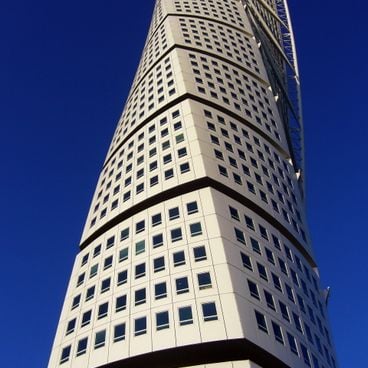
Frank Gehry designs buildings with curved metal facades, irregular forms and experimental construction methods. His work defines urban spaces from Bilbao to Los Angeles. The exterior surfaces use titanium, steel or glass formed into wave-like or folded volumes. The interior spaces accommodate art collections, concert halls and commercial offices. The Guggenheim Museum in Bilbao displays titanium panels that reflect the light of the Basque coast. The Walt Disney Concert Hall in Los Angeles combines stainless steel surfaces with wooden acoustics for the Los Angeles Philharmonic. The Vitra Design Museum in Weil am Rhein demonstrates his early approaches with white stucco surfaces and angled walls. The buildings emerge through computer-aided design that translates complex geometries into buildable structures.
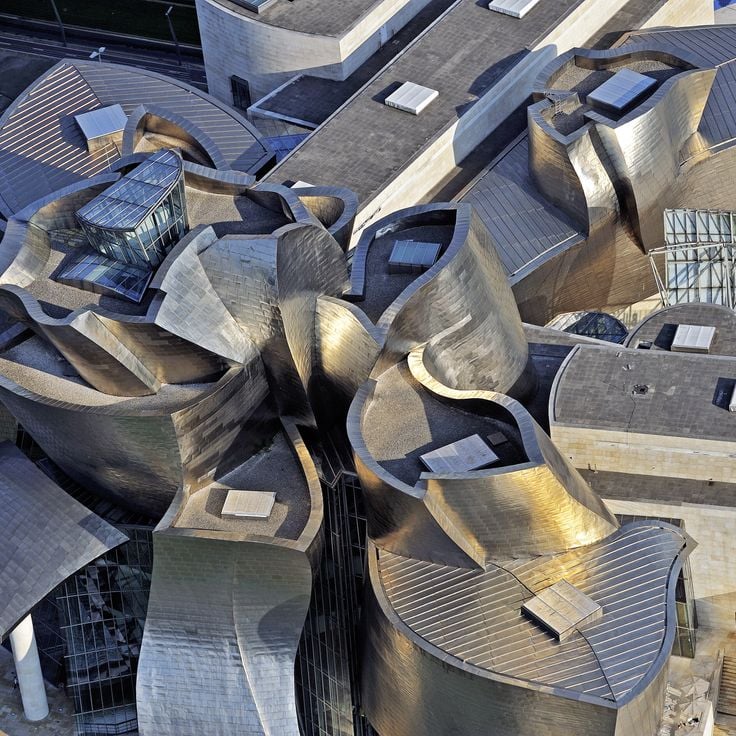
Bilbao, Spain
The Guggenheim Museum Bilbao was completed in 1997 according to Frank Gehry's designs and stands on the banks of the Nervión River. The facade consists of over 33,000 titanium plates that create different reflections depending on the light conditions. The museum spans 24,000 square meters of exhibition space and presents modern and contemporary artworks by international artists. The architecture combines organic forms with industrial materials and has contributed to the urban renewal of Bilbao.
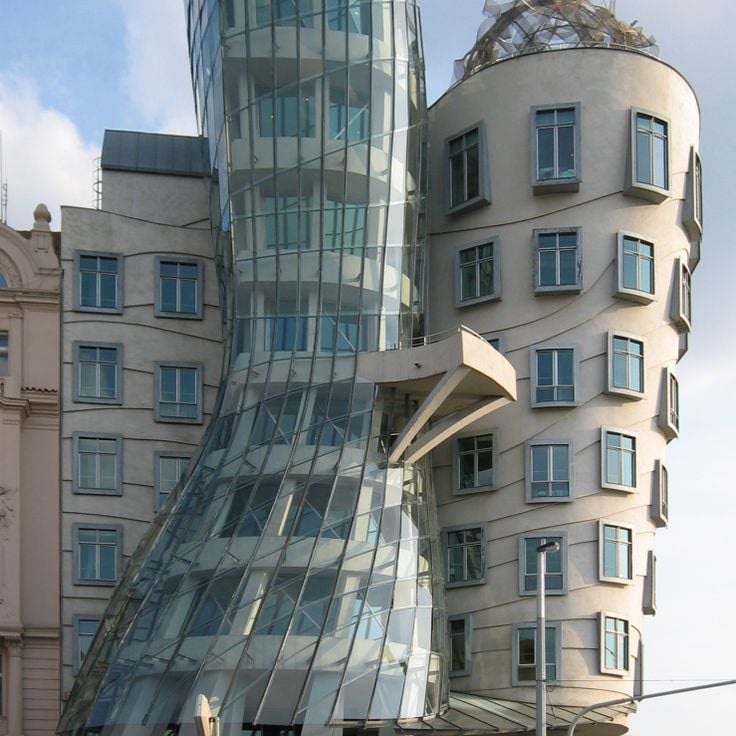
Prague, Czech Republic
The Dancing House was designed by Frank Gehry and Vlado Milunić between 1992 and 1996. The building consists of two towers with different construction: a glass cylinder and a concrete tower with irregular windows. The curved glass and steel facade creates a dynamic form. The Dancing House contains offices, a rooftop restaurant, and a gallery space. It stands at the corner of Rašínovo nábřeží and Jiráskovo náměstí along the Vltava River embankment.
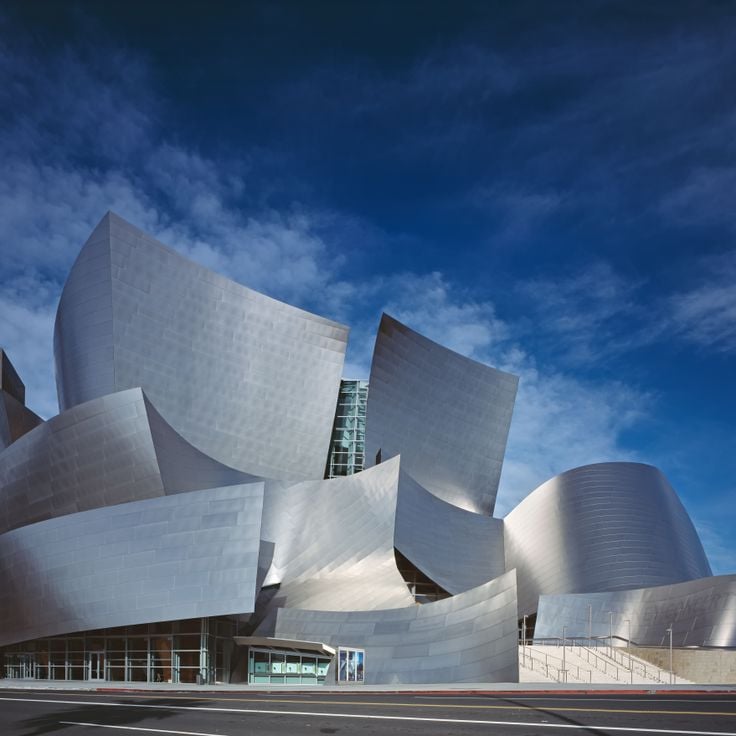
Los Angeles, USA
The Walt Disney Concert Hall was completed in 2003 and serves as home to the Los Angeles Philharmonic Orchestra. The curved exterior surfaces of polished stainless steel define the downtown Los Angeles skyline. The main concert hall seats 2265 people and was designed according to acoustic principles based on designs by Yasuhisa Toyota. The interior spaces are clad in Douglas fir wood, which contributes to sound quality. The building also includes smaller performance spaces and public areas.
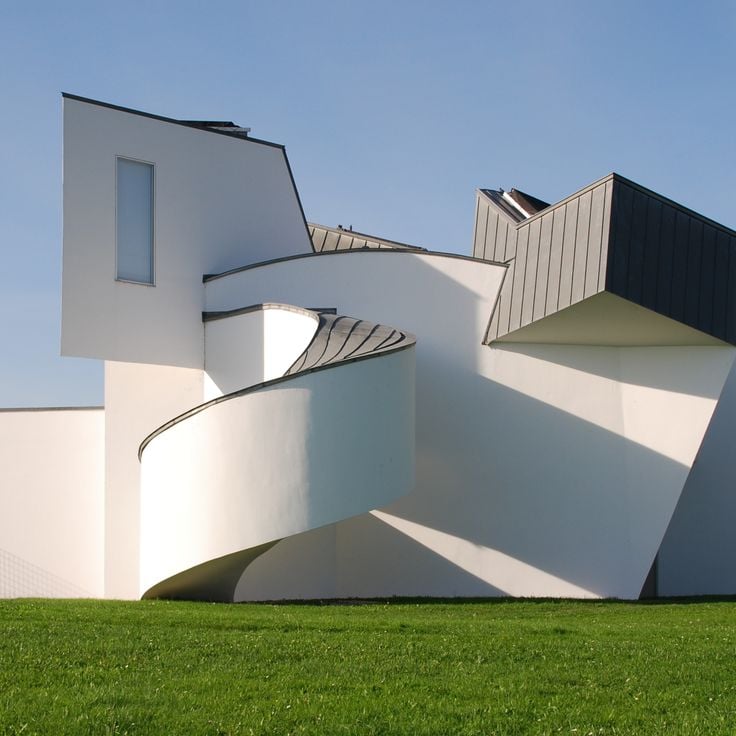
Weil am Rhein, Germany
The Vitra Design Museum was completed in 1989 as Frank Gehry's first building in Europe. The museum hosts rotating exhibitions on furniture design, architecture and contemporary design. The white facade features curved forms and slanted walls that demonstrate Gehry's deconstructivist style. The collection includes furniture pieces and design objects from the 19th century to the present day. The building is located on the Vitra Campus, where several architects have realized their structures.
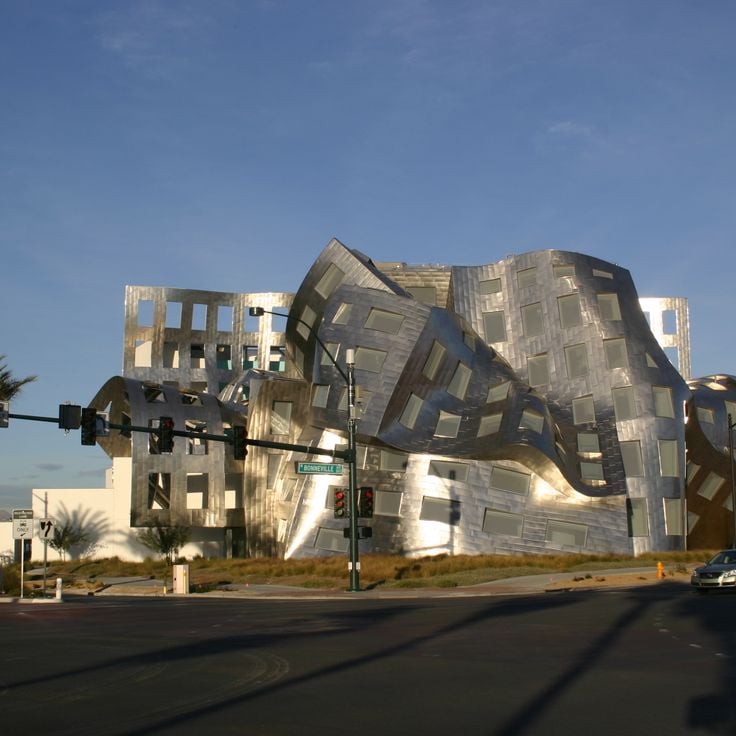
Las Vegas, USA
The Lou Ruvo Center for Brain Health is a medical research building completed in 2010. The structure comprises two main sections: a functional rectangular area for clinical spaces and a sculptural tower of bent stainless steel and glass. The undulating metal facade creates asymmetrical forms that challenge traditional architectural geometry. The center serves as a facility for neurological research and patient care.
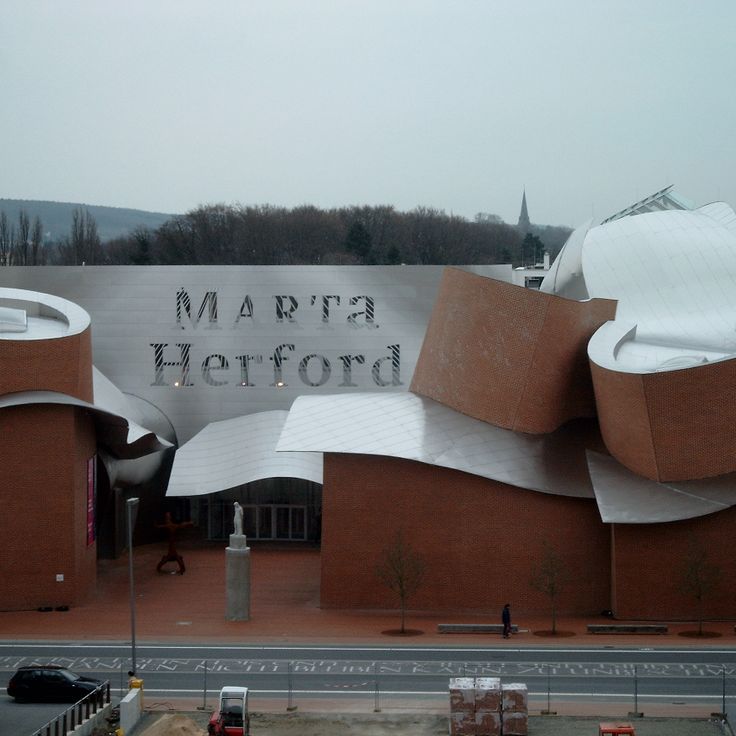
Herford, Germany
MARTa Herford opened in 2005 and presents contemporary art and design. The building connects traditional red brick walls with a curved stainless steel roof and large glass surfaces. The architecture creates a dialogue between historical building fabric and modern elements. The asymmetrical forms and dynamic structure characterize this museum in the East Westphalian city.
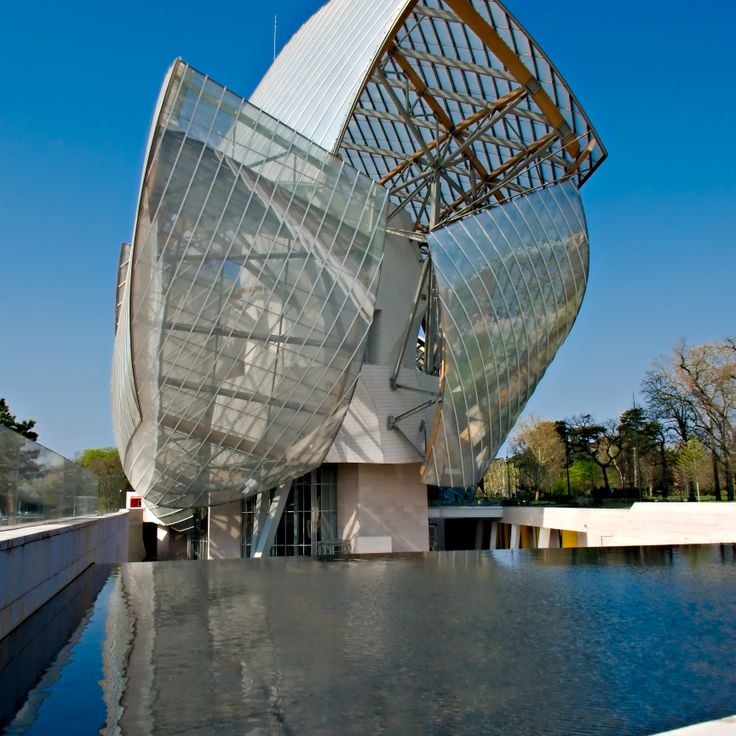
Paris, France
The Fondation Louis Vuitton is an art museum located in the Bois de Boulogne, opened in 2014. The building comprises twelve curved glass sails that rise above a white concrete core, covering an area of 11,000 square meters. The transparent panels made of 3,600 glass plates allow changing light effects inside the exhibition spaces. The museum displays contemporary art and modern art collections across eleven galleries distributed on different levels.
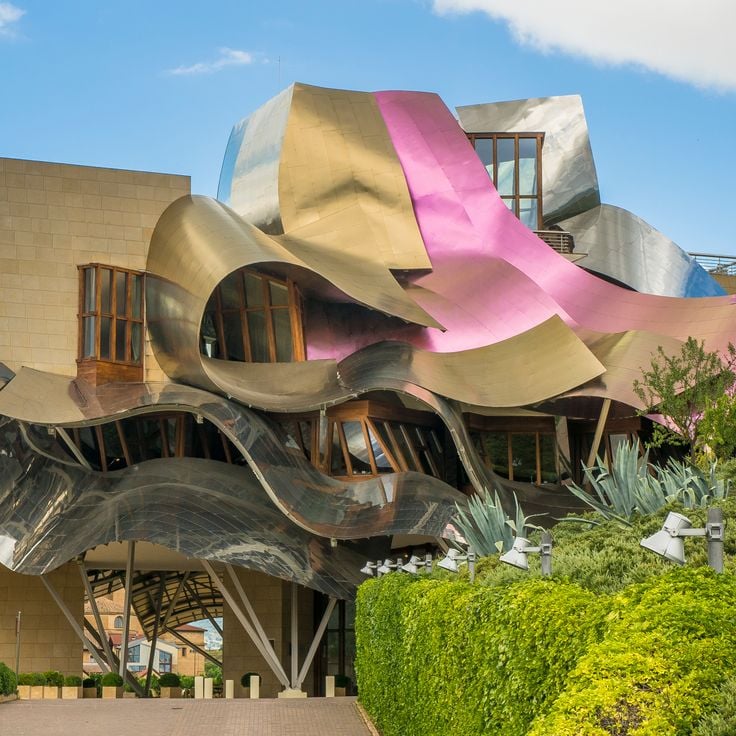
Elciego, Spain
The Hotel Marqués de Riscal rises above the historic wine cellars of the Rioja region. The curved titanium structures in red, silver, and gold form a contrast with the surrounding wine landscape. The building integrates a luxury hotel with spa facilities and a restaurant. The undulating metal facades reflect light and create changing visual effects throughout the day.
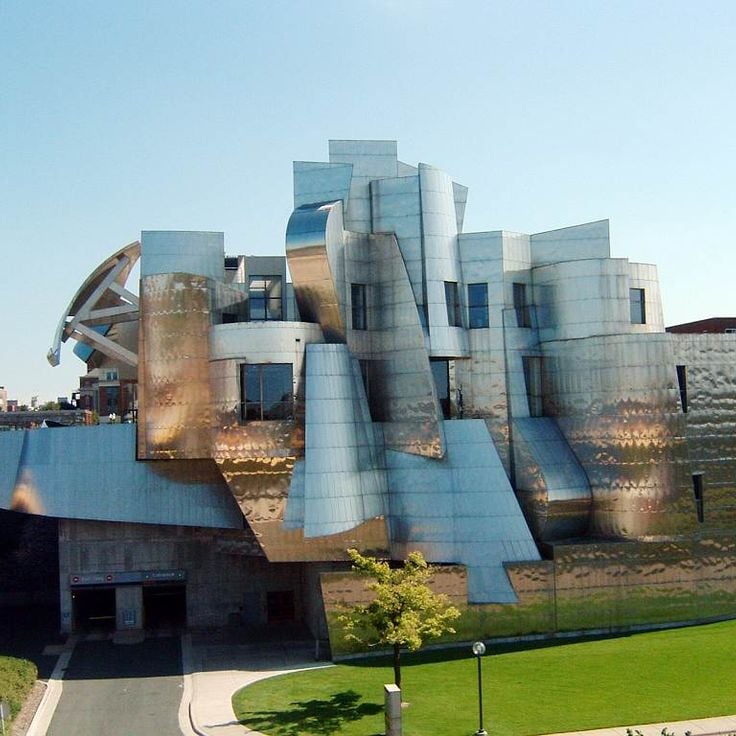
Minneapolis, USA
The Weisman Art Museum displays a distinctive exterior facade of stainless steel with geometric forms. The building stands on the banks of the Mississippi River and was designed by Frank Gehry. The reflective metal surface changes its appearance depending on light conditions and time of day. The asymmetrical architecture combines different geometric elements into a cohesive structure. The museum houses collections of 20th-century American art.
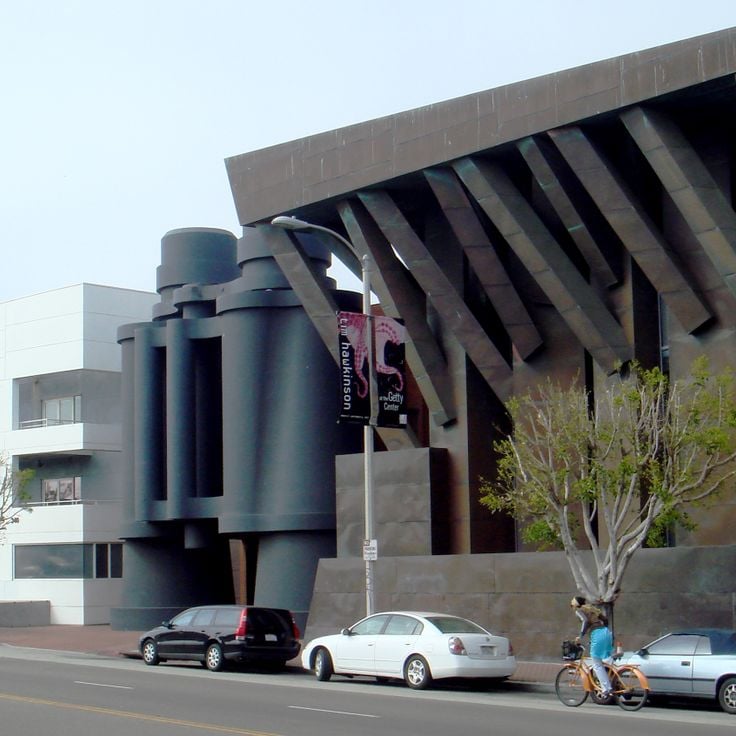
California, USA
The Chiat/Day Building in Venice, Los Angeles, was completed in 1991 as an advertising agency headquarters. The facade displays a three-story concrete binocular sculpture designed by Claes Oldenburg and Coosje van Bruggen. This central sculpture forms the main entrance and connects two distinct office towers. The north tower features a smooth white surface, while the south tower is clad in copper-colored metal panels. The building now serves as an office complex and demonstrates Gehry's postmodern approach with playful elements and contrasting materials.
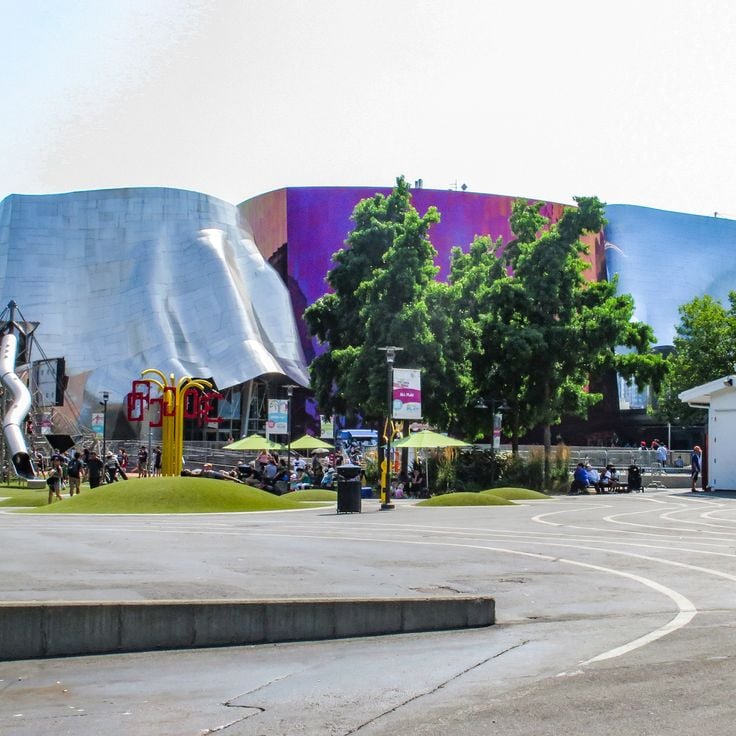
Seattle, USA
The Museum of Pop Culture features a building shell made of curved metal surfaces in red and silver tones. This wave-like architecture creates various exhibition spaces dedicated to music history, science fiction culture and different media forms. The asymmetric construction uses thousands of individually shaped metal panels, making this museum a recognizable part of the city skyline.
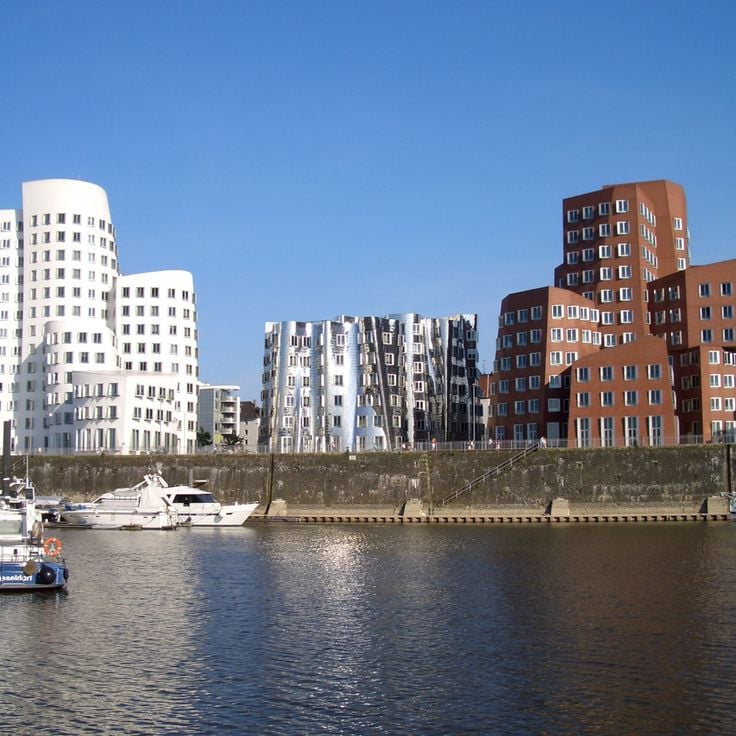
Düsseldorf, Germany
Der Neue Zollhof is an architectural ensemble of three buildings located on the Rhine riverfront in Düsseldorf's Media Harbour district. The structures are characterized by their curved facades, with each building featuring a different material: shiny metal, white plaster, and red brick. Frank Gehry designed this complex in the 1990s as part of the revitalization of the former harbour area. The three towers stand side by side and create contrast through their different surfaces and forms.
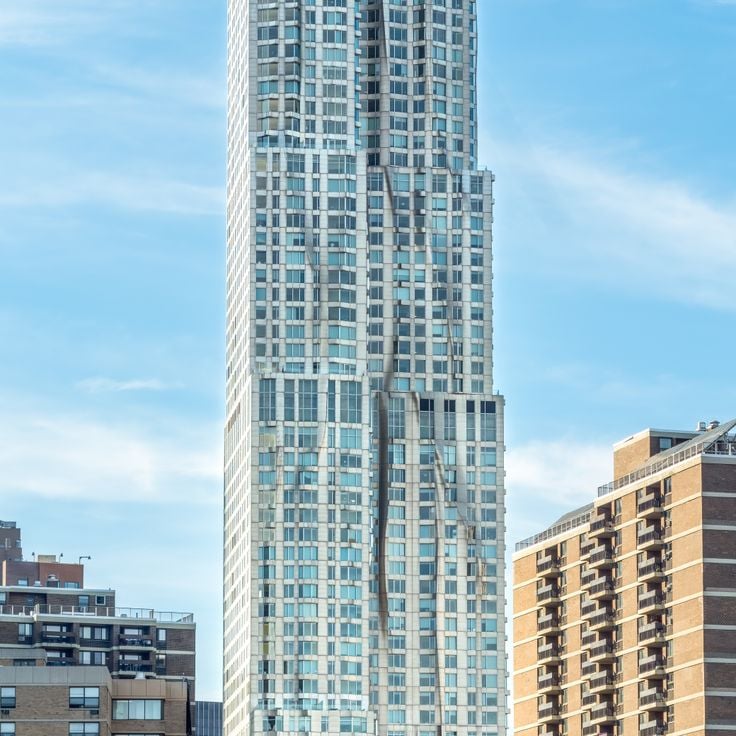
New York City, USA
8 Spruce Street is a residential skyscraper in Lower Manhattan characterized by its undulating stainless steel facade. The geometrically folded exterior creates varying light reflections depending on the time of day and sun position. The building reaches a height of 265 meters and ranks among New York's tallest residential towers. The distinctive facade design gives the structure a sculptural quality within the cityscape.
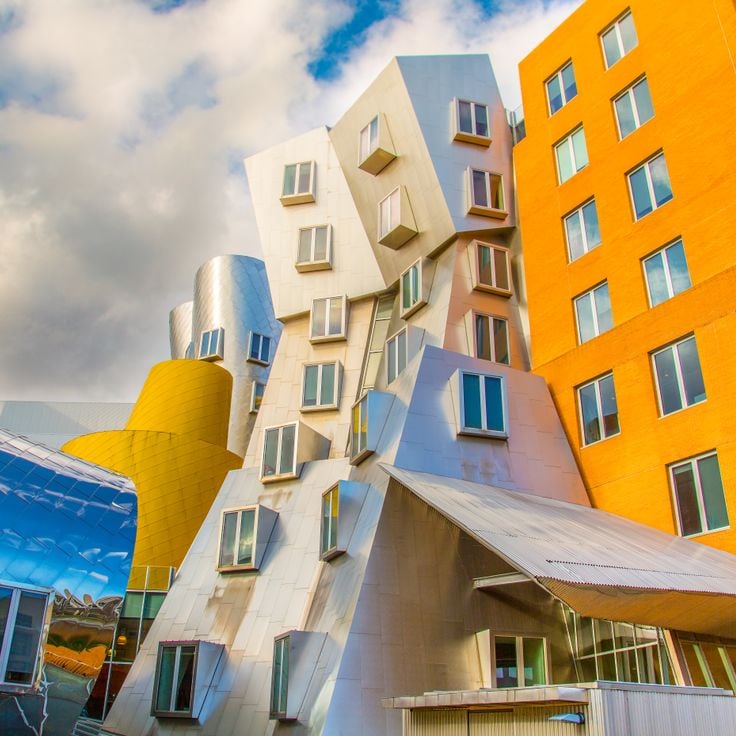
Cambridge, USA
The Stata Center is an academic complex at the Massachusetts Institute of Technology characterized by irregular geometric forms and unconventional angles. Frank Gehry's architecture created spaces for the Computer Science and Artificial Intelligence Laboratory and the Laboratory for Information and Decision Systems. The building combines research laboratories, offices, lecture halls, and common areas within an expressive structure of stainless steel, brick, and colored panels.
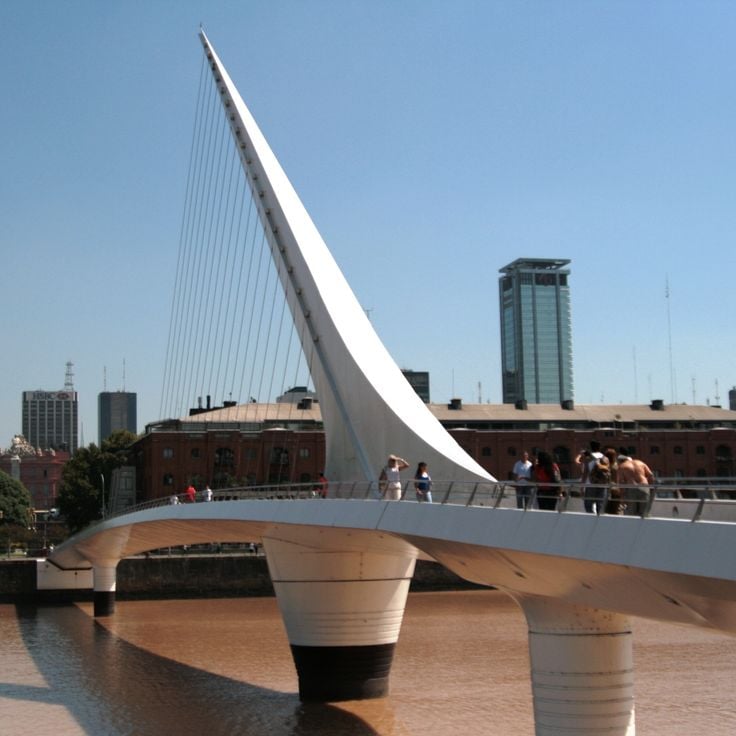
Buenos Aires, Argentina
The Puente de la Mujer is a pedestrian bridge made of white steel located in the Puerto Madero docklands district. The structure features a 39-meter high pylon that tilts over the water. The central section of the bridge rotates to allow ships to pass through the docklands. The design by Spanish architect Santiago Calatrava was completed in 2001.
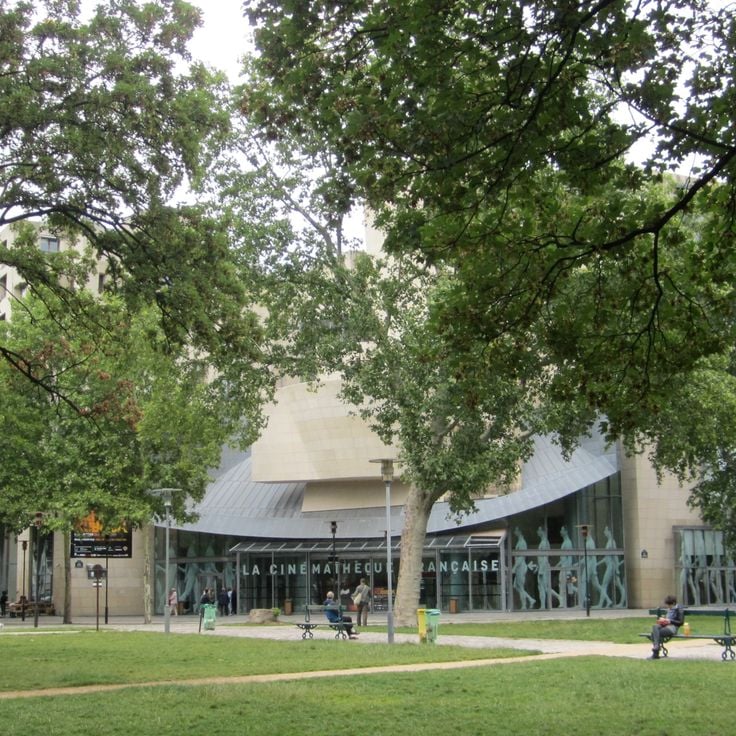
Paris, France
The Cinémathèque Française occupies a cubic building with offset glass surfaces and metal elements designed by Frank Gehry. The institute contains several cinema rooms, extensive film archives and a specialized library dedicated to film history. The facade displays Gehry's characteristic deconstructivist architecture with geometric forms and contrasting materials.
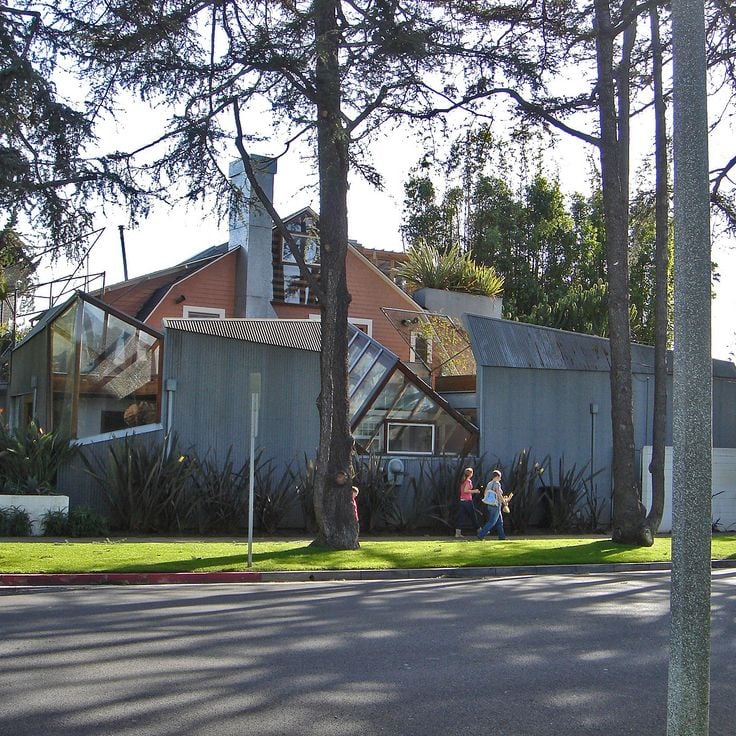
Santa Monica, United States
The Gehry Residence shows the architect's early experiments with deconstruction and ordinary building materials in a domestic setting from 1978. The house in Santa Monica wraps an existing timber-clad structure with raw metal panels, chain-link fencing, plywood sheets and exposed framing. The facade combines corrugated aluminum surfaces with tilted windows and irregular angles. The outer layers reveal the inner construction and create spatial overlaps between old and new. Inside, the rooms follow the fractured geometries with open sightlines and unexpected views.
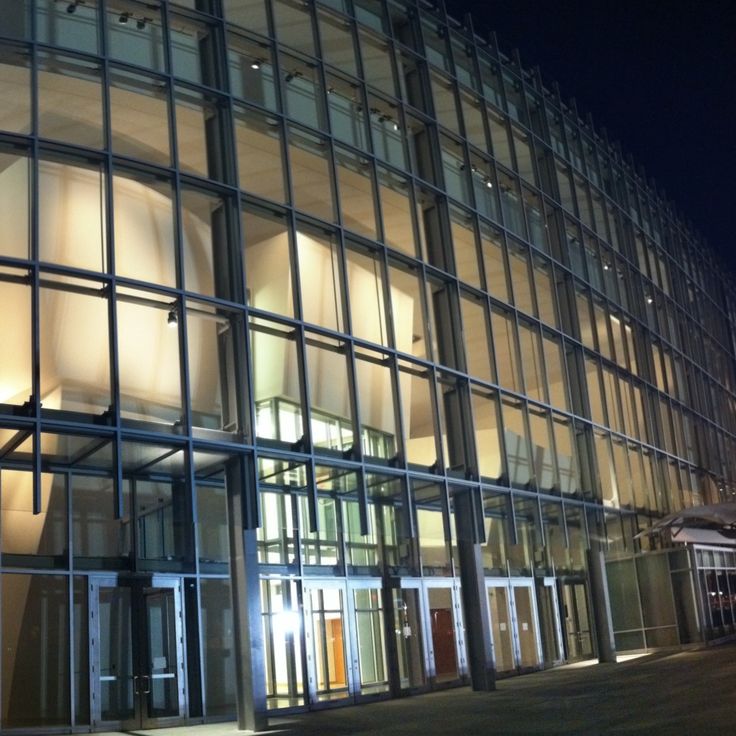
Miami Beach, USA
The New World Center serves as an educational facility for the New World School of the Arts in Miami Beach, demonstrating Gehry's experimental building methods. Completed in 2011, the building features curved glass walls and open concert spaces. The exterior displays multiple glass surfaces that create transparency and reveal views of the surrounding urban landscape. Inside, performance halls, teaching studios, and recording facilities support music education and professional development.
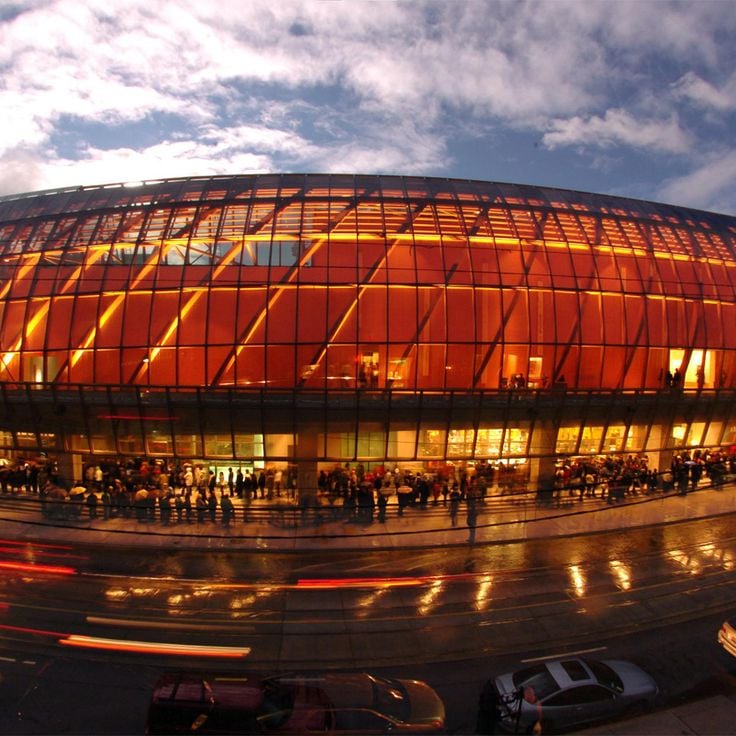
Toronto, Canada
The Art Gallery of Ontario in Toronto received a renovation and expansion by Frank Gehry. The redesigned facade features a slanted stainless steel wing that extends above the historic structure. Gehry's approach adds exhibition space and public areas while preserving the relationship to the original building. The gallery displays Canadian, African, contemporary and modern art collections.
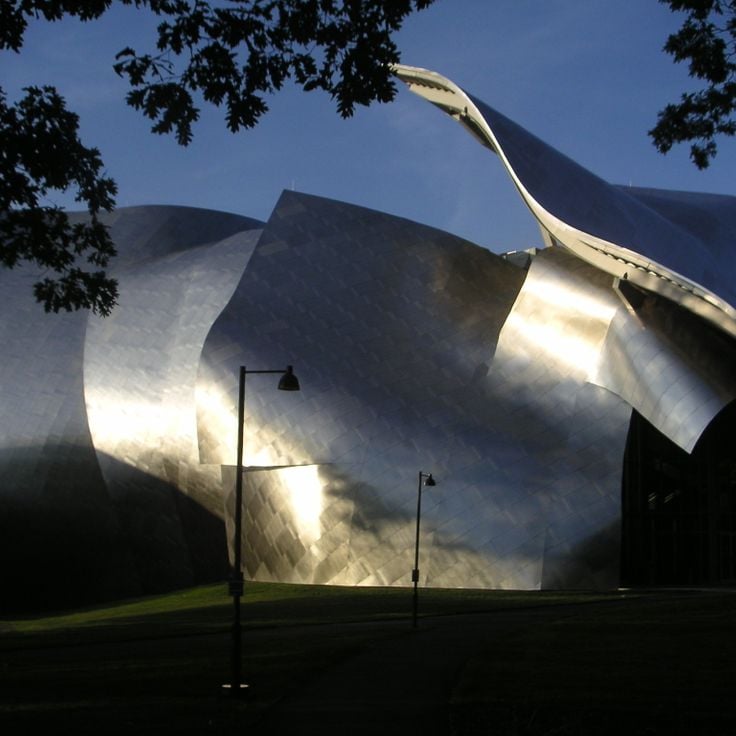
Annandale-on-Hudson, USA
The Richard B. Fisher Center for the Performing Arts sits on the Bard College campus and was completed in 2003. The building brings together steel and glass with red metal panels that create a bold visual contrast. Inside, theater spaces, dance studios, and administrative offices serve the college community. The asymmetrical forms of the exterior show how Gehry shapes performance venues through irregular geometry and layered materials.
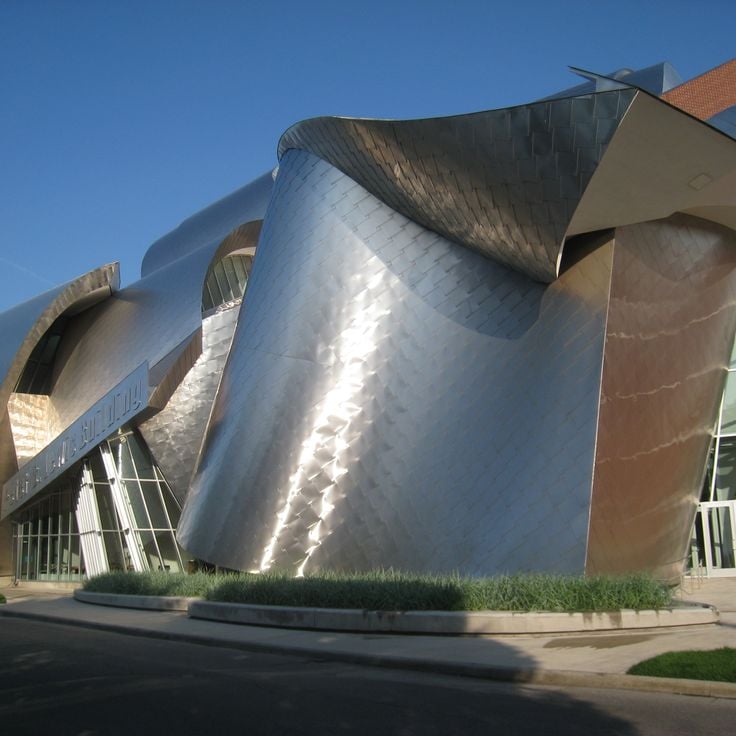
Cleveland, USA
The Peter B. Lewis Building at Case Western Reserve University was completed in 2002 as an administrative and academic structure. Its facade of curved titanium and stainless steel panels with glass surfaces creates a dynamic form that reflects light differently throughout the day and seasons. The interior spaces include offices, classrooms, and gathering areas arranged around irregular floor plans.
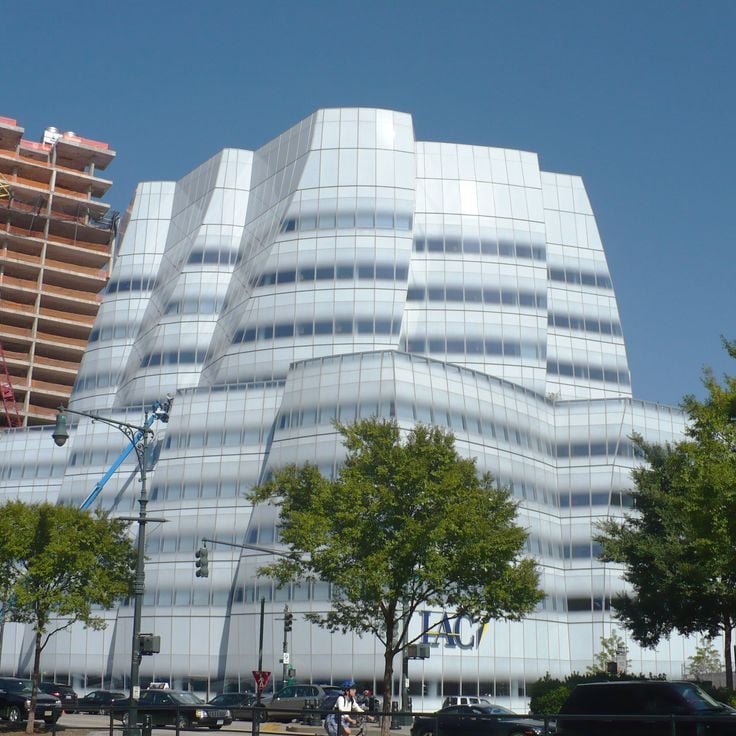
New York City, USA
The IAC Building sits on New York City's waterfront and shows Frank Gehry's signature style. The white exterior consists of rippling stainless steel panels that resemble sails. The surface curves and undulates, giving the structure a sculptural quality. Inside, the building contains corporate offices and media spaces with open floor plans and flexible layouts.
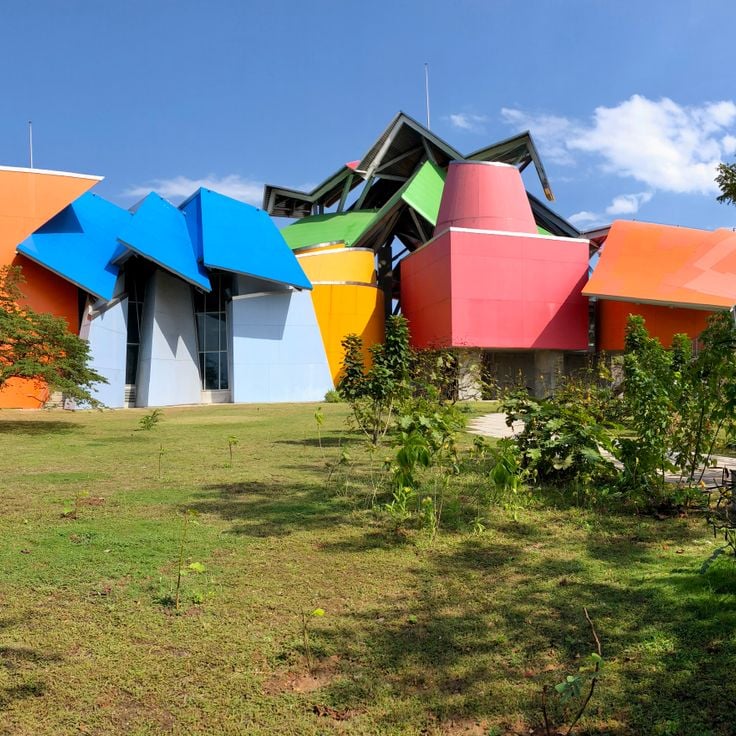
Panama City, Panama
The Biomuseo represents Frank Gehry's approach to building with curved metal facades and unconventional forms. Opened in 2014, this museum displays a colorful corrugated metal exterior with undulating surfaces and multiple angled levels that rise above a park in the Amador Causeway district. Inside, fossils, animal specimens, and interactive exhibits explore tropical biodiversity. The Biomuseo demonstrates how Gehry translates computer-generated geometries into spaces where visitors experience both the architecture and the natural world it houses.
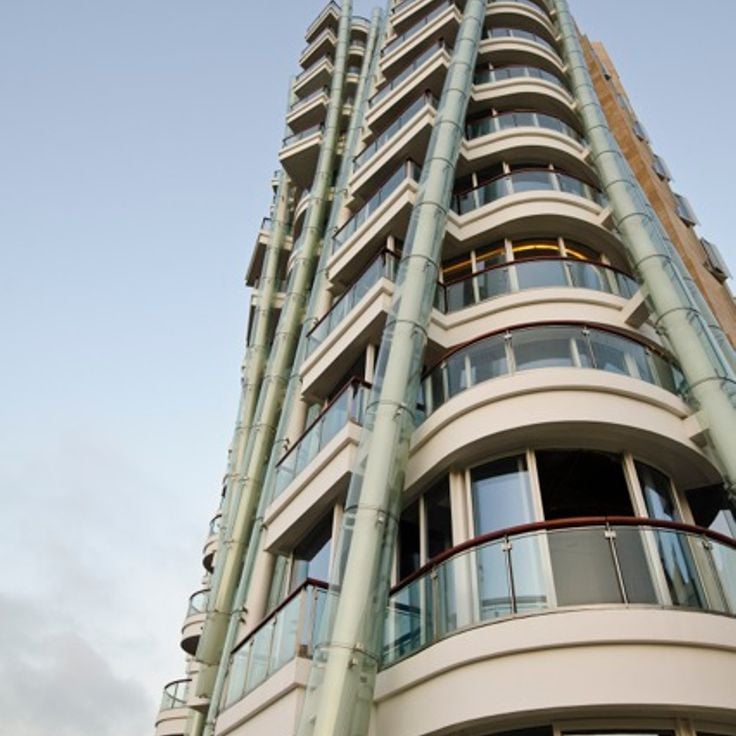
Hong Kong, China
Opus Hong Kong is a residential and commercial tower completed in 2007, showcasing Frank Gehry's approach to curved metal and glass surfaces that create flowing forms. The facade combines different materials and colors that shift with changing light throughout the day. Inside, the building houses apartments, offices, and retail spaces arranged within an organic architectural form that defines its urban location.
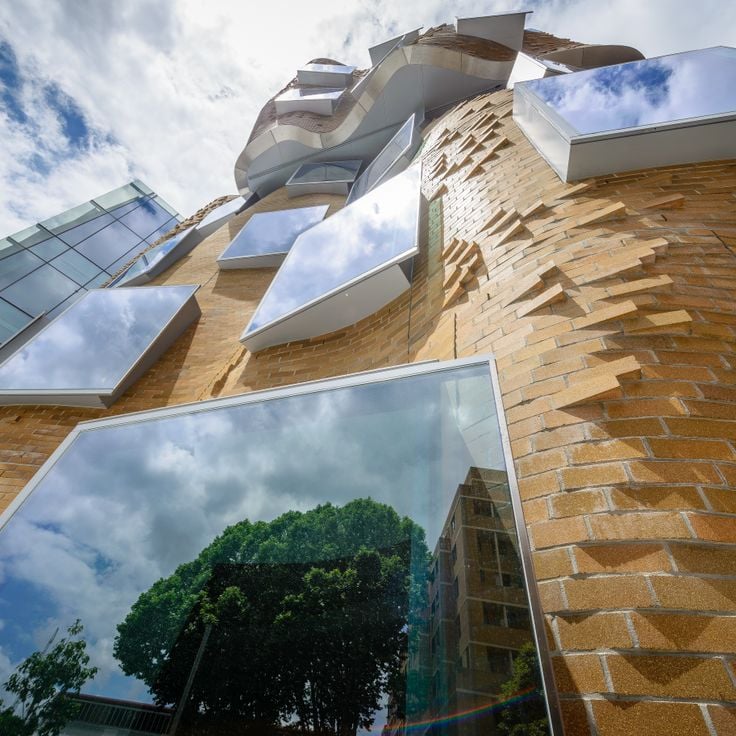
Sydney, Australia
The Dr Chau Chak Wing Building represents Frank Gehry's approach to designing structures with curved metal facades and irregular forms. Located at the University of Technology Sydney and completed in 2015, this building combines copper-colored aluminum with glass in curved and angular forms. The facade creates shadow patterns that shift throughout the day as light moves across its surfaces. Inside, the building contains classrooms, offices, and social spaces arranged across multiple levels.
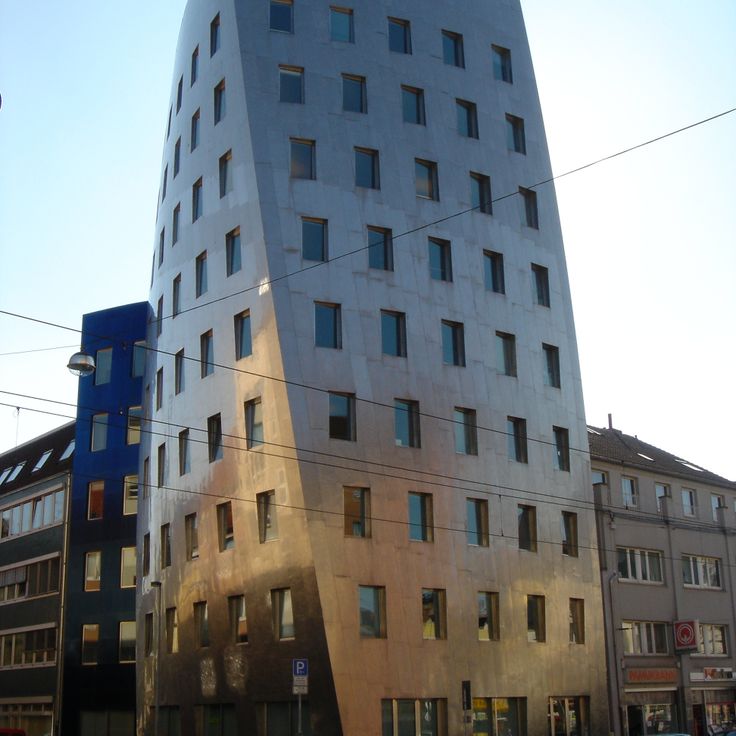
Hanover, Germany
Gehry Tower is a residential building in Hanover designed by Frank Gehry as part of an urban development project. The structure features curved metal elements and irregular geometric forms that define his approach to architecture. The exterior uses stainless steel and glass panels arranged across the facade. Inside, apartments offer views of the surrounding city, and the tower shows how computer-aided design transforms complex shapes into functional living spaces.
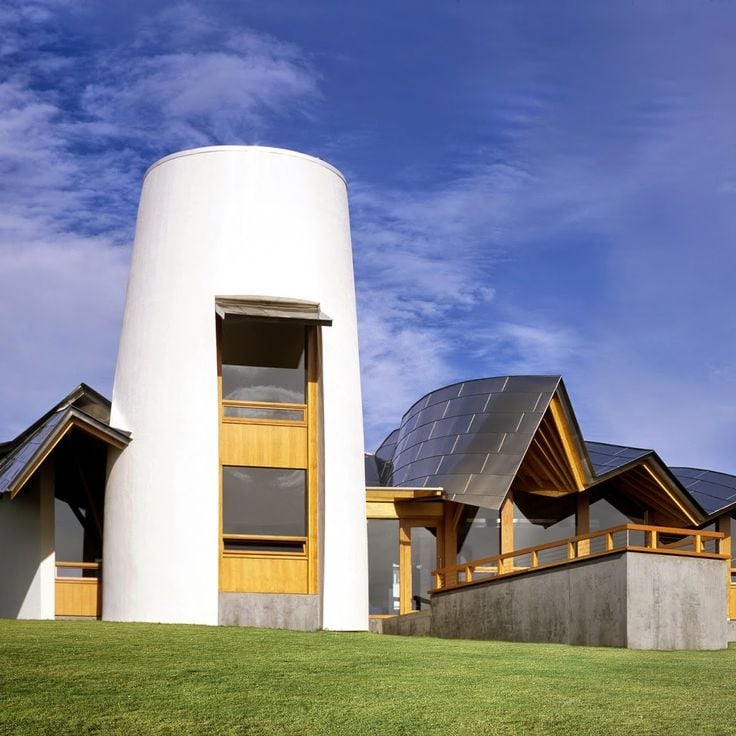
Dundee, United Kingdom
Maggie's Dundee is a cancer support center that embodies the architectural principles of this collection. Built in 2003, this building overlooks the River Tay with curved wood and metal forms that create an organic appearance. The irregular roofline with multiple levels defines distinct interior spaces. The center provides counseling services and support programs in an environment designed to feel open and welcoming.
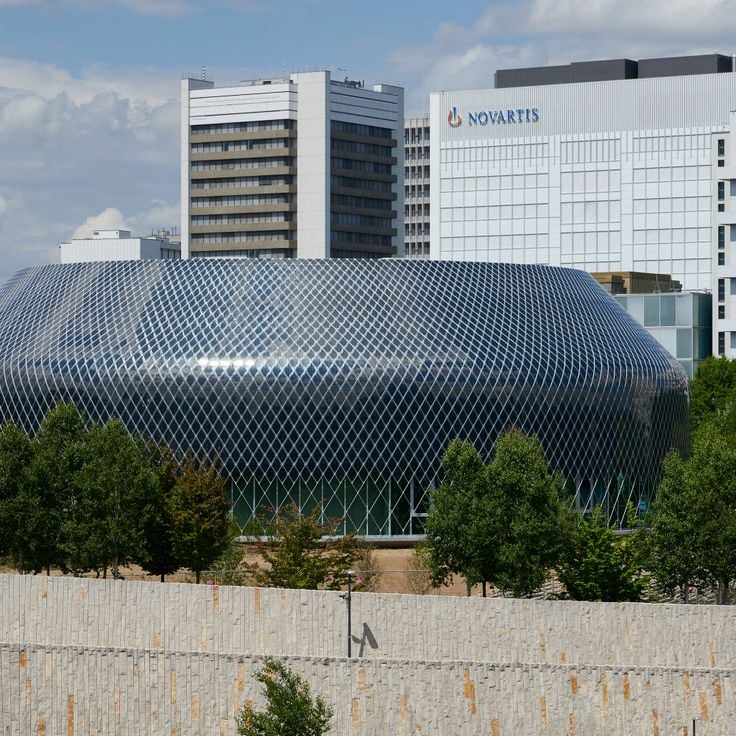
Basel, Switzerland
The Novartis Campus Gehry Building in Basel represents Frank Gehry's approach to experimental building forms. Completed in 2009, this research facility features curved surfaces of white aluminum and stainless steel that create shifting shadows and light reflections throughout the day. Inside, the building contains laboratories, offices, and collaboration spaces where researchers work on pharmaceutical development. The structure shows how computer-aided design transforms complex geometries into functional spaces for scientific work.
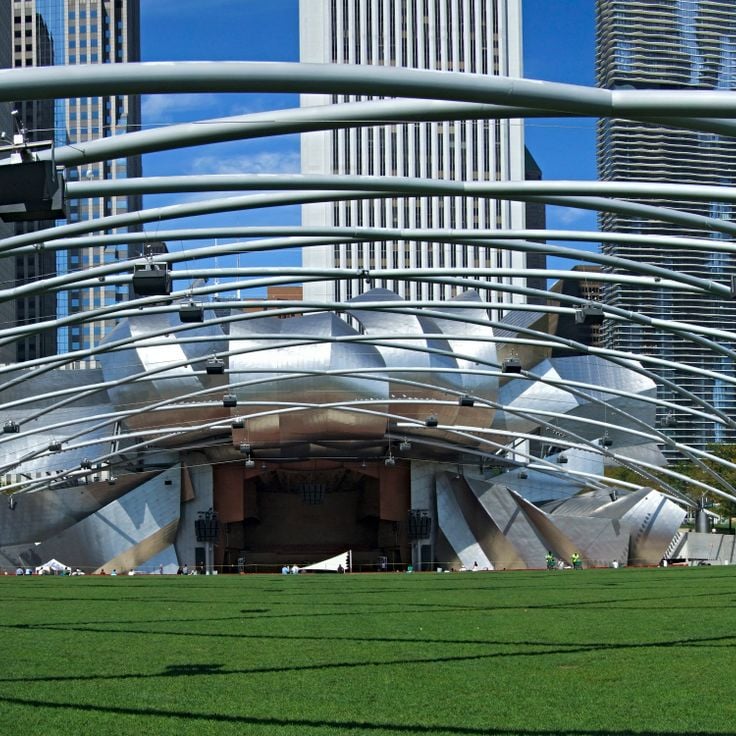
Chicago, USA
The Jay Pritzker Pavilion brings Frank Gehry's architectural vision to Chicago with its sweeping stainless steel band shell that curves above the audience. Metal surfaces reflect changing light throughout the day, creating shifting visual effects. Since opening in 2006, the pavilion has hosted outdoor concerts and public gatherings, accommodating thousands of visitors. The structure anchors Millennium Park and draws people through its sculptural form and open design.
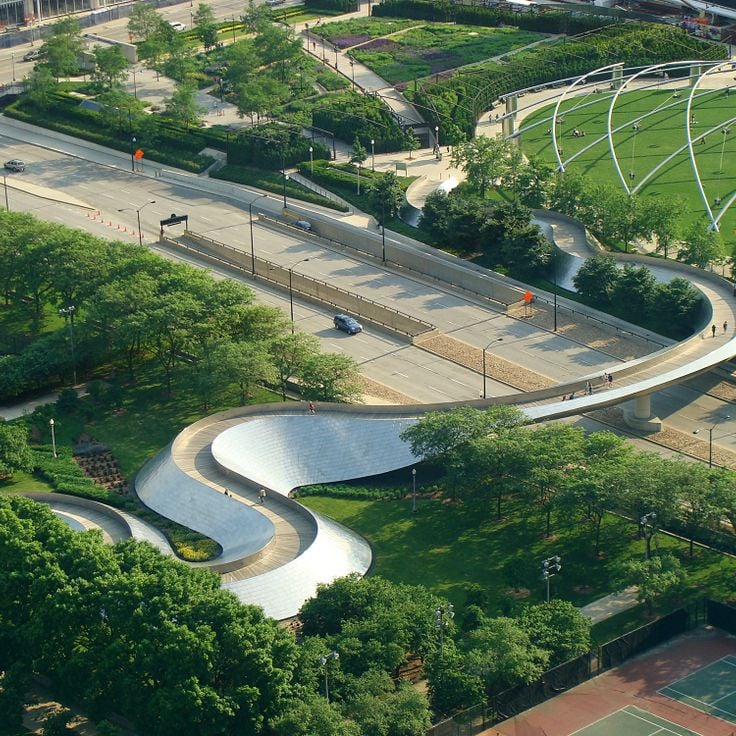
Chicago, USA
The BP Pedestrian Bridge demonstrates Frank Gehry's design approach with curved metal surfaces that define contemporary urban spaces. This bridge connects two sections of Millennium Park and was completed in 2003. The structure features arched stainless steel surfaces spanning over the roadway. The reflective metal panels shift in appearance with changing light and weather, creating a dynamic visual experience for pedestrians crossing through the park.
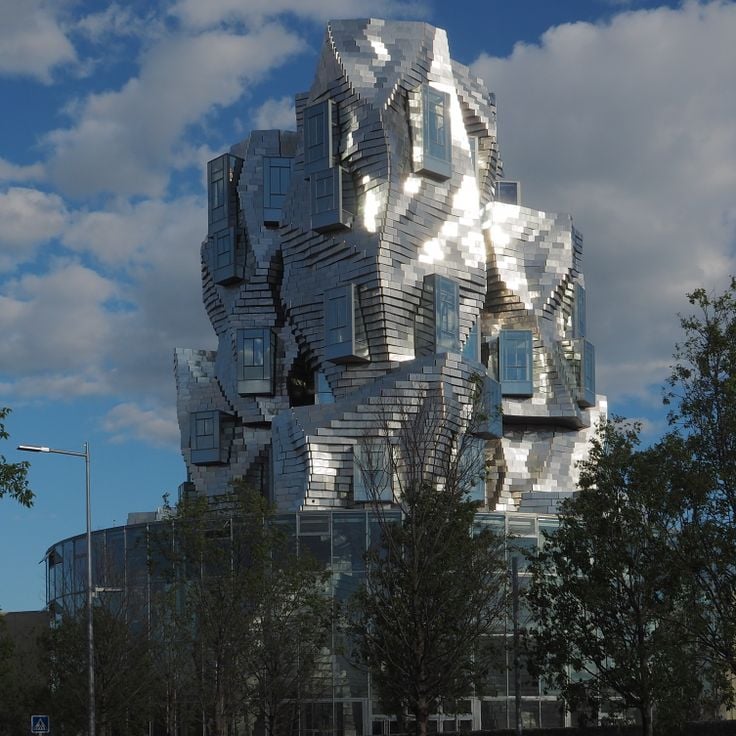
Arles, France
The Luma Tower in Arles exemplifies Frank Gehry's approach to building design through its curved metal exterior and experimental forms. This cultural center contains spaces for art exhibitions and performances, fitting within the urban fabric of the city. The facade uses titanium panels that shift in appearance with changing light. Inside, the structure accommodates galleries for contemporary art collections.
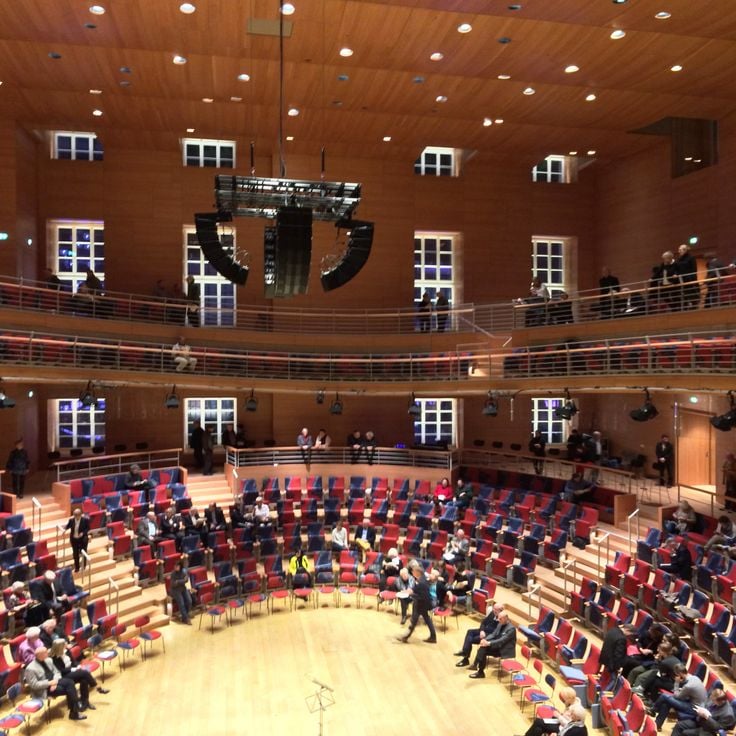
Berlin, Germany
The Pierre Boulez Saal is a concert hall in Berlin that embodies Frank Gehry's design language with curved metal facades and experimental construction methods. The building displays the architect's characteristic approach of irregular forms and modern materials. Inside, the hall provides space for orchestral performances and concerts. The structure demonstrates how digital planning translates complex geometric shapes into functional buildings.
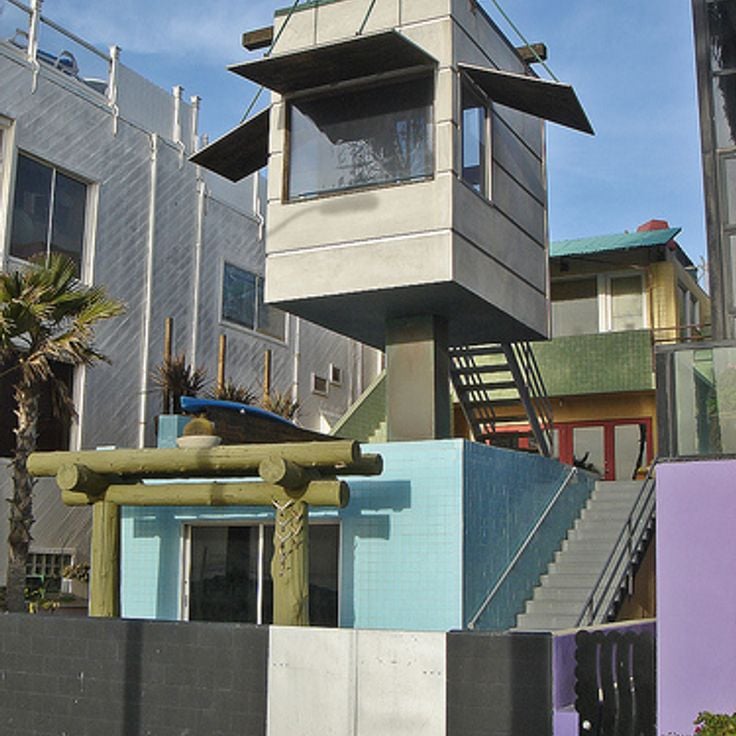
Venice, Los Angeles, United States of America
The Norton Beach House in Venice, Los Angeles, demonstrates Frank Gehry's approach to residential architecture through unconventional forms and experimental building methods. The house fits into the collection of Gehry's works that employ curved metal cladding and irregular volumes to create new spatial experiences.
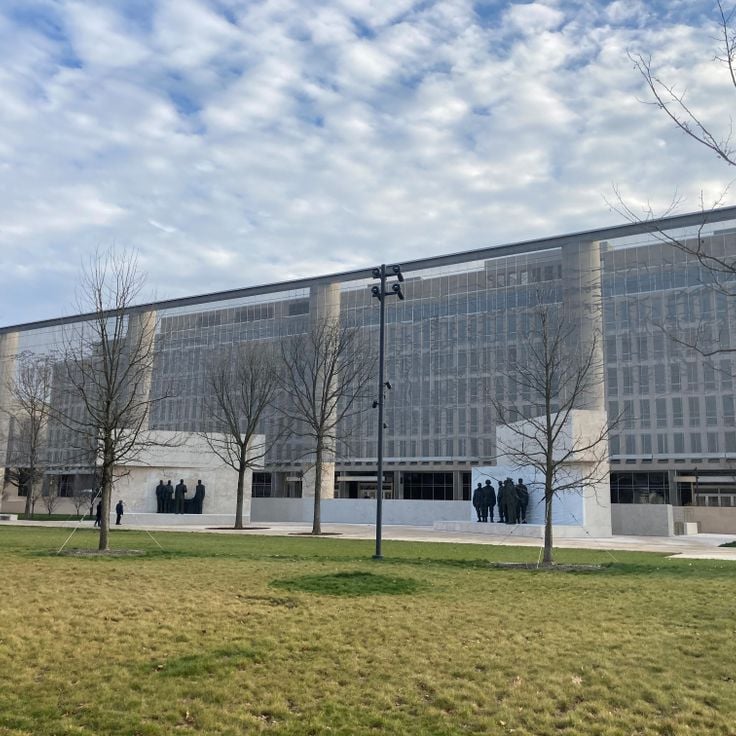
Washington, United States of America
The Dwight D. Eisenhower Memorial honors the American president and Supreme Commander of Allied Forces during World War II. Frank Gehry designed this memorial with his signature approach of metal construction and angular forms that reflect his work on buildings like the Guggenheim Museum in Bilbao and the Walt Disney Concert Hall in Los Angeles. The structure stands along Independence Avenue in Washington and combines modern design with historical significance.
Similar collections
The most incredible structures in the world
Architecture: famous buildings, modern and historical structures
Modern 21st-century architecture: skyscrapers, museums, and landmark buildings
Postmodern architecture worldwide: 50 buildings you should see