Rajasthan gathers fortified cities like Jaipur, Jodhpur, and Jaisalmer, where pink and ochre sandstone palaces stand out in busy streets. The inner courtyards of the havelis give a glimpse of how traders and nobles lived, while the walls of the forts follow rocky ridges for miles. In Udaipur, the palaces are reflected in the calm waters of Lake Pichola, lined with steps where locals come at sunset. Further away, the Thar desert spreads its golden dunes around stone-built villages, where people raise camels and weave colorful fabrics. Natural parks like Ranthambore host tigers, leopards, and hundreds of bird species in a dry forest with lakes and old ruins. This set of about thirty places shows Rajput architecture, local customs, and different types of landscapes, from the Aravalli mountains to the dry lands in the west.
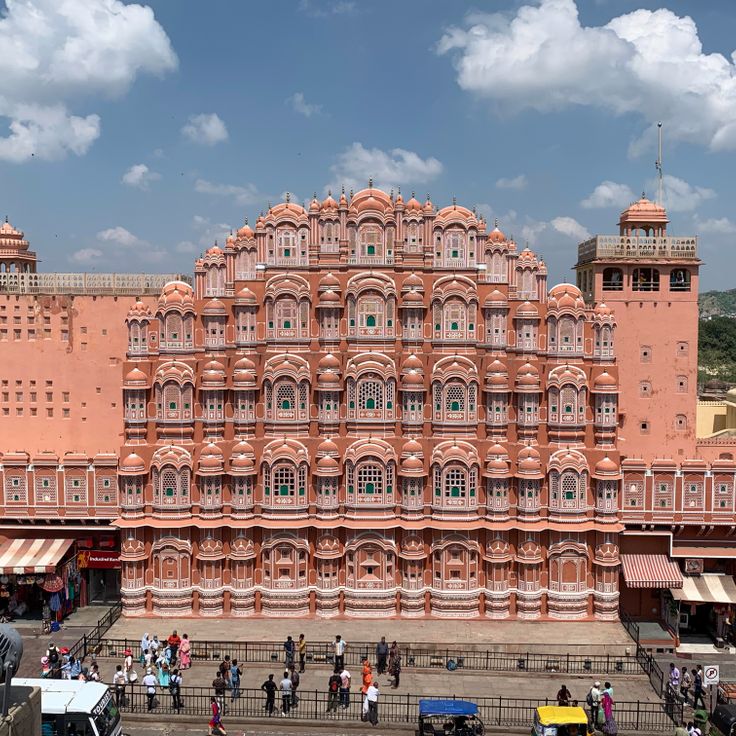
Jaipur, India
Hawa Mahal is the most recognizable building in Jaipur. This pink sandstone structure from the 18th century has 953 small windows arranged in a honeycomb pattern. The windows were originally designed so that the women of the royal court could watch the street below without being seen themselves. The building sits directly on a busy street and looks like a giant lattice when viewed from above. The architecture shows the style of the Rajput rulers who built Jaipur. Today it stands as the symbol of the city.
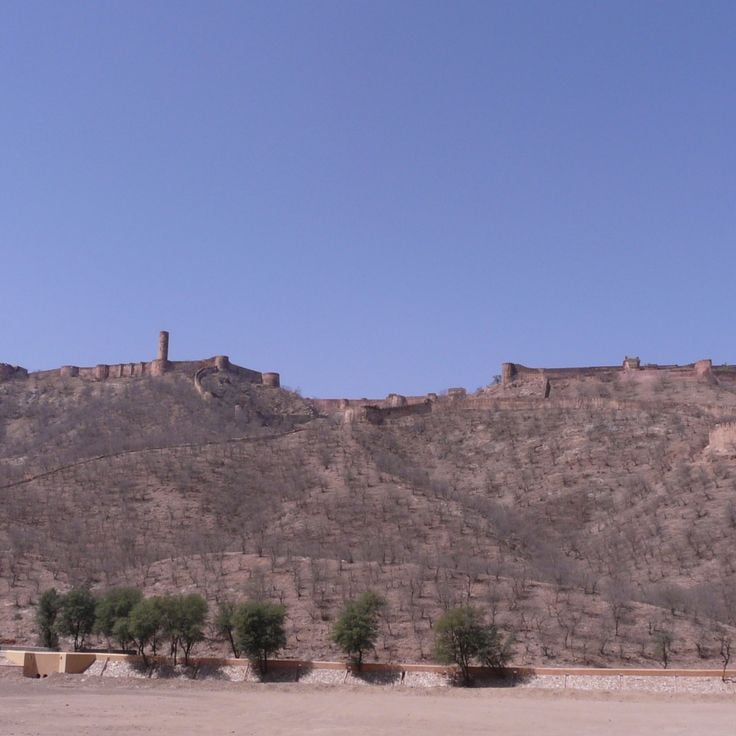
Jaipur, India
This fort sits on a hill overlooking Jaipur. Inside, courtyards and palaces show how rulers lived, with decorated walls and marble details. The pathways wind through different sections, revealing the separation between public spaces where official business happened and private quarters. From the walls, you can see across the valley to the pink city below.
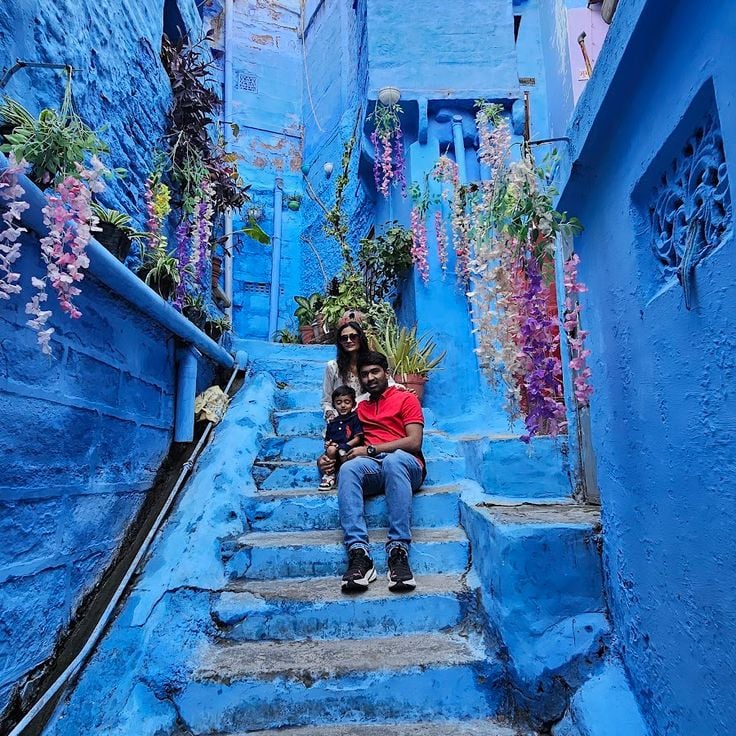
Jodhpur, India
The old city of Jodhpur spreads across a hillside with houses painted in indigo blue, creating a distinctive visual character. Narrow lanes wind between buildings that show medieval architecture from earlier centuries. Walking through the streets, you notice detailed woodwork on doors and windows, and the blue color appears in different shades throughout the neighborhood.
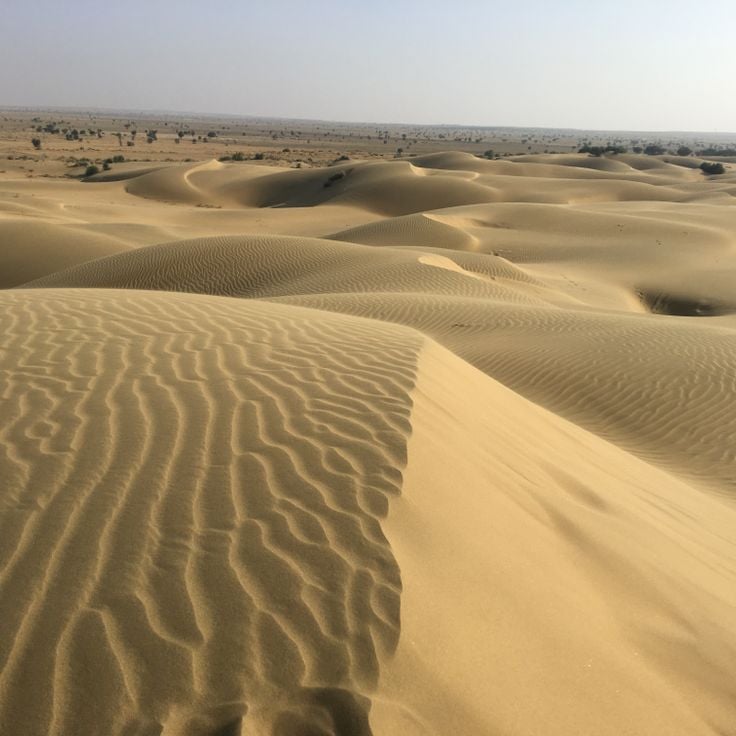
Jaisalmer, India
Sam Sand Dunes near Jaisalmer showcase the vastness of the Thar Desert. Visitors ride camels across golden dunes, especially during late afternoon when the sun casts orange light across the sand. The dunes are part of the dry landscape that defines western Rajasthan. People here raise camels and weave colorful textiles by hand. The sky stretches endlessly and the silence is broken only by bird calls.
Jaipur, India
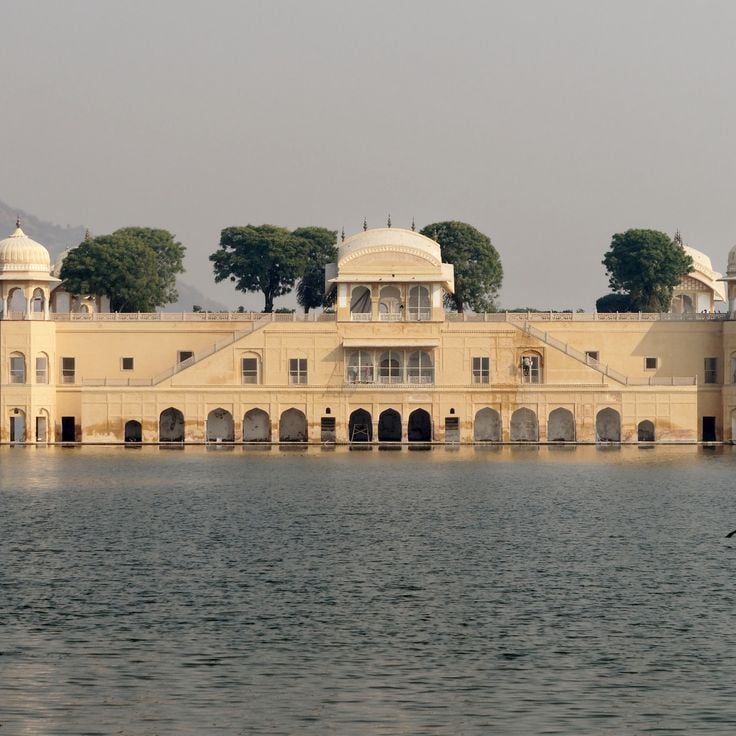
Jal Mahal is a palace built in the water of a lake in the middle of Jaipur. From the shores, you can see the architectural details of the structure. The building displays the construction style common to this region, with its walls and roofs reflected in the water. The lake and palace are part of the city's history.
Jaipur, India
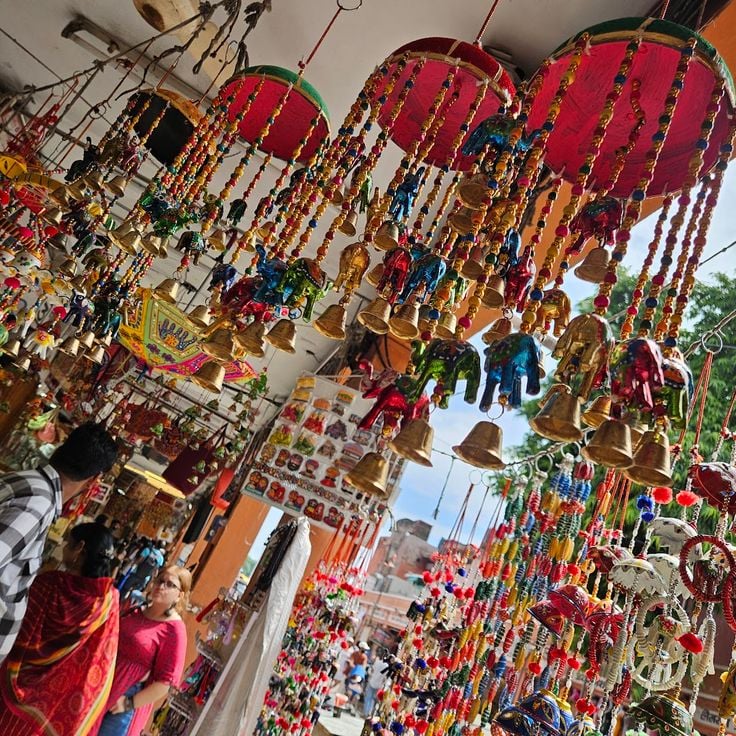
Bapu Bazaar in Jaipur is a busy market where colorful fabrics, clothing and handmade items are bought and sold. The market sits in the heart of the walled city and shows how local trade has worked here for generations. Walking through the rows of shops and stalls, you see merchants displaying their goods and people shopping for textiles and crafts. The items sold here reflect skills and techniques that have been passed down through families in this region.
Jaipur, India
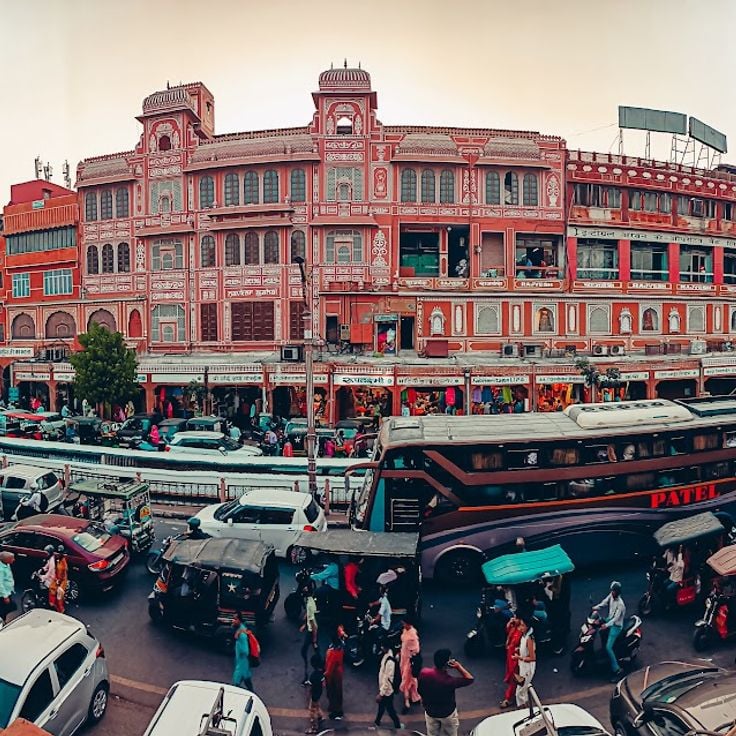
Johari Bazaar sits in the heart of Jaipur's old city as a busy market where jewels, gemstones, and handcrafted items change hands daily. The narrow lanes are lined with shops where artisans display their work and buyers arrive seeking quality pieces. Walking through here shows how commerce has worked in Rajasthan for generations, with vendors packed closely together and the back-and-forth between seller and customer happening openly. The market draws both locals and travelers looking for authentic jewelry and gems.
Jaisalmer, India
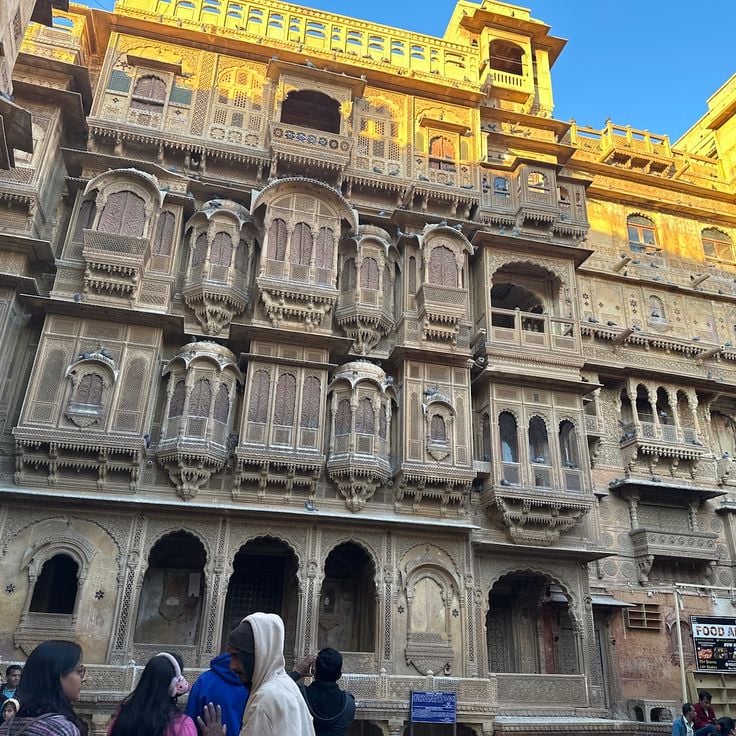
Patwon Ki Haveli in Jaisalmer is a five-story merchants' mansion that shows the prosperity and craftsmanship of an earlier era. The stone carving on its facades is intricate and detailed, reflecting the skill of local artisans and the wealth of the trading class. The structure reveals how wealthy merchant families lived, arranged their homes, and displayed their status through architectural decoration.
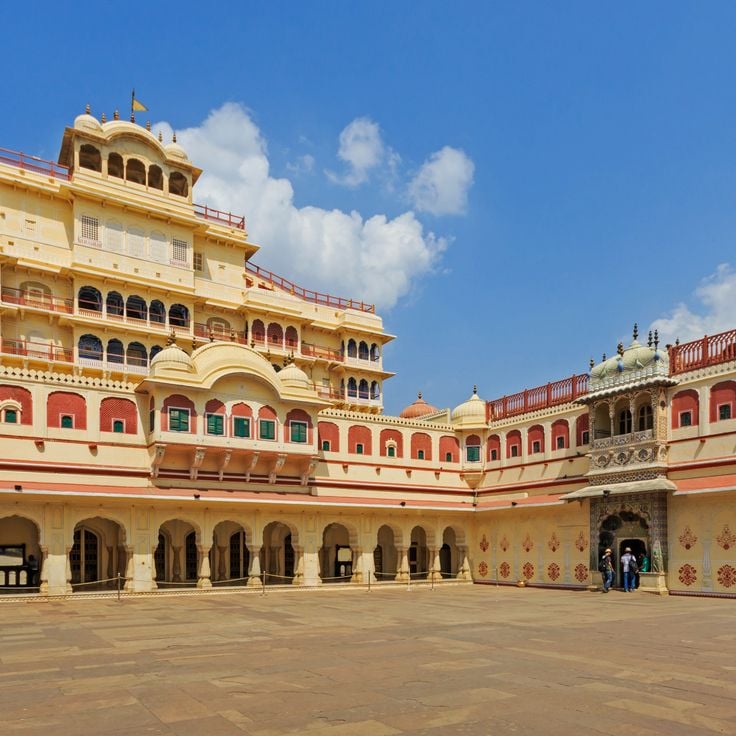
Jaipur, India
Jaipur is known as the Pink City, where rose-colored buildings define the historic and commercial streets. This city shows typical Rajasthani architecture with rectangular streets and squares laid out according to a mathematical plan. The palaces and merchant houses with their decorated facades reflect the rich past, while markets and workshops show how residents live daily.
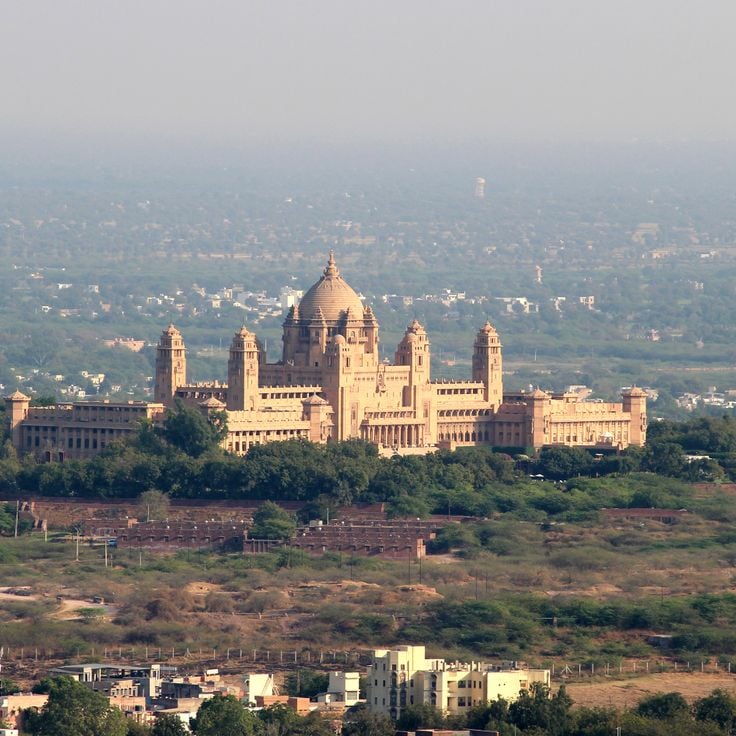
Jodhpur, India
The Umaid Bhawan Palace is a 20th-century palace in Jodhpur. This building combines European architectural styles with Indian traditions. The palace served as a royal residence and now houses a luxury hotel in part of its spaces. Visitors can see the expansive structure with its towers and terraces that rise above the city. The palace shows how Rajput nobility lived and built during the 20th century.
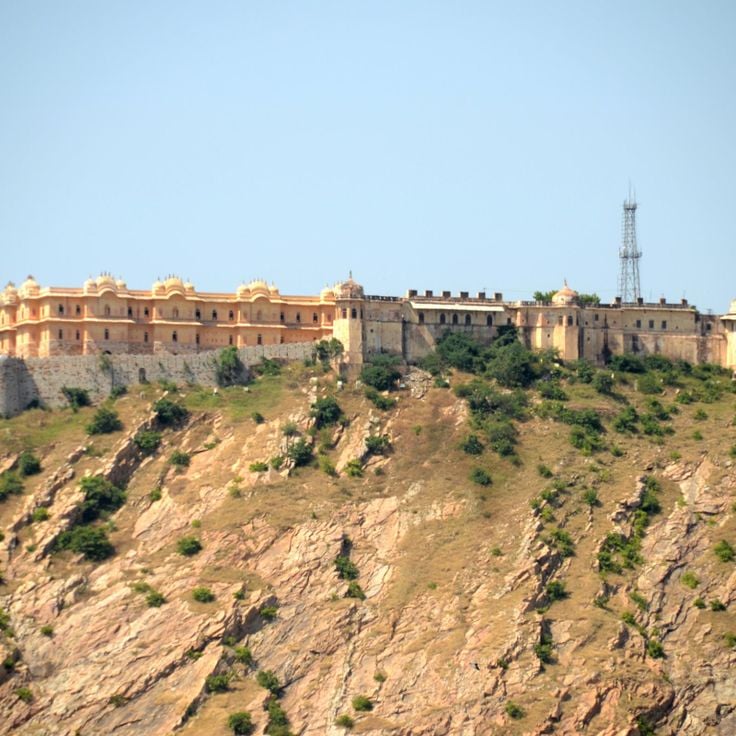
Jaipur, India
Nahargarh Fort rises above Jaipur and offers views of the pink city and the surrounding landscape. From its elevated position, visitors can see the geometric layout of Jaipur's streets and the Aravalli Mountains in the distance. The fort displays Rajput architecture and was part of the city's defense system. Within its walls are old chambers and passages that tell the story of the region's past.
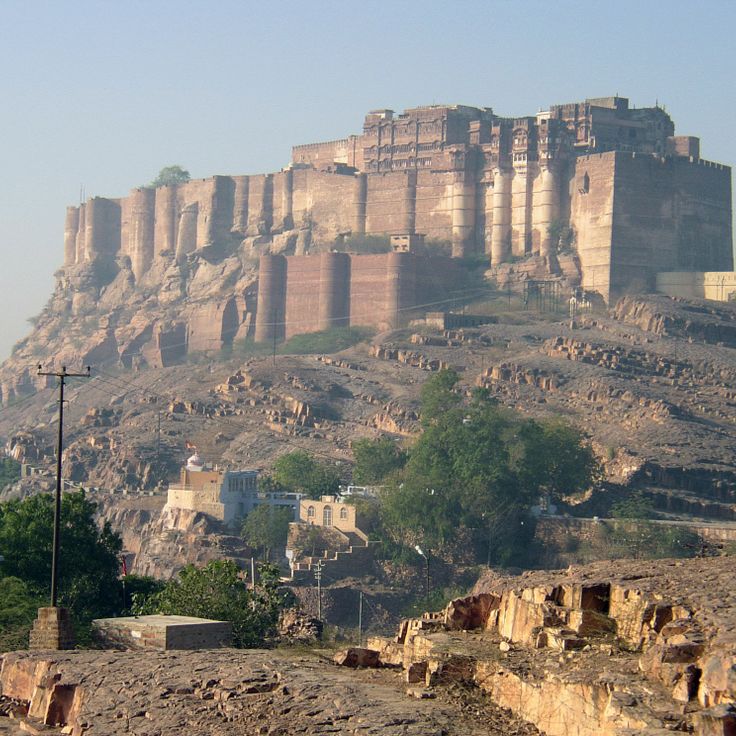
Jodhpur, India
Mehrangarh Fort rises above Jodhpur from a hilltop and reveals the history of the Rajput kingdom. The fortress holds a museum with collections of weapons, furniture, and textiles that show how the ruling family lived. In the workshops, craftspeople work with traditional techniques passed down through generations. The walls and towers offer views over the blue-painted houses of the city below.
Jodhpur, India
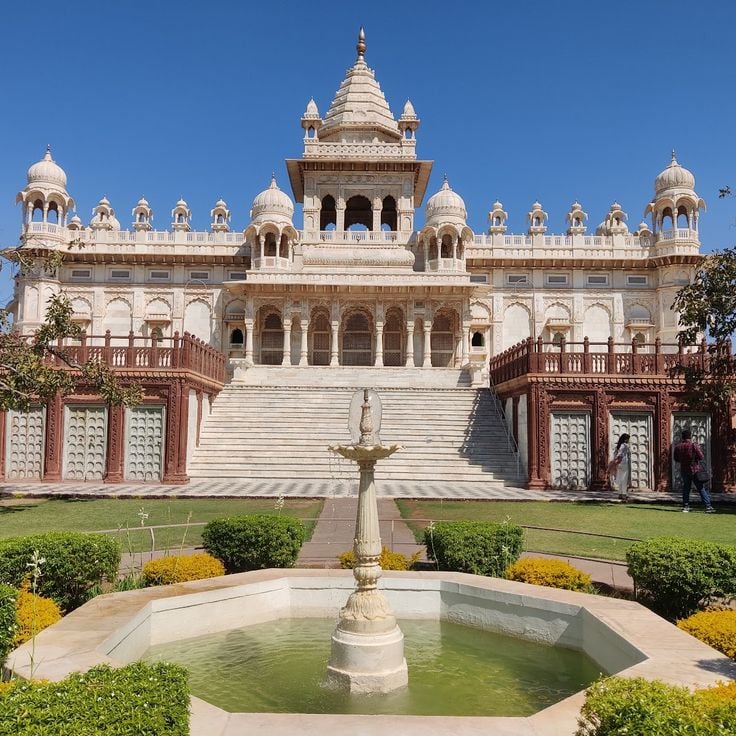
Jaswant Thada is a white marble mausoleum in Jodhpur built in memory of a maharaja. The interior features intricately carved stone work and detailed sculptural elements. The structure sits on a hilltop overlooking the city and Mehrangarh Fort. The gleaming white marble contrasts with the red stone buildings below and shows the craftsmanship of its era.
Udaipur, India
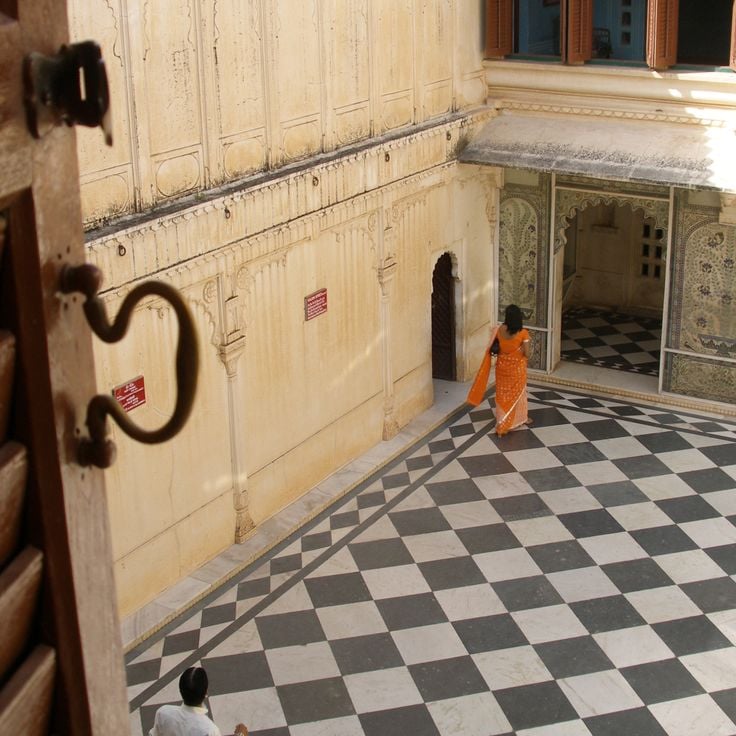
City Palace in Udaipur is a royal residence that blends Rajasthani and Mughal architectural styles and overlooks Lake Pichola. The structure demonstrates the wealth and authority of the ruling family through its intricate stonework and spacious halls. The palace sits directly on the water's edge, offering views across the surrounding gardens and lake. Visitors can explore how the rulers lived while walking through the palace's rooms and corridors.
Jaipur, India
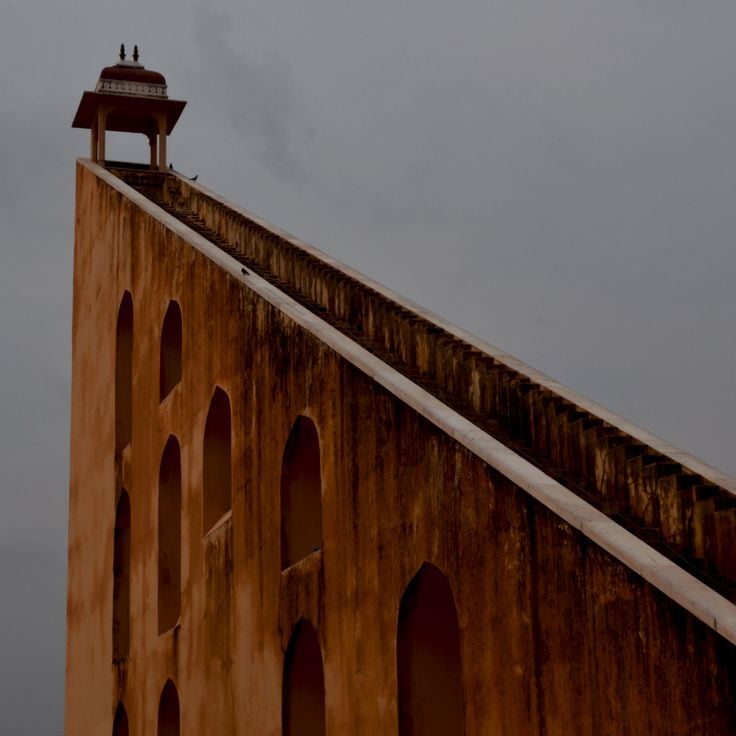
The Jantar Mantar in Jaipur is an 18th century astronomical observatory with stone instruments designed to measure celestial positions. This collection of mathematical instruments was built for mapping the sky and understanding the movements of stars and planets. The structures show how astronomers and mathematicians of that era observed and calculated the positions of heavenly bodies. Visitors can see how large stone sundial-like instruments and other devices tracked the movements of celestial objects across the sky. The Jantar Mantar demonstrates the mathematical and astronomical knowledge of 18th century Rajasthan.
Jaisalmer, India
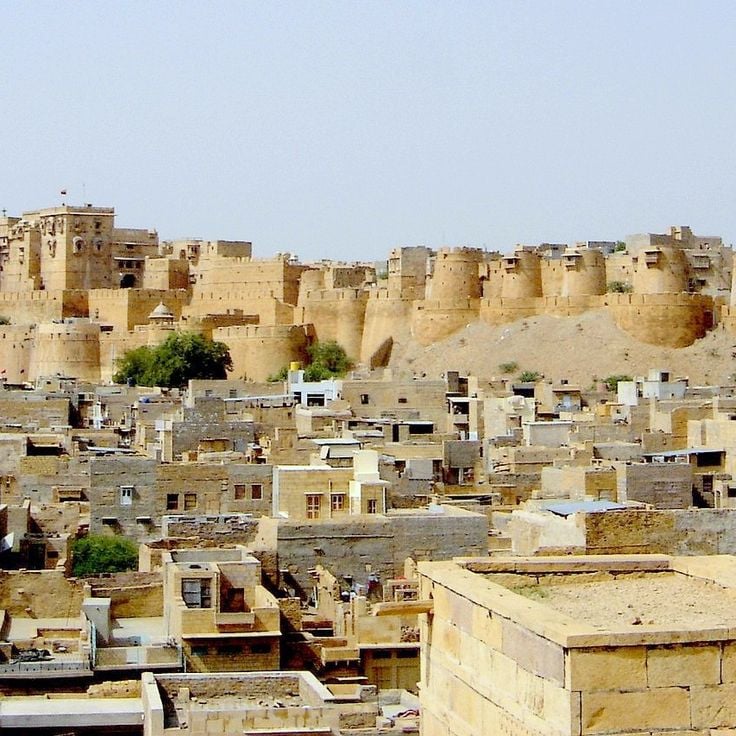
Jaisalmer Fort rises above the desert city with walls and towers carved from golden sandstone. Built with 99 defense towers, it remains home to residents who live within its walls and make it a functioning community rather than just a historical monument. Inside, you find temples, traditional homes with intricate wooden latticed windows, and narrow lanes where daily life continues. Walking through these passages, you can see craftspeople working, smell food from kitchens, and hear conversations echoing off stone walls. From the fort's heights, the view extends across the city and surrounding desert.
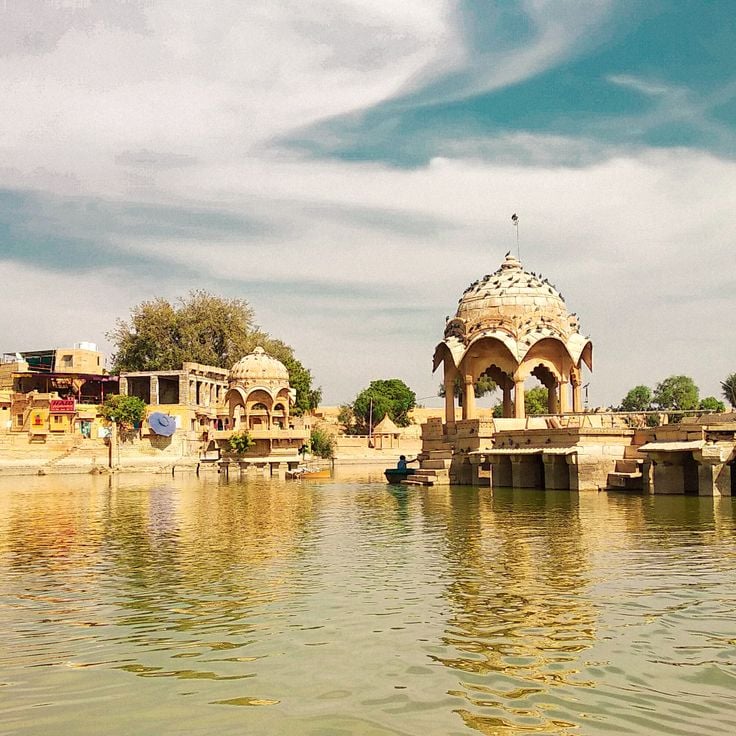
Jaisalmer, India
This artificial lake near Jaisalmer is surrounded by temples and ghats where visitors swim and walk along the water. The surrounding buildings are reflected in the water, and along the banks you see people praying, washing, or sitting and enjoying the light. The lake is an important part of daily life in the city and shows how people here have learned to use water in this dry region.
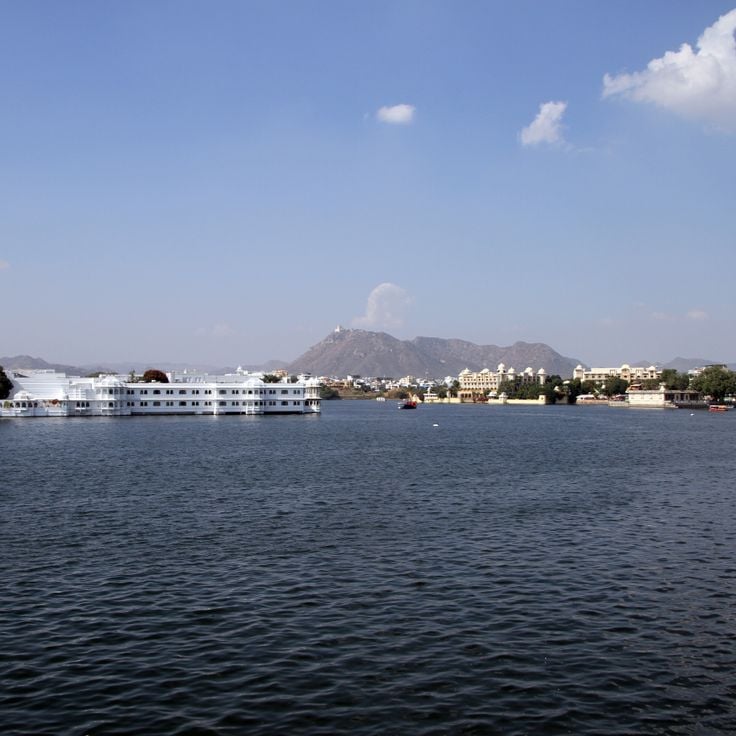
Udaipur, India
Lake Pichola in Udaipur is a large artificial lake surrounded by hills and palaces. The City Palace and Jag Niwas Palace sit on its shores and islands. Boats move across the water, and people gather along the ghats in the evening as the sun sets, watching the light play across the surface. The lake is a central part of daily life in Udaipur.
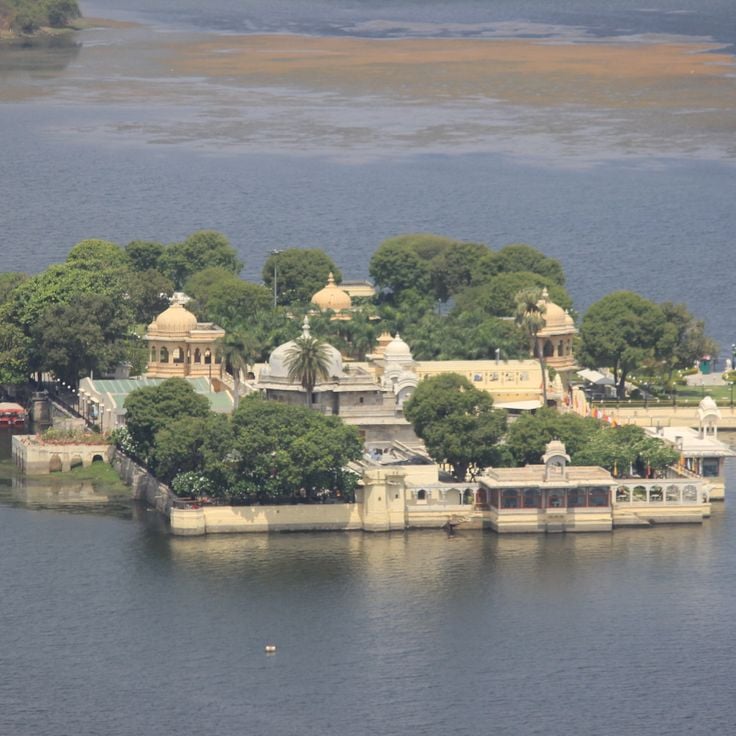
Udaipur, India
Jag Mandir is a palace on an island in Lake Pichola, built in the 17th century and reachable only by boat. This structure displays Rajput architecture with its vaulted rooms and carved columns that reflect in the water. The palace was constructed as a retreat for the royal family and sits within Udaipur's landscape, where the Aravalli mountains rise in the distance.
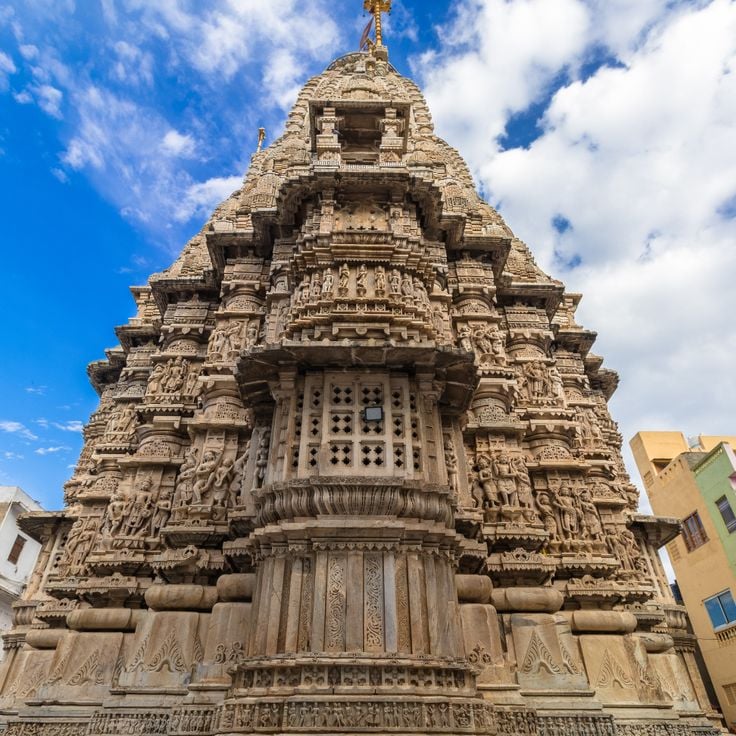
Udaipur, India
The Jagdish Temple in Udaipur is a three-story Hindu temple built in the 17th century. It features carved stonework on its walls and interior spaces. The temple sits near Lake Pichola, where locals and visitors come to pray and observe the details of its construction. Inside, you can see religious images and altars that are part of daily worship for Hindu pilgrims.
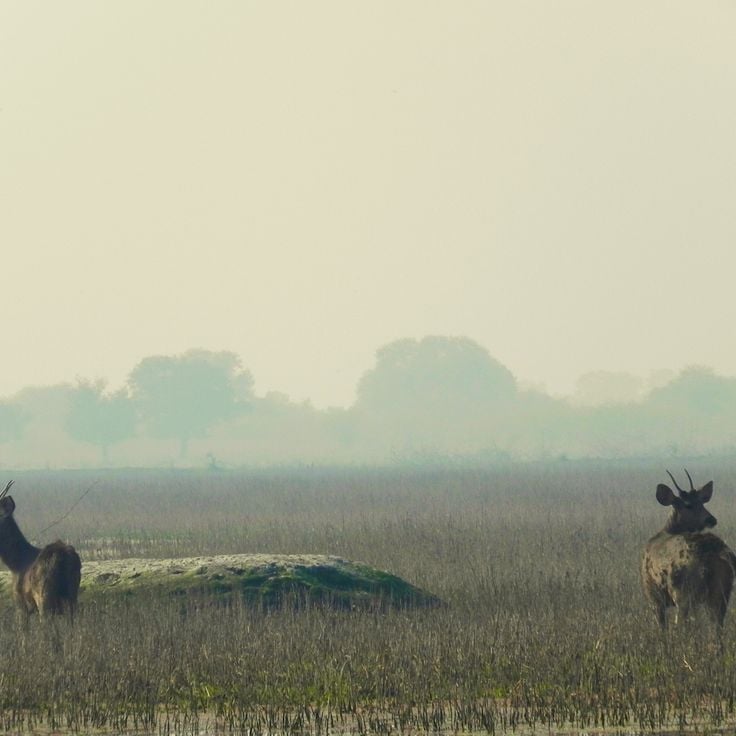
Bharatpur, India
Keoladeo National Park is a major bird sanctuary in Bharatpur where thousands of bird species live among water and wetlands. The park was created around two centuries ago from a reservoir and now hosts herons, ibises, storks, and many other birds that either breed here or pass through during migration. Paths lead through flat areas with lakes and reed beds, where you can watch birds on foot or by bicycle. Birds are most active and easy to spot in the early morning and evening.
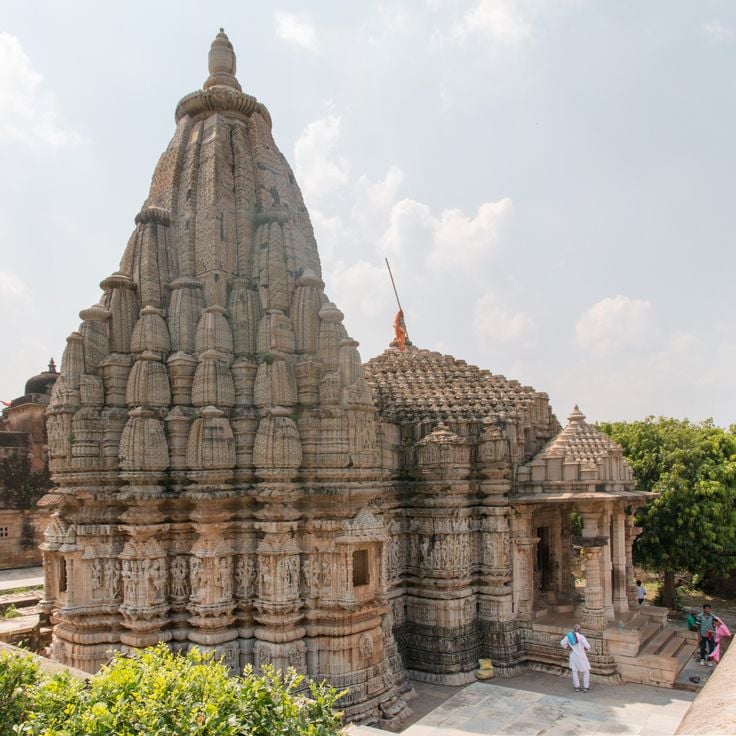
Chittorgarh, India
Chittorgarh Fort rises on a hilltop as a massive fortress with towers, palaces and temples. It stands as a symbol of Rajput courage and military strength. The fort covers a large area and contains buildings from many periods. Walking through it, you see the scale of the fortifications, the remains of royal structures, and the layout of a medieval stronghold. The site shows how the Rajputs built and defended their kingdoms.
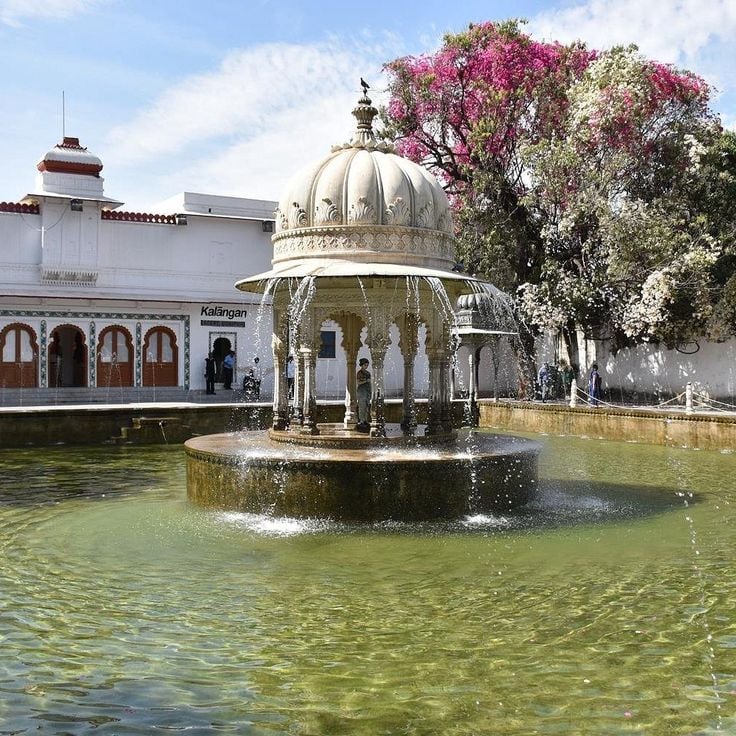
Udaipur, India
This garden in Udaipur was created for the ladies of the royal court. It features shaded pathways lined with fountains, small pavilions, and a large pool filled with lotus flowers. The layout reveals how nobility spent their days in these spaces, offering a window into the private life of the royal household.
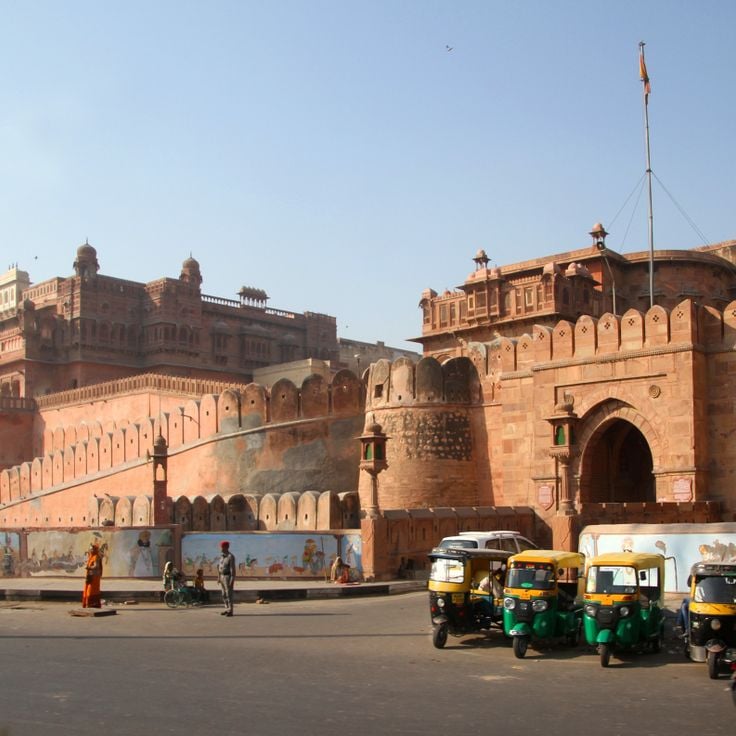
Bikaner, India
Junagarh Fort in Bikaner dates to the 16th century and displays the architectural style of Rajput rulers. Thick walls surround inner courtyards where red sandstone palaces stand. Inside, historical collections, crafts, and gardens reveal how the royal family lived. The fort sits within the city and offers views of the building techniques and decorative details from that period.
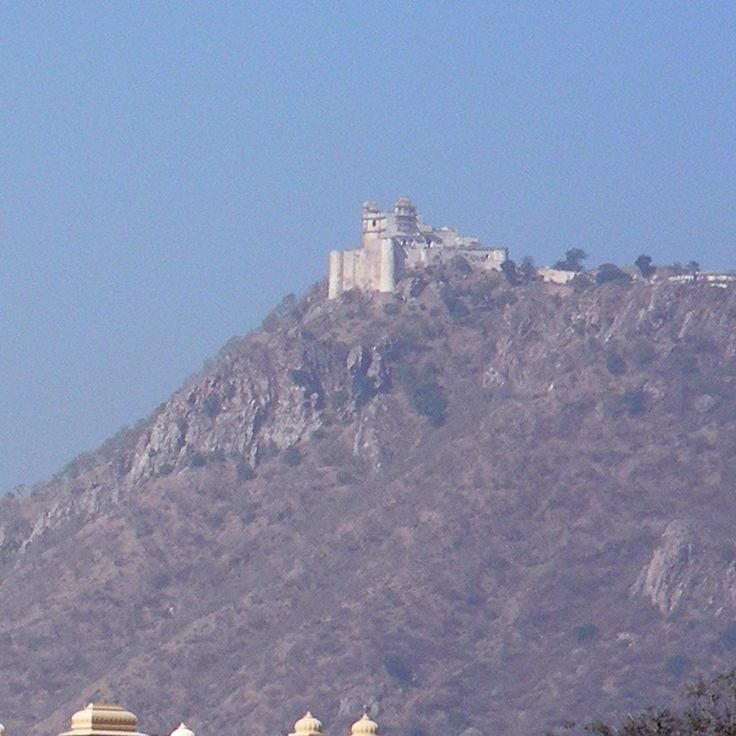
Udaipur, India
Sajjangarh Palace sits on a hilltop above Udaipur and was built during the 19th century. From this vantage point, you can see Lake Pichola and the valleys below. The palace shows how Rajput rulers constructed their residences in the highest locations to command views over the city and surrounding landscape. From its walls, you observe the daily life of Udaipur and the lakes beneath it.
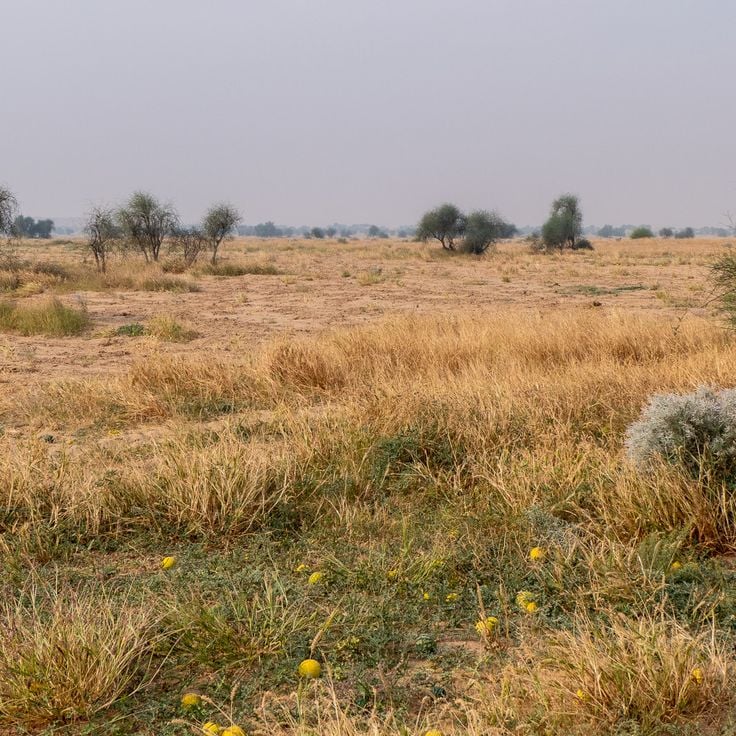
Jaisalmer, India
The Desert National Park in Jaisalmer protects the natural habitat of the Thar Desert. This protected area preserves the animals and plants that have adapted to harsh, dry conditions. The park is home to gazelles, wildcats, desert foxes, and many bird species. The landscape features sand dunes, rocky hills, and scattered water sources where wildlife comes to drink. Visitors can take jeep tours to explore the desert and observe its inhabitants.
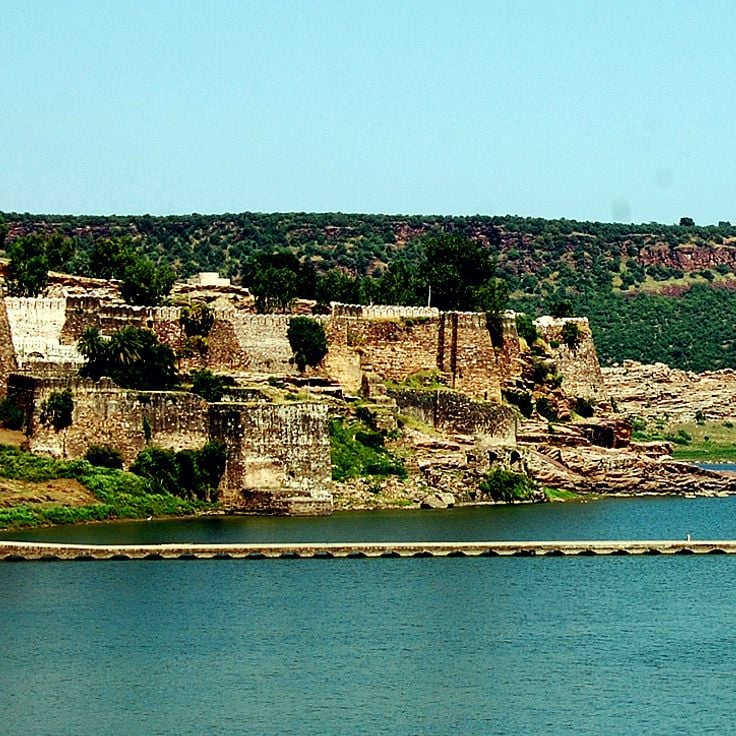
Jhalawar, India
Gagron Fort is a triangular fortress that rises above the meeting point of two rivers. It shows Rajput building methods with strong walls and towers that follow the natural shape of the land. From its hilltop location, you can see the valleys and river landscapes below. The fort was once a key defensive position and today stands as a record of local history and architecture.
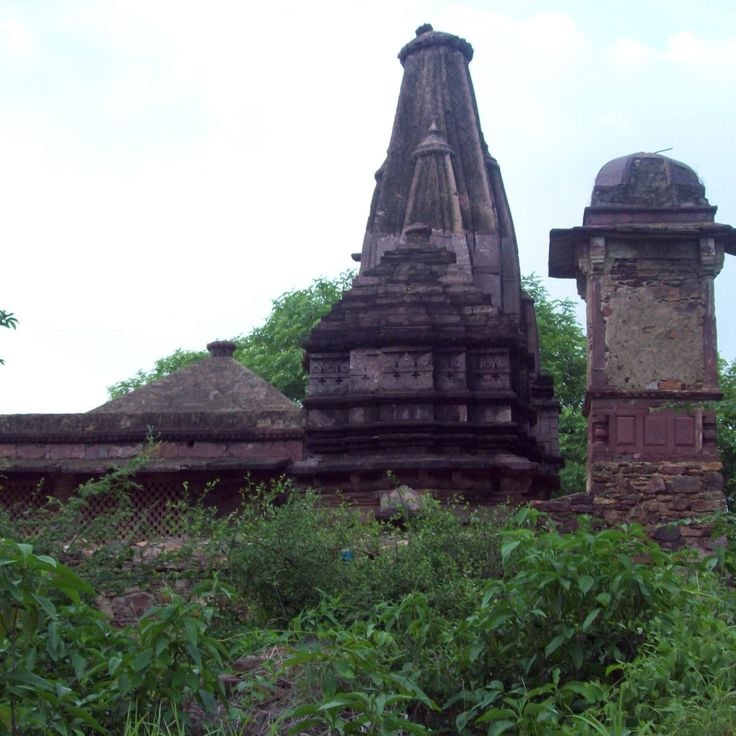
Sawai Madhopur, India
Ranthambore National Park is a wildlife sanctuary in the heart of Rajasthan where tigers and leopards roam through dry forests dotted with ancient ruins and lakes. Visitors come here on jeep safaris to see animals in their natural setting. The park shows how nature and history exist side by side in this region.
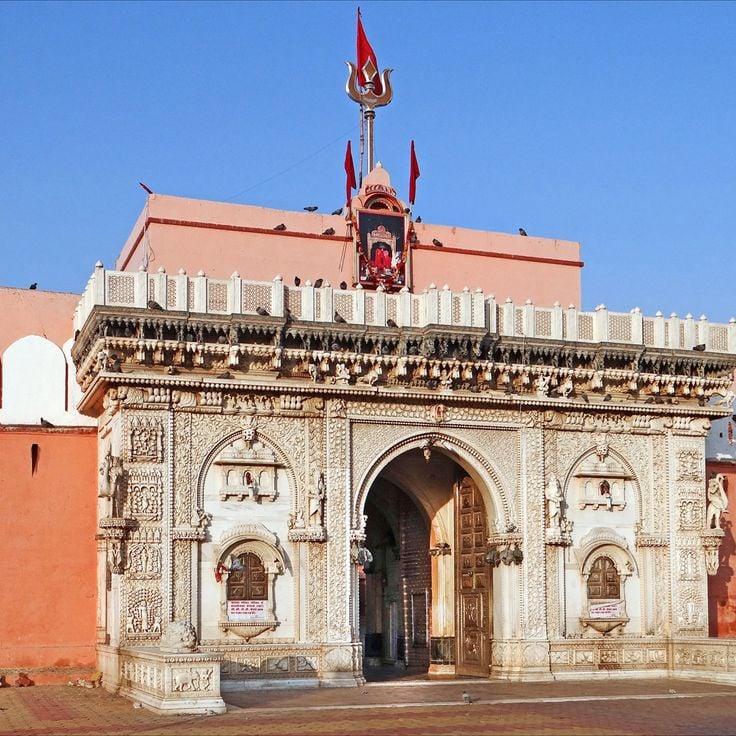
Deshnok, India
The Karni Mata Temple in Deshnok is home to thousands of sacred rats that roam freely throughout the shrine. Visitors walk through halls where these rodents scurry across floors and climb the walls. The temple draws pilgrims who come to honor the goddess Karni and participate in traditions deeply rooted in local belief.
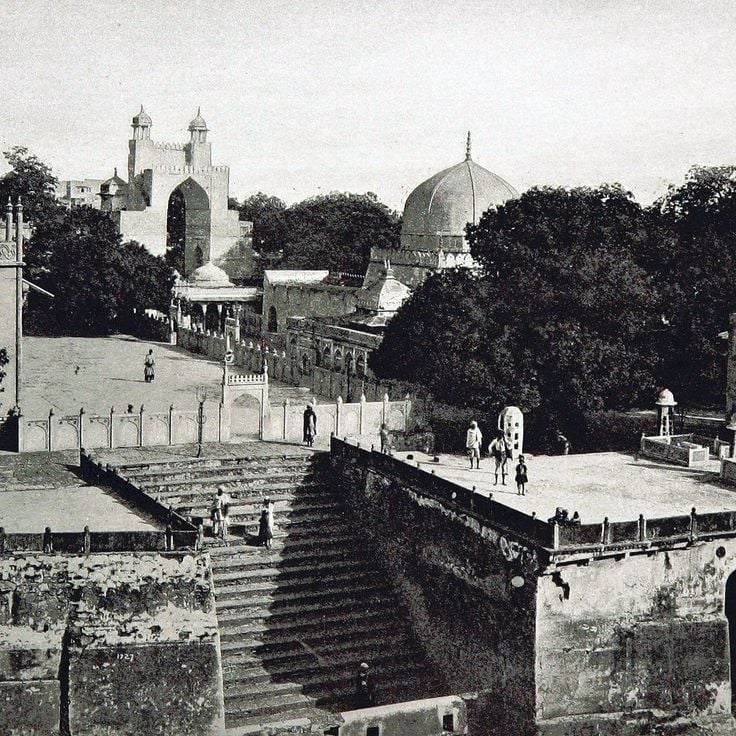
Ajmer, India
The Ajmer Sharif Dargah is a revered sanctuary and the tomb of the saint Khwaja Moinuddin Chishti. This shrine draws pilgrims from all faiths and reflects the deep spiritual traditions of Sufism. Located in the city of Ajmer in the heart of Rajasthan, this place shows how religious devotion and cultural respect exist together. Visitors come to witness the spiritual power and historical importance that have made this site a meeting point for different communities across centuries.
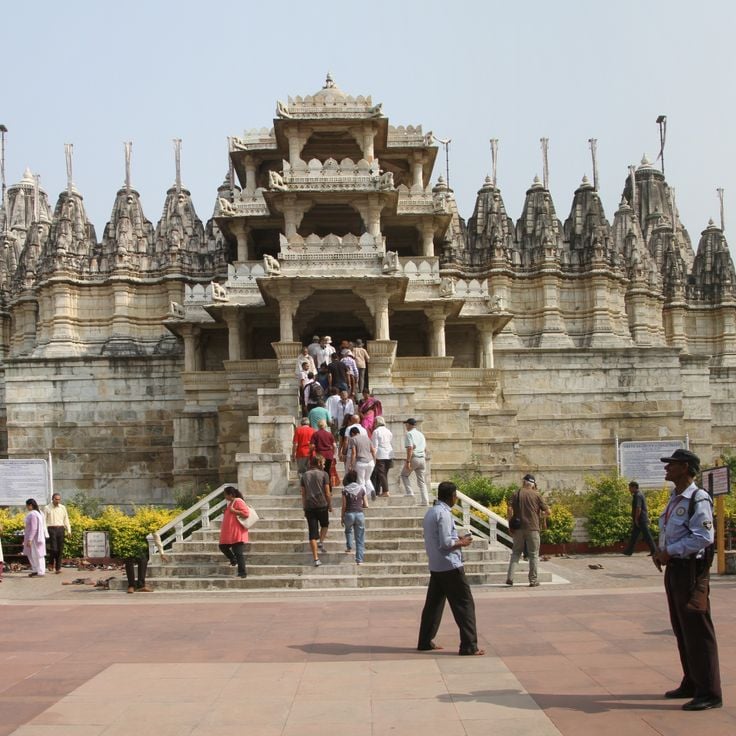
Rajasthan, India
The Ranakpur Jain Temple is a 15th century sanctuary set on a hillside. Visitors are struck by white marble walls and numerous carved columns that define the interior spaces. Artisans shaped each column individually, and fine details show the care taken during construction. Rooms open onto several courtyards where visitors can walk under stone ceilings and find quiet moments of reflection.
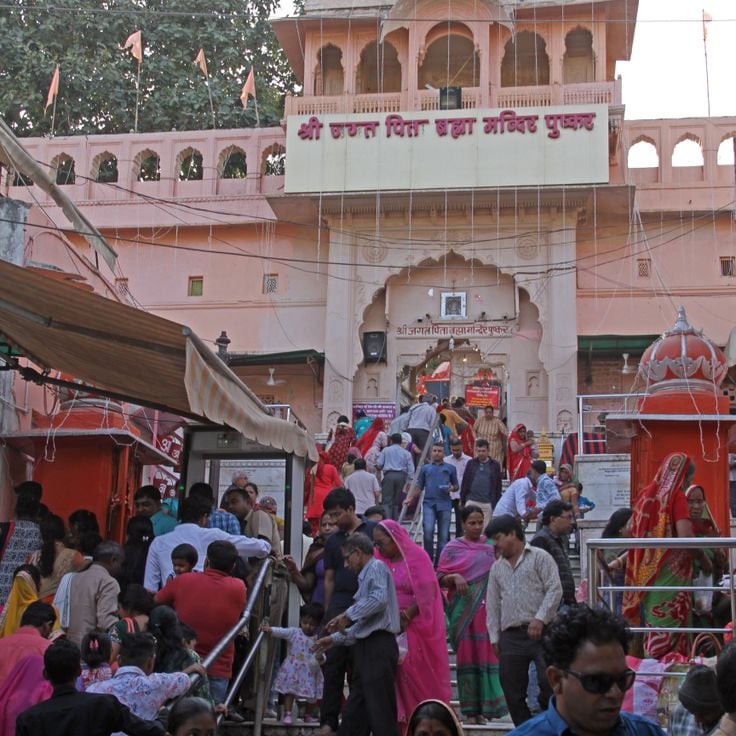
Pushkar, India
The Brahma Temple in Pushkar is one of the few temples in India dedicated to the god Brahma. The sanctuary sits near the sacred Pushkar Lake, where pilgrims and visitors gather. The temple reflects the religious traditions of Rajasthan and draws people who want to understand the spiritual history of this region. Its architecture and location make it a special place for both believers and travelers.
Mount Abu, India
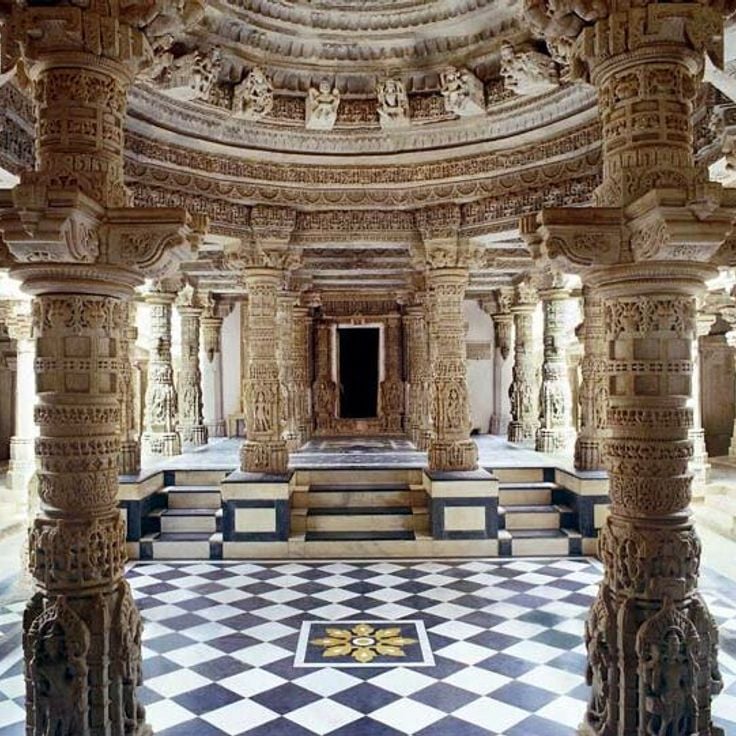
The Dilwara Temples sit on Mount Abu within a mountain setting. Built between the 11th and 13th centuries, these Jain shrines feature intricate marble carvings throughout their chambers. White marble walls display detailed geometric patterns and figures cut directly into the stone. Each temple was constructed at a different time and has its own character. Visitors walk through rooms with arched ceilings and columns where light filters in through openings. People still come here to pray, and the spaces carry a sense of quiet reflection.
Rajsamand, India
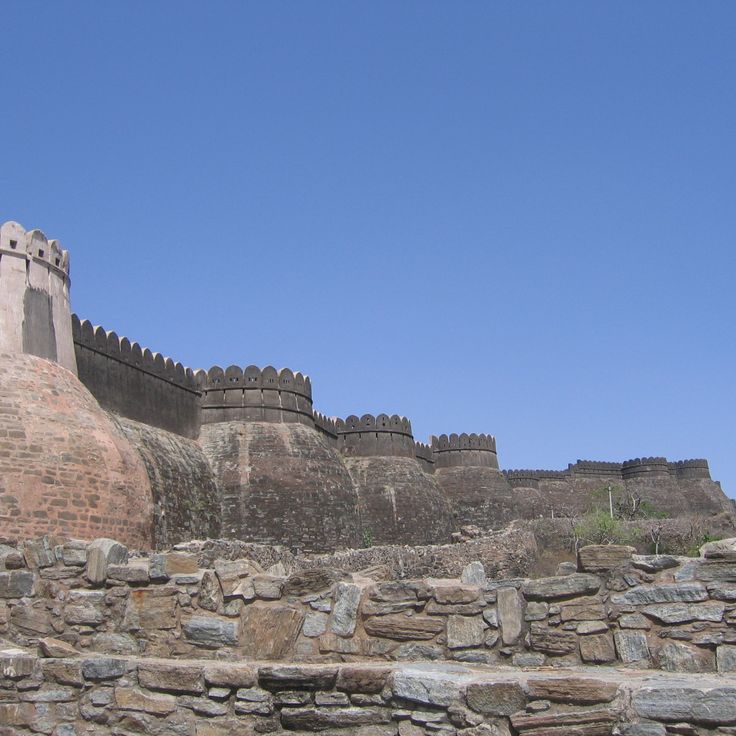
Kumbhalgarh Fort sits on a ridge in Rajasthan, showing how medieval rulers built their strongholds. The walls stretch for miles along the hilltop between two valleys, offering views of the surrounding land. The fort contains palaces, temples, and living spaces that reveal how the rulers and their families lived here. Walking along the walls takes you past different gates and bastions, where you can see the construction methods and understand why this place mattered in history.
Pushkar, India
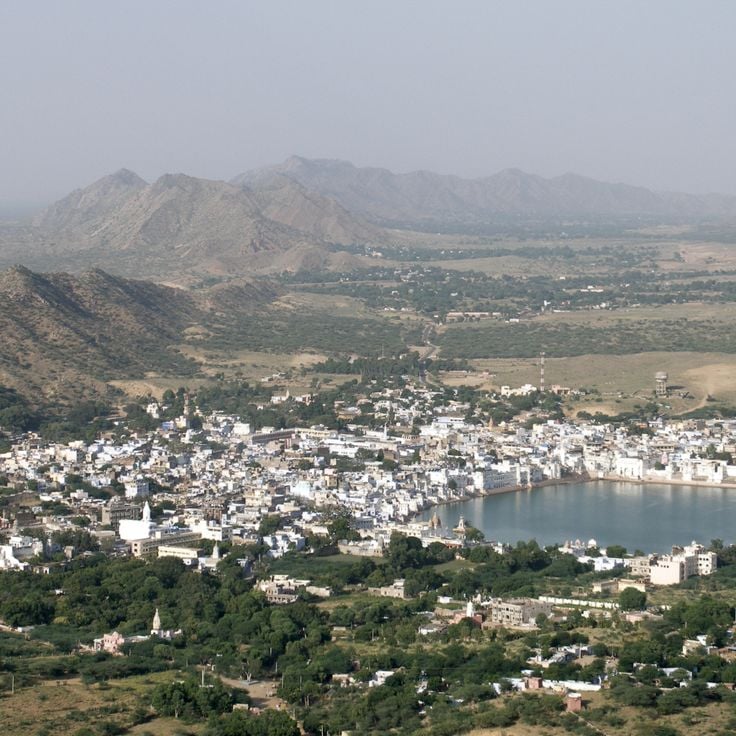
Pushkar is a holy city centered on its sacred lake, where pilgrims perform ritual bathing on the ghats. The town feels spiritual, with narrow streets lined with temples and shrines. The lake water is deeply valued by locals, and visitors can observe pilgrimage traditions throughout the day.
Sawai Madhopur, India
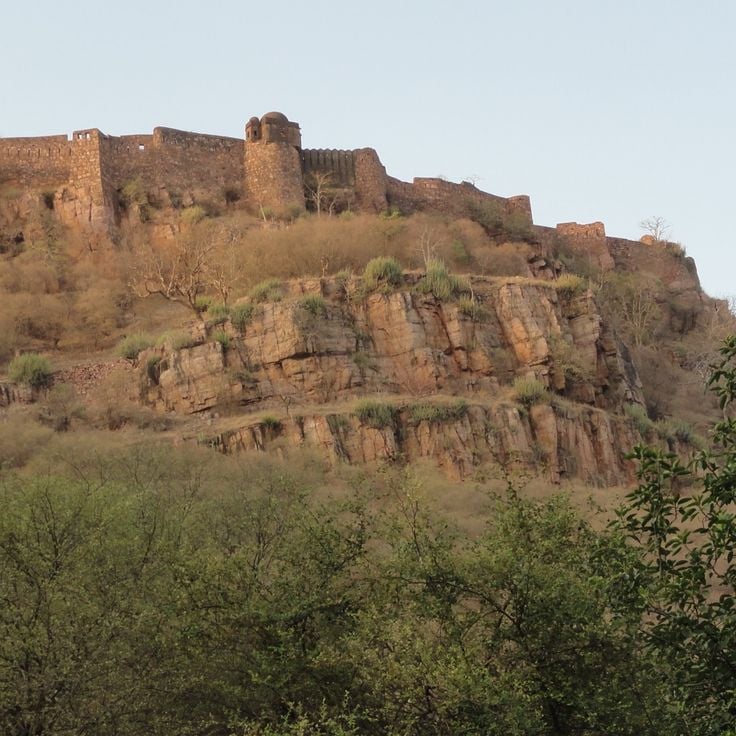
Ranthambore Fort is a 10th century fortress that rises above the wildlife reserve and can be reached through the national park area. The ruins sit on rocky ridges and offer views of the dry forests and lakes that define this region. From the fort, visitors can look out over the eastern Rajasthan landscape where tigers and leopards roam freely. The old structure connects the history of Rajput warriors with the wild nature that surrounds it.
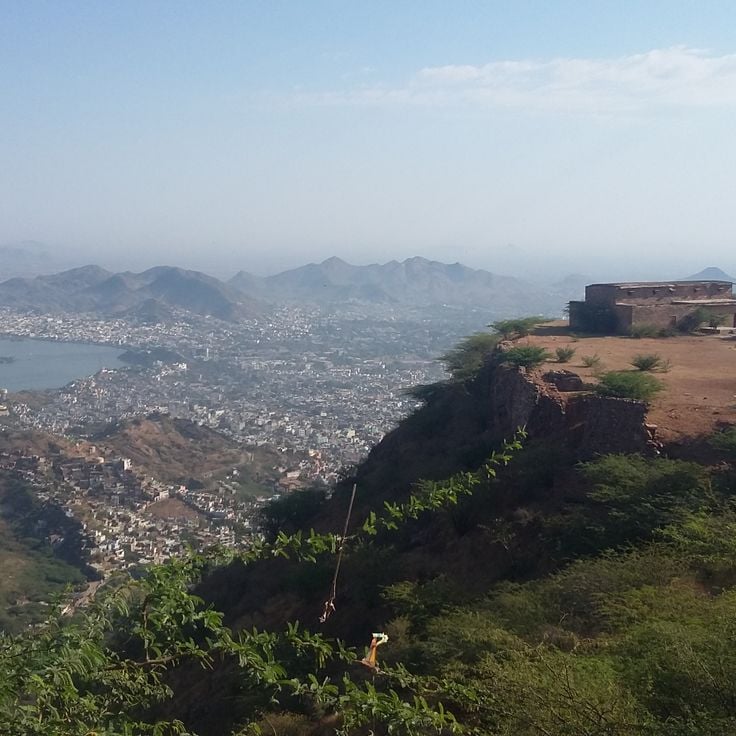
Bundi, India
Taragarh Fort rises above Bundi, a historic city in Rajasthan. This 14th century fortress sits on a hill overlooking the town below, with thick walls and towers that still command the landscape. A path winds up the hillside to reach the fort, passing through rocky terrain. From the top, the view stretches across Bundi's houses, lakes, and the surrounding region. The walls and fortifications show the craftsmanship of their time, and walking through them, you feel the weight of centuries of history that these stones have witnessed.
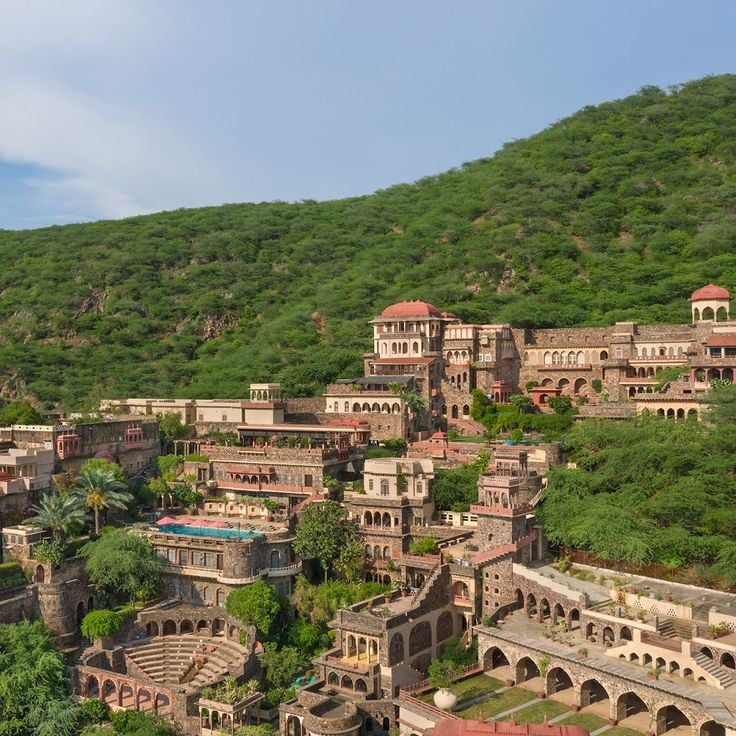
Neemrana, India
Neemrana Fort Palace is a 15th-century fortress that now operates as a hotel. The fort sits on a hilltop overlooking the plains below. Historic rooms and staircases connect different levels of the structure. Visitors walk through old corridors and discover architectural layers built over centuries. The fort shows how a royal fortress was constructed and how it functions today as a place to stay.