Thousand Pillar Temple, Hindu temple in Hanamakonda, India
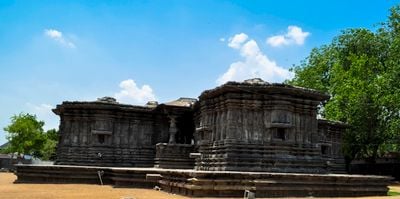
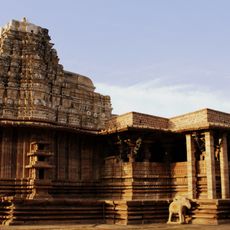
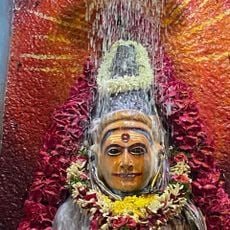
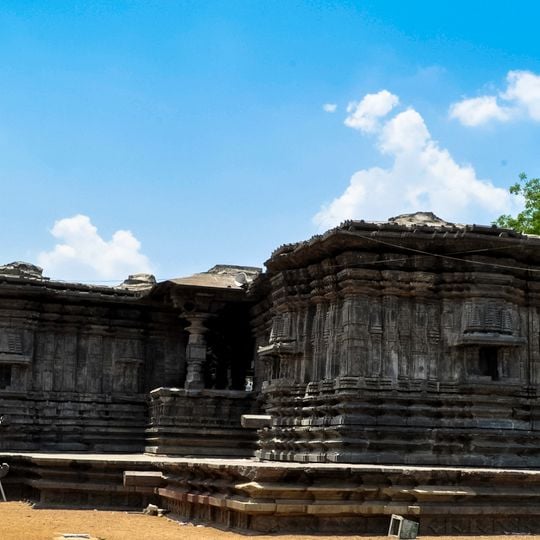
The Thousand Pillar Temple is a Hindu temple in Hanamkonda district, India, built from gray basalt stone. The site forms a star-shaped plan with three separate sanctuaries for different deities, connected by open columned halls and surrounded by low masonry walls.
King Rudra Deva of the Kakatiya dynasty commissioned construction between 1175 and 1324, when Warangal was an important center of power. The builders followed architectural forms of the Chalukya tradition, which were widespread across the Deccan region.
The name refers to the many columns inside, each showing different ornaments and patterns. Visitors today see a black Nandi statue carved from a single block of stone in front of the entrance, serving as guardian of the sacred space.
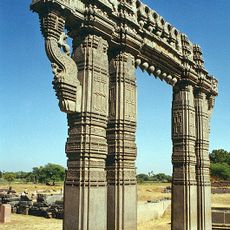
The temple stands in Hanamkonda town, about 5 kilometres from Warangal and roughly 150 kilometres from Hyderabad, beside the Hanamkonda–Warangal highway. The nearest railway station is Warangal, 6 kilometres away; Rajiv Gandhi International Airport is the nearest airport. The northern gateway leads into the courtyard, where the Nandi faces the main shrine and the three sanctuaries open east, south and west.
The builders used a sand box method for the foundation, placing sand as a cushion beneath the stones. This technique helped the structure remain stable for centuries by absorbing ground movement.
The community of curious travelers
AroundUs brings together thousands of curated places, local tips, and hidden gems, enriched daily by 93,780 contributors worldwide.