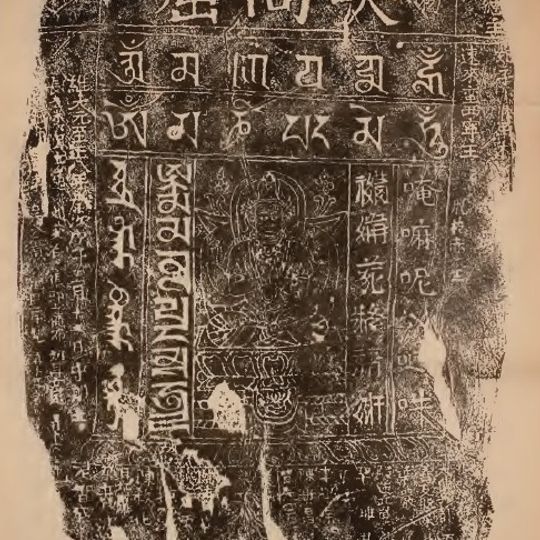
Stele of Sulaiman, Stone monument in Mogao Caves, China
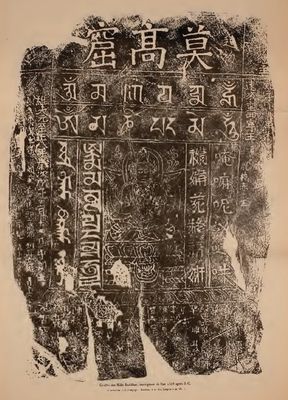
The Stele of Sulaiman is a stone monument located within the Mogao Caves complex near Dunhuang, in Gansu province, China. It bears carved inscriptions and a central relief figure of the Bodhisattva Avalokitesvara, typical of Buddhist sculpture from the Yuan period.
The stele was erected in 1348, during the Yuan Dynasty, to honor Prince Sulaiman of Xining and other patrons of a nearby Buddhist temple. It was created at a time when Mongol rulers actively supported Buddhist institutions across the region.
The stele carries the Buddhist mantra Om mani padme hum in six different scripts, including Chinese, Tibetan, and Uyghur. This makes the stone a rare object where several writing traditions from across Central Asia appear side by side.
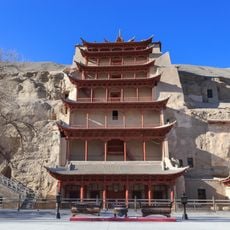
The stele is managed by the Dunhuang Academy and can be seen as part of a visit to the Mogao Caves area. It is worth checking in advance whether the piece is currently on display, as access to specific items may vary.
The stele was first recorded by French explorer Charles Eudes Bonin during his travels through western China between 1898 and 1900, long before the Mogao Caves gained wider attention. His notes remain among the earliest Western descriptions of this object.
The community of curious travelers
AroundUs brings together thousands of curated places, local tips, and hidden gems, enriched daily by 60,000 contributors worldwide.