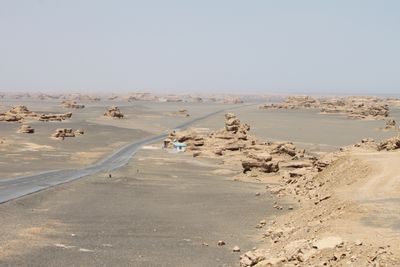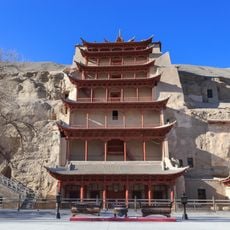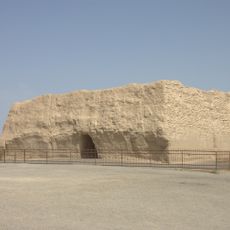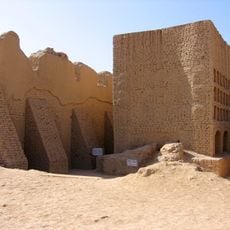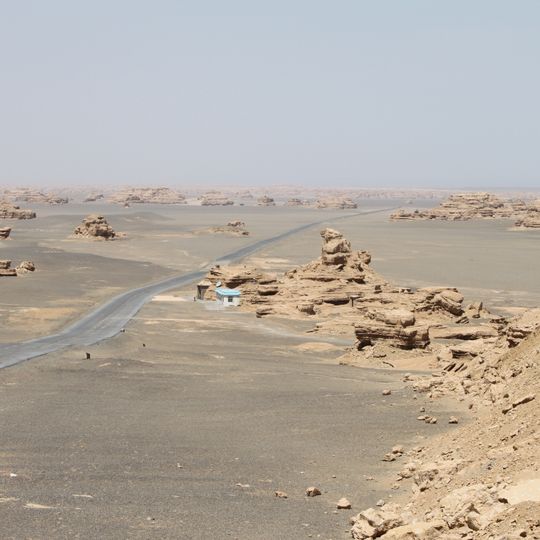
Dunhuang Yardang National Geopark, UNESCO Global Geopark in Dunhuang, China.
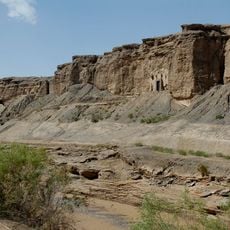
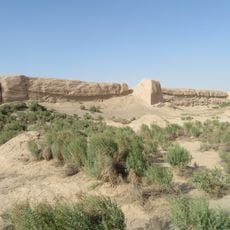
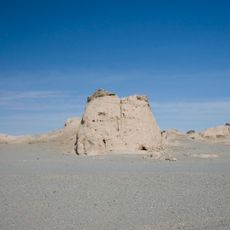
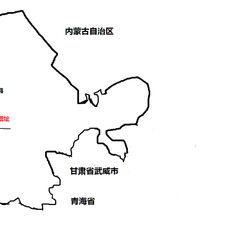
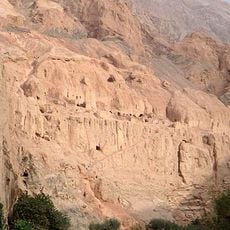
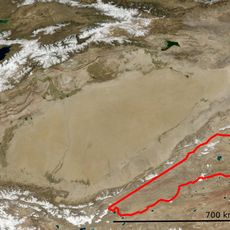
The geopark covers 2067 square kilometers in Gansu Province, presenting dense formations of wind-eroded rock structures known as Yardangs distributed across two geologically distinct areas. The landscape displays numerous structures shaped by continuous wind erosion, creating a maze of ridges, towers, and furrows. The terrain stretches through desert expanses with elevations that can reach several dozen meters in height and formations extending across wide distances.
The geological formations developed over a period of 700,000 years through natural wind and rain erosion processes, creating the largest Yardang structures in China. The area received national park status in 2001 and joined the UNESCO Global Geoparks Network in 2015. Scientists have documented the site since the 1980s as a significant example of aeolian erosion landscapes, with research continuing to reveal details about formation mechanisms.
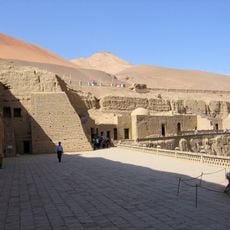
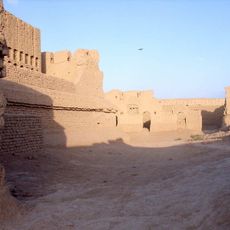
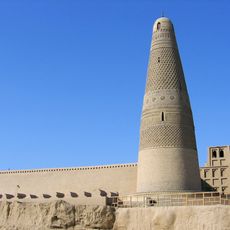
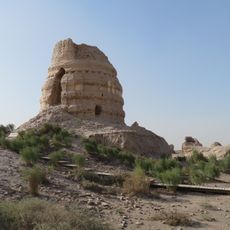
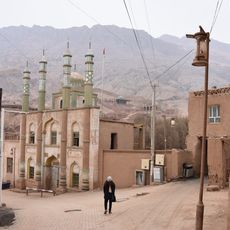
The area holds the Aisikexiaer Castle within the Yardang Ghost Town, where the name derives from Uyghur language meaning old city. This geological landscape connects natural processes with regional heritage and serves as an educational site for geological science and environmental conservation. Local communities regard the formation as part of their regional identity and as testimony to the forces of nature operating over millennia.
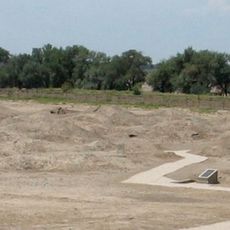
Located approximately 180 kilometers northwest of Dunhuang town center, the area offers information panels, guided tours, and a geological museum for visitors. Best visiting times are spring and autumn, as extreme summer heat and winter cold can affect accessibility. Organized transport from Dunhuang is available, since public transportation options are limited. Adequate water and sun protection are essential for desert conditions, and tours typically last several hours.
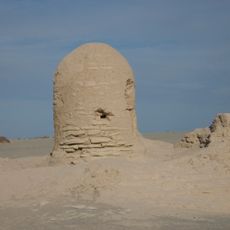
Rock formations throughout the park display naturally shaped structures resembling specific objects, including the Mongolian Bao, Camel, Stone Bird, and Peacock formations. Some researchers have identified over 40 different recognizable shapes named after animals, buildings, and everyday objects. The wind patterns that created these shapes originate primarily from the northwest direction and have worked consistently over thousands of years.
The community of curious travelers
AroundUs brings together thousands of curated places, local tips, and hidden gems, enriched daily by 92,304 contributors worldwide.