Miran, Archaeological site in Ruoqiang County, China
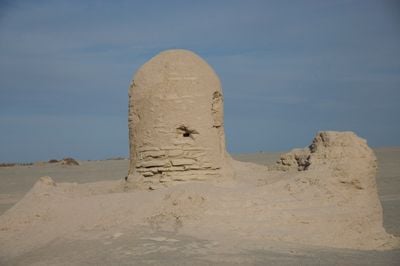
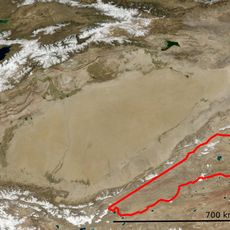
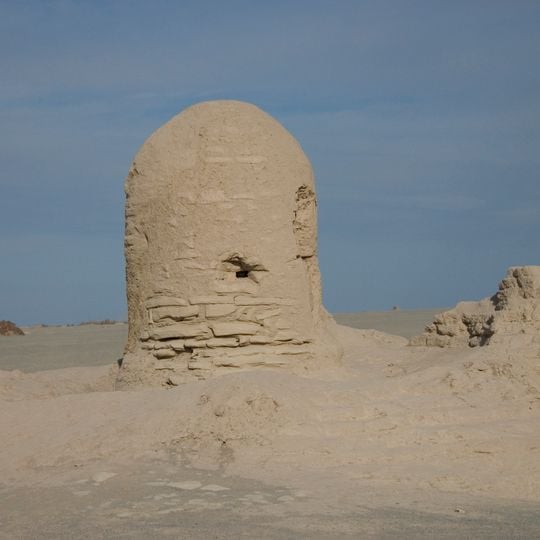
Miran is an archaeological site at the southeastern edge of the Taklamakan Desert containing remains of Buddhist temples, fortifications, and ancient settlements. The location encompasses multiple excavation areas that reveal the structure of an ancient oasis town.
The site originated during the Han Dynasty and remained inhabited through the Tang period, serving as a vital oasis town along the southern Silk Road route. This extended occupation reflects its importance as a trade and transport hub.
The excavated manuscripts show the use of multiple languages including Tibetan, Chinese, and Sanskrit, revealing the multicultural character of this ancient trading post. This linguistic diversity demonstrates how different peoples met and traded at this location.
Visiting the site requires special permits and involves traveling through desert terrain, so visitors should plan for specialized transportation from Ruoqiang County. It is advisable to check permit requirements in advance and prepare accordingly for the desert conditions.
Wall paintings in Buddhist temples display winged figures from the third century showing Roman artistic features, suggesting surprisingly far-reaching trade connections. These artistic elements document the exchange between distant civilizations along the Silk Road.
The community of curious travelers
AroundUs brings together thousands of curated places, local tips, and hidden gems, enriched daily by 91,344 contributors worldwide.