Lop Desert, Desert and archaeological site in Xinjiang, China
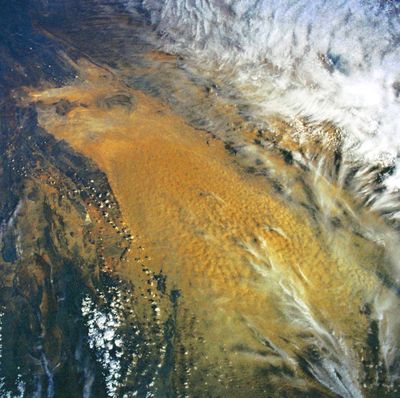
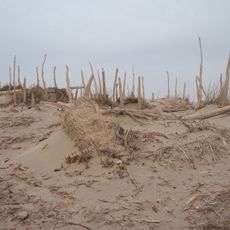
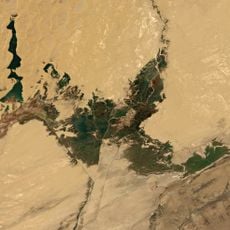
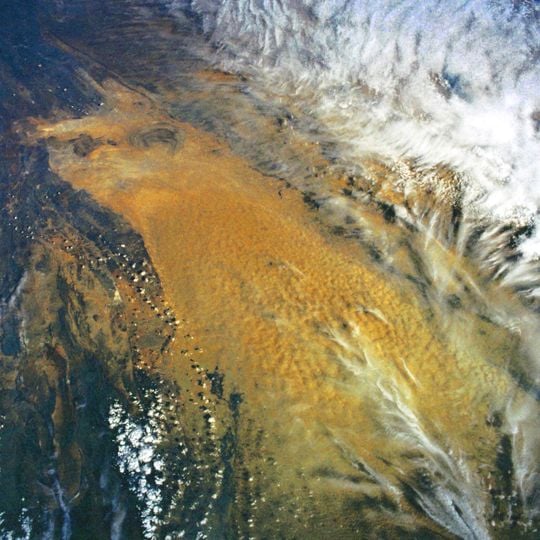
The Lop Desert is an expansive sandy region in northwestern China with an arid climate, where clay beds, sand formations, and dried lake basins stretch across the landscape. The terrain is mostly flat and barren, with sparse vegetation and archaeological remains scattered along former settlement areas.
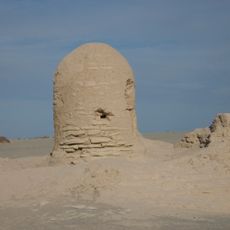
The area was once a thriving trading hub along the Silk Road, where ancient cities like Loulan flourished during the Han Dynasty before being abandoned. The decline of these settlements was tied to shifts in water sources that made life in this region unsustainable.
The region served as a crucial meeting point for trade routes connecting East and West, where people of different backgrounds encountered each other and exchanged ideas. Archaeological remains today still reveal traces of Buddhist and Central Asian cultures that flourished here.
Visitors should prepare for extreme temperature swings and very little rainfall that make traveling difficult in this region. Careful planning with local guides and adequate water and equipment are essential for safe exploration.
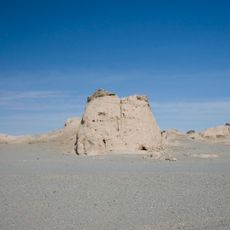
The place is known for yardangs, bizarre wind-sculpted rock formations that resemble giant furrows and ridges carved into the ground. These natural shapes take thousands of years to form through wind erosion and give the desert an unusual appearance.
The community of curious travelers
AroundUs brings together thousands of curated places, local tips, and hidden gems, enriched daily by 60,000 contributors worldwide.